As an Amazon Associate, Akermin earns from qualifying purchases. Product links on this page are affiliate links.
RMS (root mean square) is the effective value of an alternating voltage or current: the DC value that would deliver the same power to a resistive load. A True RMS meter calculates it directly from the waveform, whatever its shape. An averaging (average-responding) meter measures the average of the rectified waveform and multiplies by 1.11, which is only correct for a pure sine wave. Modern loads distort the waveform, so averaging meters read them wrong, usually low. For any work beyond checking a clean mains outlet, True RMS is the specification to insist on.
Why RMS
An AC waveform swings between positive and negative, so its simple average is zero. What matters for heating, lighting and power is the mean of the square of the instantaneous value, then the square root of that: RMS. Mains at “230 V” or “120 V” is an RMS figure; the peak of a 230 V sine wave is 325 V. RMS is what makes AC and DC comparable: 100 V RMS AC heats a resistor exactly as much as 100 V DC.
How averaging meters cheat
Computing a true RMS value takes more circuitry, so cheaper meters rectify the AC, average it, and scale by the ratio between RMS and average for a sine wave (1.11). On a clean sine wave the result is correct. On anything else it is not:
| Waveform | Averaging meter error |
|---|---|
| Pure sine wave | 0% |
| Square wave | Reads about 11% high |
| Triangle wave | Reads about 4% low |
| Phase-controlled dimmer at half brightness | Reads 20 to 30% low |
| Switch-mode power supply input current | Reads 30 to 40% low |
| Variable-frequency drive output | Unreliable; can be far off |
The loads that distort
- Dimmers and phase-controlled heaters.
- LED drivers, computer and phone power supplies, and almost all modern electronics, which draw current in short pulses at the peak of each half-cycle.
- Variable-speed drives on pumps, fans and HVAC compressors.
- Inverters, UPS units and generators, whose output may be a modified or stepped waveform.
- Solar inverters and battery chargers.
The distortion is greatest in current, which is why clamp meters, which mostly measure current, benefit even more from True RMS than multimeters do; see multimeter vs clamp meter.
Crest factor
True RMS meters have a limit to how spiky a waveform they can handle, stated as crest factor (peak divided by RMS), usually 3 at full scale. Beyond that even a True RMS meter under-reads. For most household and light commercial loads this is not a constraint.
AC-coupled versus AC+DC
Most True RMS meters measure the AC component only, ignoring any DC offset. Some measure AC+DC RMS, which is the correct value for a waveform with both, such as a rectified but unfiltered supply. The distinction matters in electronics and drive work, rarely in a house.
Bottom line
True RMS has become cheap enough that there is little reason to buy an averaging meter. If a listing does not say True RMS (or TRMS), assume it is averaging. Meters that state it are compared in best multimeters for home and DIY; for the safety rating that matters even more, see what a CAT rating is.
Recommended Tools

Fluke 117 Digital Multimeter, Non-Contact AC Voltage Detection, Measures Resistance/Continuity/Frequency/Capacitance/Min
View on Amazon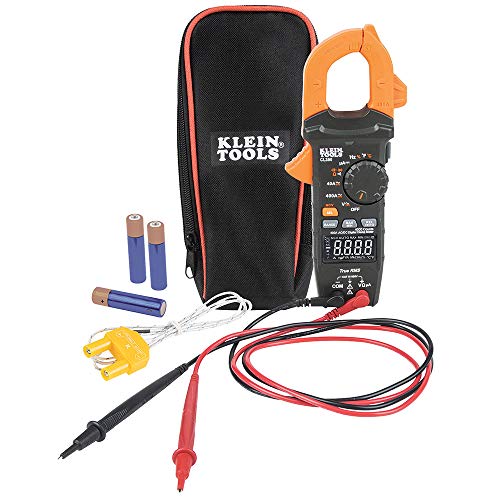
Products shown because their documented specifications fit this guide. Price and availability are on Amazon and can change.
Frequently Asked Questions
Do I need True RMS for household use?
For checking outlets and batteries, no. For anything involving dimmers, LED drivers, variable-speed motors, inverters or measuring current on modern electronics, yes; averaging meters read those wrong.
How wrong can an averaging meter be?
Typically 5 to 40 percent low on distorted waveforms. A square wave reads about 10 percent high; a narrow pulse train can read 40 percent or more low.
Does True RMS matter for DC?
No. DC has no waveform to average. True RMS matters only for AC voltage and current measurements.
Affiliate disclosure: Akermin earns a commission from qualifying Amazon purchases made through links on this page. Our editorial picks are based on documented specifications and owner feedback, not commissions.
Related Guides

Fluke 1AC II VoltAlert Review: Two Detection Thresholds in One Listing
A pocket sized non contact voltage tester whose tip glows red and beeper sounds when voltage is detected, with a continuous self test and a choice of audible or silent operation.
Read More→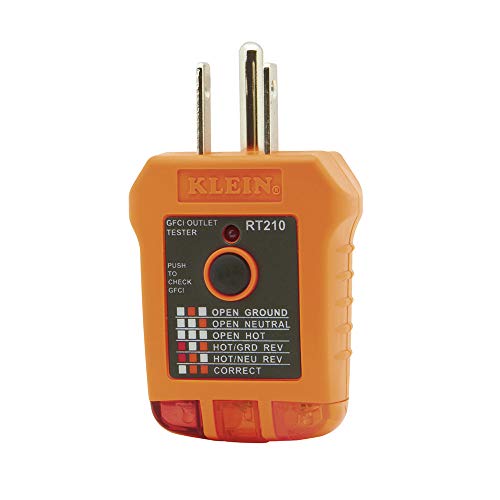
Klein Tools RT210 Review: A Fault Finder That Does Not List Its Faults
A three wire receptacle tester for standard and GFCI North American outlets, specified for 110 to 125 volts AC at 50 or 60 Hz, a 6.6 foot drop and an operating range of 32 to 140 degrees Fahrenheit.
Read More→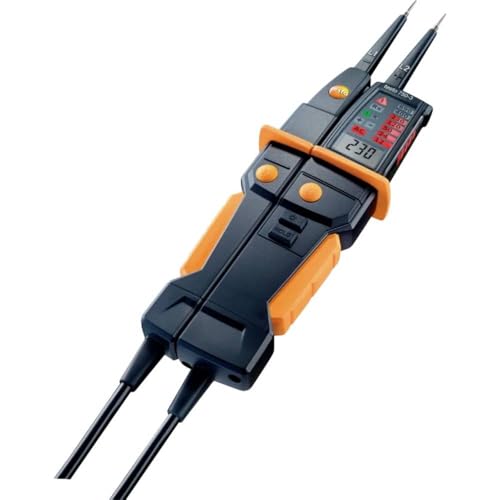
Testo 750-3 Review: Four Bullets, and No Published Category Rating
A two pole voltage tester with a three digit LCD showing measured voltage, a patented LED voltage bar viewable from any angle, polarity detection on DC and a GFCI test function for AC outlets.
Read More→