As an Amazon Associate, Akermin earns from qualifying purchases. Product links on this page are affiliate links.
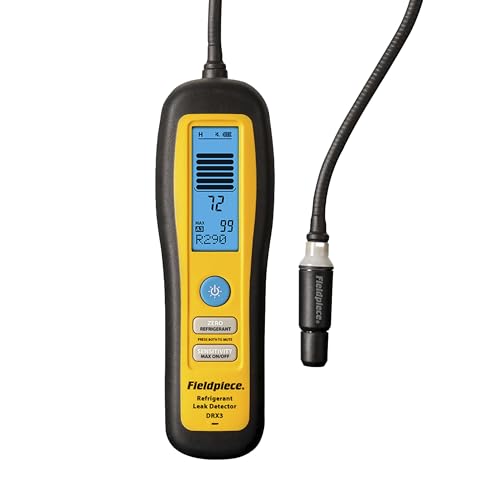
The only product here whose listing explicitly states A3 coverage is the Fieldpiece DRX3 which names A3, A2L and A1 refrigerants alongside combustible gases and uses a field-replaceable heated diode sensor. The Inficon Compass publishes a 0.15 oz./year (4 g/year) sensitivity figure and states it detects all CFCs, HCFCs, HFCs and HFOs, but its listing does not name A3 or A2L, so treat its A3 suitability as unconfirmed until the manufacturer says otherwise. The Inficon Replacement Filter Cartridges is not a detector at all; it is a pack of replacement filter cartridges for Inficon D-TEK instruments, and it matters because a clogged filter is the most common reason a heated diode detector stops responding. The Testo Gas Leak and the Bacharach H-10 are listed by title only, with no published specifications, so they cannot be compared on A3 capability from the data given.
Why A3 changes the detector question
A3 is the ASHRAE safety classification for refrigerants that are highly flammable. That single property reshapes the purchasing decision, because a detector that works fine on R-410A is not automatically acceptable for an A3 system. The instrument has to be rated for the refrigerant class, and the rating has to come from the manufacturer, not from a general claim that the tool detects many refrigerants.
This is where the listings separate. The Fieldpiece DRX3 states plainly that it detects A3, A2L and A1 refrigerants and combustible gases, and it names the sensor as a heated diode that is field-replaceable. That is the complete package a technician needs: a stated A3 capability and a sensor that can be swapped when it drifts or becomes contaminated. The Inficon Compass states that it detects all CFCs, HCFCs, HFCs and HFOs, and publishes a sensitivity of 0.15 oz./year (4 g/year). HFO is the chemical family that includes many A2L and A3 refrigerants, so the coverage claim is broad, but the listing does not use the words A3 or A2L. A buyer who needs documented A3 suitability should ask the manufacturer before relying on a family-level claim. For background on how the classifications differ and why the wording matters, see A2L refrigerant leak detectors explained.
The Testo Gas Leak and the Bacharach H-10 appear here by title only. The Testo Gas Leak is a Testo gas leak detector with no published specifications in the listing. The Bacharach H-10 is a Bacharach H-10 Pro with brand, product number and category, and nothing else. Neither listing gives a sensitivity figure, a sensor type or a refrigerant list, so no A3 claim can be verified from the data provided. They are not wrong tools; they are unstated tools.
What each listing actually publishes
The table below uses only figures and claims that appear in the product data. Where a listing is silent, the cell says so rather than guessing.
| Product | Sensor type | Sensitivity figure | A3 named | Refrigerant coverage as stated | Filter or consumable |
|---|---|---|---|---|---|
| Fieldpiece DRX3 | Heated diode, field-replaceable | Not stated in the listing | Yes | A3, A2L, A1, HC, HFC, HCFC, CFC, HFO, H2/N2 tracer gas, blends, heating gases | Sensor is field-replaceable; batteries are field-replaceable, long-life |
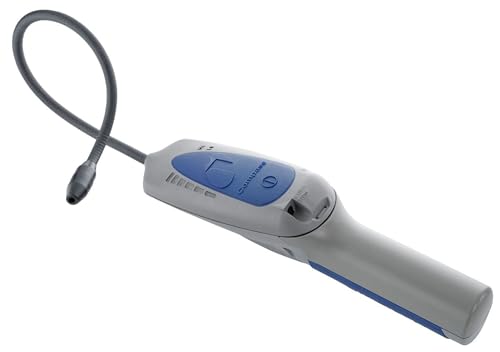
| Inficon Compass | Heated diode | 0.15 oz./year (4 g/year) | Not stated in the listing | All CFCs, HCFCs, HFCs, HFOs | Not stated in the listing |
| Inficon filter cartridges | Not applicable, accessory | Not applicable | Not applicable | Fits D-TEK Stratus, D-TEK3, D-TEK Select | This is the consumable |
| Testo 0632 0336 | Not stated in the listing | Not stated in the listing | Not stated in the listing | Not stated in the listing | Not stated in the listing |
| Bacharach H-10 Pro | Not stated in the listing | Not stated in the listing | Not stated in the listing | Not stated in the listing | Not stated in the listing |
Two facts stand out. First, only one listing names A3. Second, only one listing publishes a sensitivity number at all. That is not a flaw in the products; it is a gap in the listings, and it is the gap a buyer has to work around.
The three tools worth sorting through
Fieldpiece DRX3
The only listing here that names A3 explicitly, with a heated diode sensor you can replace in the field.
Inficon Compass
A heated diode detector with a published 0.15 oz./year (4 g/year) sensitivity figure and broad refrigerant coverage, though A3 is not named.
Inficon Replacement Filter Cartridges
Not a detector, but the consumable that keeps D-TEK Stratus, D-TEK3 and D-TEK Select units reading correctly.
The accessory that decides whether your detector still works
The Inficon Replacement Filter Cartridges looks out of place on a detector page until you understand what a filter cartridge does. A heated diode sensor samples air pulled through the instrument, and that air carries oil mist, moisture, dust and refrigerant decomposition products. The filter sits upstream of the sensor and traps the debris that would otherwise coat the diode. When the filter clogs, the pump starves, the sensor sees less sample, and the detector becomes slow or silent on small leaks. The failure looks like a dead instrument but is usually a blocked consumable.
The listing for the Inficon Replacement Filter Cartridges says it fits the D-TEK Stratus, D-TEK3 and D-TEK Select, that the unit count is one, and it gives the package weight and dimensions. It does not state a service interval, so the honest advice is to check the manufacturer’s schedule rather than invent one. The practical point is that if you run an Inficon D-TEK, this cartridge belongs in your kit alongside the detector. If you run a Fieldpiece DRX3, this cartridge does not fit, and you would source the DRX3 sensor instead, which the listing describes as field-replaceable. Replacement parts are part of the tool, not an afterthought.
Sensitivity numbers, and what a heated diode can and cannot do
The Inficon Compass publishes 0.15 oz./year, which converts to 4 g/year. That is a small leak by any standard, and it tells you the instrument is intended for finding slow losses that a pressure test might miss. The listing also claims no false alarms from soap solutions, which addresses a real annoyance: residual soap, moisture and oils can trigger some sensors, and a detector that ignores them saves time on a wet system.
The Fieldpiece DRX3 publishes no sensitivity figure. That is not a statement that it is insensitive; it is a statement that the listing does not quantify it. Do not assume the two are equal, and do not assume one is better. If the number matters to your work, ask the manufacturer for the Fieldpiece DRX3’s specification before buying.
Heated diode sensors are the traditional choice for refrigerant work because they respond to halogenated gases and can be very sensitive. Their weaknesses are also well known. They can be poisoned by exposure to large refrigerant concentrations, they drift with contamination, and they need periodic replacement or recalibration. That is exactly why a field-replaceable sensor, as described for the Fieldpiece DRX3, and a replaceable filter, as sold for the D-TEK family, are not minor details. They are the difference between a tool that keeps working and one that gets retired early. For a broader treatment of sensor types, see heated diode refrigerant leak detectors.
Where these detectors stop being the right answer
A refrigerant leak detector finds leaks. It is not a combustible gas alarm, and it is not a substitute for one. The Fieldpiece DRX3 detects combustible gases as well as refrigerants, but the listing describes a handheld leak detector, not a fixed alarm with relay outputs and continuous monitoring. If you need to protect an occupied space from an A3 leak while nobody is watching, a handheld sniffer is the wrong shape of instrument. You need a fixed detection system rated for the refrigerant and the room volume, and that is a different purchase.
There is also a classification trap. A detector rated for A2L is not automatically rated for A3. A2L refrigerants are mildly flammable; A3 refrigerants are highly flammable. Some instruments cover both, some cover only A2L, and the listing is the only place to confirm which. The Fieldpiece DRX3 names both classes. The Inficon Compass does not name either. If your work is A3-specific, that difference is the whole decision.
Finally, a leak detector does not replace a pressure test, a nitrogen pressure hold, or an evacuation and recharge procedure. It narrows the search. The repair still has to be verified by other means. For a wider view of the category, see refrigerant leak detectors and how to test a refrigerant leak detector before use.
Recommended Tools

Products shown because their documented specifications fit this guide. Price and availability are on Amazon and can change.
Frequently Asked Questions
Which of these detectors is actually rated for A3 refrigerant?
Only the Fieldpiece DRX3 states A3 coverage in its listing. The Inficon Compass states broad HFO coverage but does not name A3 or A2L, so its A3 rating is not confirmed by the supplied data. The Testo Gas Leak and the Bacharach H-10 publish no refrigerant list at all. If A3 is a requirement, the Fieldpiece DRX3 is the only one you can verify from the listing alone.
Is the Inficon Replacement Filter Cartridges a leak detector?
No. The Inficon Replacement Filter Cartridges is a pack of replacement filter cartridges for Inficon D-TEK Stratus, D-TEK3 and D-TEK Select detectors. It is included here because a clogged filter is a common cause of a detector losing sensitivity, so it belongs in the same kit as the instrument.
What does 0.15 oz./year mean in practical terms?
It is a sensitivity figure of 4 grams per year, which is a very small leak rate. A detector with that figure is intended to find slow losses that a short pressure test might not reveal. The Fieldpiece DRX3 does not publish a comparable figure, so the two cannot be ranked on sensitivity from the listings.
Can I use a heated diode detector on A3 refrigerant safely?
Only if the manufacturer rates the instrument for A3. The sensor technology itself is not the issue; the rating is. A heated diode draws a sample into the instrument and the instrument must be designed and certified for the refrigerant class. The Fieldpiece DRX3 states A3 capability. For the Inficon Compass, ask the manufacturer before use on A3.
Do I need to replace the sensor or filter regularly?
The listings do not publish service intervals, so no interval can be quoted from the data given. What the listings do say is that Fieldpiece DRX3 has a field-replaceable sensor and that Inficon Replacement Filter Cartridges is a replaceable filter for the D-TEK family. Both are consumables by design, which tells you replacement is expected at some point.
Why do two products have no specifications listed?
the Testo Gas Leak and the Bacharach H-10 appear in the source data with title-level information only. The Testo Gas Leak gives a brand, model and product name. The Bacharach H-10 gives a brand, product number and category. Neither publishes sensor type, sensitivity, refrigerant coverage or A3 status, so nothing beyond the name can be compared. They are not excluded because they are unsuitable; they are excluded from the comparison because the listings do not publish the data needed to compare them.
Affiliate disclosure: Akermin earns a commission from qualifying Amazon purchases made through links on this page. Our editorial picks are based on documented specifications and owner feedback, not commissions.