Best Hygrometers for Indoor Plants: 6 Picks for Air Humidity and Soil Moisture
Search for a plant hygrometer and you get two unrelated products. One measures the humidity of the air around the leaves. The other measures water in the soil around the roots. Both matter, neither substitutes for the other, and buying the wrong one is the commonest mistake here.
As an Amazon Associate, Akermin earns from qualifying purchases. Product links on this page are affiliate links.
Our Top Picks
Instruments were separated into air hygrometers and soil moisture probes, then compared on the accuracy each listing states, refresh interval, whether high and low values are retained, probe length for soil meters, and how many units are supplied. We did not run laboratory tests and publish no measurements of our own.
Best Overall
TempPro TP50 Digital Hygrometer
Published accuracy, a 10 second refresh and high and low records in a plant room.
Air hygrometers and soil moisture meters measure completely different things. Neither tells you anything about the other, and a plant collection usually needs both.
How to Choose a Plant Humidity Instrument
Start by working out which of two unrelated problems you actually have.
Leaf Tips Mean Air, Roots Mean Soil
Crisp brown edges and curling usually point to dry air. Yellowing, wilting and soft stems usually point to the water in the pot. Different symptoms, different instrument.
Highs and Lows Explain Overnight Damage
Heated rooms dry out sharply at night and recover by day. A meter that only shows the current value misses the four hours that did the damage.
Soil Probes Read a Relative Scale
The dial is not a moisture percentage. It responds to the electrical properties of the soil, which fertiliser salts also affect. Use it to compare the same pot over time.
Do Not Leave the Probe in the Pot
One listing here states a five minute limit. The metal corrodes in damp compost, which shifts the reading and eventually ruins the meter.
Check the Top of the Range for Enclosures
Propagators and terrariums sit above 90 percent RH. A hygrometer that stops short of that pegs at its limit and stops being useful.
Several Cheap Meters Beat One Good One
Humidity varies hugely between rooms in the same house. Mapping that is more valuable than a tighter accuracy figure in a single spot.
Is a plant hygrometer the same as a soil moisture meter?
No, and this is the central confusion in the category. A hygrometer measures water vapour in the air around the leaves. A soil moisture meter measures water in the growing medium around the roots. They answer different questions and a plant collection usually needs both.
Which one do brown leaf tips point to?
Usually dry air rather than dry soil, particularly in winter when heating is running. Crisp brown edges and curling on tropical foliage are the classic low humidity symptom. Wilting, yellowing and soft stems more often relate to watering.
What humidity do houseplants need?
It depends entirely on the species, and recommended bands are wide. Tropical foliage plants are generally described as preferring higher humidity than a heated home provides in winter, while succulents and cacti do not. Look up the species rather than adopting a single number for a mixed collection.
Why does my soil meter read wet in dry soil?
Commonly because of fertiliser salts, which increase the electrical conductivity the meter responds to, or because the probe is touching a wet root or sitting in a compacted pocket. Take readings in two or three places in the pot rather than one.
Can I leave a soil probe in the pot permanently?
No. One listing here states a five minute limit explicitly. The metal corrodes in damp compost, which changes the reading over time and eventually destroys the meter. Insert, read, withdraw and wipe it.
Do misting and pebble trays actually raise humidity?
A hygrometer is how you find out, and the honest answer for most homes is that the effect is small and short lived. Place a meter next to the plant before and after, and if the number barely moves you have saved yourself a daily chore.
Reviews
TempPro TP50 Digital Hygrometer Best Overall
This is the only air hygrometer here that publishes an accuracy figure, and for plants that matters more than it does for a living room. Tropical foliage plants are frequently recommended humidity bands rather than single targets, and a meter with an unknown error could put you a long way outside a band you believe you are hitting.
The high and low memory is the feature that actually diagnoses plant problems. Air humidity in a heated house does not sit still: it collapses overnight when the heating runs and recovers during the day. A live reading taken at noon tells you nothing about the four hours of very dry air that crisped the leaf tips. The listing also names greenhouses directly as a use case for its refresh rate, which is fair, because a glasshouse swings faster than a room.
Strengths
Accuracy published for both humidity and temperature
High and low retained, which explains overnight damage
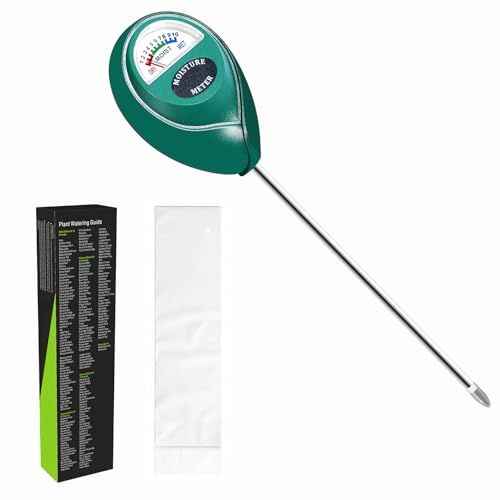
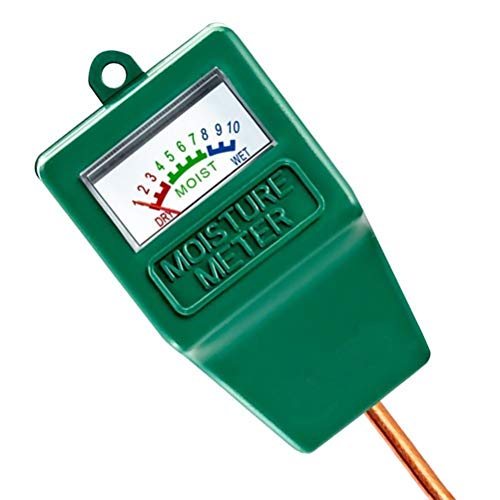
The single most useful thing about a soil probe is that it reads at depth. Pushing a finger into compost tells you about the top two centimetres, which dries first and fastest and is the least representative part of the pot. Roots live lower down, and in a large pot the difference between the surface and the root zone can be the difference between bone dry and soaking.
No battery is the other quiet advantage. A plant tool that lives in a windowsill tray and gets used once a week is exactly the kind of device whose battery is always flat. This one works by measuring the electrical properties of the soil directly and moving a needle, so it works whenever you pick it up. Two cautions apply to every meter of this type: do not leave the probe in the soil, because the metal corrodes, and treat the dial as a relative guide rather than a calibrated percentage.
Strengths
Reads the root zone, not the surface
No batteries to go flat
Instant reading with a clear ten point dial
Very inexpensive
Limitations
Relative scale, not a calibrated moisture percentage
Probe corrodes if left in the pot
Readings are affected by fertiliser salts in the soil
XLUX Long Probe Soil Meter, 2 Pack Best for Large Pots
Standard soil probes are sized for small pots, and in a floor-standing planter holding a fiddle leaf fig or a large monstera they simply do not reach the roots. A probe more than five inches longer solves a genuine problem rather than an imagined one, and two in a pack means one can live upstairs and one downstairs.
The listing also does something creditable: it states plainly that the meter should not be left in the soil for more than five minutes because the metal tip degrades. Every probe of this type has that limitation and most listings omit it. Treat it as a measuring tool you insert, read and withdraw, not a sensor you install.
ANFBYOH Mini Hygrometers, 6 Pack Best for Several Rooms
Humidity varies enormously within a single home, and plant owners discover this the hard way when the same species thrives in the bathroom and fails in the living room. Six meters lets you map that instead of guessing: one per room, one in the propagation box, one in a terrarium, and the picture appears within a day.
The stated 5 percent relative humidity accuracy is honest for this price and sets the right expectation. It means a reading of 55 could be 50 or 60, which is fine for deciding that one room is much drier than another and not fine for chasing a five point target. Six meters also give you a free cross-check: put them together on a table for an hour and note how far apart they sit before you separate them.
A single probe rather than a twin fork makes insertion easier in dense or root-bound compost, where a two-prong meter tends to lever rather than push. For a collection of established houseplants whose pots are full of roots, that is a practical difference.
Beyond that this is a straightforward instrument doing one thing. There is no display to interpret, no battery, and nothing to configure. The same caveats apply as to every soil meter: the scale is relative rather than a percentage, fertiliser salts raise the apparent reading, and the probe should not be stored in the pot. Used as a weekly check before watering, it prevents the single most common way houseplants die.
Strengths
Single probe pushes into root-bound compost easily
JEDEW Thermo-Hygrometer, 2 Pack Best for Terrariums
The published range up to 99 percent relative humidity is what makes this relevant to enclosed growing. A propagation box, a terrarium or a humidity tent routinely sits above 90 percent, and a meter whose range stops earlier simply pegs at its limit and stops being informative.
The 24 vent design is a reasonable response to the other problem in an enclosure, which is that a sealed sensor housing responds slowly to a change in air that is already saturated. Two units let you put one inside the propagator and one in the surrounding room, which is exactly the comparison that tells you whether the enclosure is doing anything.
Short answer: the TempPro TP50 is the best air hygrometer here because it publishes accuracy and retains highs and lows, which is what explains overnight leaf damage; the XLUX soil meter is the best pot probe because it reads the root zone and needs no battery; and most plant owners with a real problem need one of each rather than two of either.
Two instruments, two different problems
Type plant hygrometer into a search box and the results mix air meters with soil probes as though they were interchangeable. They are not related at all. A hygrometer reports how much water vapour is in the air, which affects transpiration through the leaves. A soil moisture meter reports how much water is held in the growing medium, which affects the roots. A plant can sit in soaking compost in desert-dry air, or in a saturated bathroom with a bone dry pot, and each combination kills in a different way.
Reading the symptoms before buying
The plant usually tells you which instrument you need. Crisp brown leaf tips and edges, curling, and a general crisping that starts at the margins point to air that is too dry, which is overwhelmingly a winter problem caused by heating. Yellowing lower leaves, soft stems, wilting despite damp compost and a sour smell point to the pot, which is usually too much water rather than too little. Buy the instrument that matches the symptom, and only add the second one when you want the full picture.
Why the overnight number is the one that matters
Air humidity in a heated home is not stable. It falls sharply when the heating runs and recovers when it stops, which means the four driest hours of the day frequently happen while everyone is asleep. A meter checked at lunchtime will report a perfectly reasonable figure and miss the period that actually damaged the leaves. This is why a high and low memory is the single most useful feature on a cheap hygrometer, and why the TempPro earns its place here despite being an ordinary looking device.
Soil meters measure conductivity, not water
It is worth understanding what a battery-free soil probe actually does, because it explains its limitations. The metal probe and the soil form part of an electrical circuit, and the meter responds to how readily current passes. Water increases conductivity, which is why it works. So does dissolved fertiliser, which is why a freshly fed pot can read wetter than it is, and so does salt build-up in old compost. The dial is a relative guide for one pot over time rather than a calibrated moisture percentage, and reading in two or three spots in the same pot is more reliable than one confident jab.
Enclosures need a meter that reaches the top of the scale
Propagators, terrariums and humidity tents routinely run above 90 percent relative humidity, and a meter whose published range stops short of that simply pegs and stops telling you anything. The JEDEW listing publishing a 10 to 99 percent range is the reason it appears here. If you are propagating, put one meter inside the enclosure and one in the surrounding room, because the difference between the two is the only measurement that tells you whether the cover is doing its job. For the wider category see the digital hygrometer roundup, and if you run a glasshouse with carbon dioxide enrichment, greenhouse CO2 monitors covers that side.
How We Research
Instruments were separated by what they actually measure, then compared on published accuracy and range, refresh interval, high and low retention, probe length and construction for soil meters, power requirements and the number of units supplied. Soil moisture meters are included alongside hygrometers because this search returns both and buyers are frequently choosing between them without realising they are different measurements. We did not run laboratory tests and publish no measurements of our own.
Five WiFi and LoRa freezer alarms compared on stated probe accuracy, how many alert channels they use, whether they warn you when the hub itself goes offline, and how they handle defrost cycles.
Six loggers split between single-use shipment recorders and reusable units, compared on stated accuracy at cold temperatures, memory depth, calibration certificates and how the report is retrieved.
Six temperature and humidity loggers judged on the things conservation actually needs: a replaceable humidity sensor, a calibration certificate, long unattended runtime and a record somebody else can read.