As an Amazon Associate, Akermin earns from qualifying purchases. Product links on this page are affiliate links.
A salt test works by sealing a saturated salt solution in a small air space and letting it hold a known relative humidity. At room temperature, pure sodium chloride holds about 75 percent RH. If your hygrometer reads 75 percent plus or minus its own stated accuracy, the sensor is behaving. If it reads far outside that, the sensor is suspect. The test is worth running once when you unbox a hygrometer, and again if readings stop matching your senses. It is not a substitute for a calibrated reference, it does not check temperature, and it cannot tell you whether the wall you are measuring is wet. For that last question you need a moisture meter, not a hygrometer.
The physics inside the jar: why a salt and water mixture holds a fixed humidity
A saturated salt solution in a sealed container reaches an equilibrium with the air above it. The salt crystals and the dissolved salt set the amount of water vapour the air can hold at that temperature. The result is a relative humidity that depends on the salt and the temperature, and very little else. Sodium chloride, ordinary table salt, holds roughly 75 percent RH at normal room temperatures. Magnesium chloride holds about 33 percent. Potassium carbonate holds about 43 percent. These are standard reference points published in physical chemistry tables, and they are what makes the salt test possible without a laboratory.
The mechanism is worth understanding because it explains the test’s limits. The equilibrium is temperature dependent. At 20 degrees Celsius sodium chloride sits near 75.5 percent RH; at 25 degrees it sits near 75.3 percent. The change is small enough that a home test can ignore it. But the equilibrium also needs time. A small sensor in a small jar may settle in a few hours; a larger chamber or a slower sensor may need longer. The listing for a typical consumer hygrometer such as the Temtop S1+ air quality monitor states that it tracks humidity in real time, but it does not publish a response time, so you cannot know from the listing how quickly its sensor will follow the jar. That is one reason the test is a check rather than a calibration.
There is a second reason. A salt test gives you one point on the curve. A hygrometer’s error is not necessarily the same at 30 percent RH as at 75 percent RH. A sensor that reads correctly at 75 percent may still be several points out in a dry basement. The test is a sanity check, not a full calibration curve.
Running the test without fooling yourself
The common mistakes in a home salt test are procedural, not chemical. Use a clean container with a tight lid. A glass jar with a rubber seal is better than a plastic tub with a snap lid, because the seal matters more than the volume. Put a small amount of salt in a shallow dish or a bottle cap, add just enough distilled water to make a slushy paste, and place the dish in the jar. Do not put the salt directly on the bottom of the jar where the sensor might touch it. Put the hygrometer in the jar so its sensor opening is exposed to the air, not buried in the salt or resting against the wall.
Seal the jar and leave it alone. The listing for the Govee WiFi thermometer hygrometer H5179 states that it refreshes every two seconds, which tells you how often the display updates, not how fast the sensor equilibrates. Give the jar at least six hours, and overnight is safer. Read the display without opening the jar, or use an app if the hygrometer has one. Opening the jar to look resets the test.
Record the reading and the room temperature. If the room is unusually cold or hot, note it, because the reference humidity shifts slightly with temperature. Then compare the reading to the expected value for your salt. For sodium chloride at ordinary room temperature, that is about 75 percent RH. A reading within a few points is normal for a consumer sensor. A reading 10 points away is a warning. A reading that is wildly different, say 40 percent or 90 percent, suggests a failed sensor or a leaky jar.
| Salt | Approximate RH at room temperature | What it is useful for |
|---|---|---|
| Sodium chloride (table salt) | 75 percent | General check of a hygrometer in the normal indoor range |
| Magnesium chloride | 33 percent | Checking behaviour in dry conditions |
| Potassium carbonate | 43 percent | Checking behaviour in the middle-dry range |
| Potassium sulphate | 97 percent | Checking near saturation, rarely needed at home |
The table is a guide to the chemistry, not a claim about any product. If your hygrometer’s listing publishes an accuracy figure, compare the result to that figure. The Govee H5179 listing states humidity accuracy of plus or minus 3 percent RH. A reading within 3 points of 75 percent is within the manufacturer’s own tolerance. A reading 6 points out is outside it, and the sensor is either faulty or the test was flawed.
What the salt test cannot tell you, and the mistake that follows
The salt test answers one question: does this hygrometer read close to a known humidity at one temperature? It does not answer whether the hygrometer is suitable for the job you bought it for. The most common mistake is to use a hygrometer as a damp detector. A hygrometer measures the water vapour in the air. It does not measure the water content of a wall, a floor or a piece of timber. A room can read 55 percent RH while the plaster behind a skirting board is saturated. If you are investigating a damp patch, a musty smell or a stained ceiling, the instrument you need is a moisture meter, and the difference is explained in protimeter versus hygrometer.
The second mistake is to treat a salt test as a calibration certificate. It is not. A calibration is a documented comparison against a reference that is itself traceable to a standard, with an uncertainty statement. A salt test is a home check with an unstated uncertainty, a jar that may leak, and a sensor that may not have equilibrated. It is useful, but it is not evidence you can put in a report.
The third mistake is to test once and forget. Sensor drift is real. A hygrometer that passed a salt test when new may drift after a season in a damp basement or a dry attic. The test is cheap and repeatable, so repeating it periodically is sensible. The broader question of whether a hygrometer is accurate enough to be worth owning at all is covered in is a hygrometer accurate.
There is also a category error that catches buyers of multi-function monitors. A device that reports PM2.5, AQI, temperature and humidity, such as the Temtop S1+, is an air quality monitor with a humidity channel, not a dedicated hygrometer. Its humidity sensor may be perfectly adequate for comfort monitoring and still not be the right instrument for a conservation store or a wine cellar. The listing does not publish a humidity accuracy figure for the S1+, so you cannot compare it to a salt test result in the way you can with a device that does publish one.
When a salt test is the right tool, and when it is not
Run a salt test when you have a new hygrometer and want to know whether it is roughly sane before you rely on it. Run it when a hygrometer’s readings stop matching your experience, for example when it says 70 percent in a room that feels dry, or 30 percent in a room where condensation is running down the windows. Run it when you are comparing two hygrometers and want to know which one to trust. The procedure is cheap, it uses materials you already have, and it catches gross faults.
Do not run a salt test as a substitute for a calibrated reference when the reading matters professionally. If you are monitoring a museum store, a pharmaceutical cabinet or a food storage area, you need a hygrometer with a stated accuracy and a calibration route, and you need to follow that route. A salt test does not produce a calibration certificate.
Do not run a salt test to diagnose damp. A hygrometer reading of 65 percent RH in a bedroom is a comfort observation. It is not a diagnosis of rising damp, a leaking pipe or a bridged damp course. Those are moisture-content questions, and the instruments that answer them are covered in what a hygrometer means and in the comparison linked above.
Do not run a salt test on a device that does not let you see the reading while it is sealed. A hygrometer with no app and no display visible through the jar is awkward to test. A device with app logging, such as the GoveeLife 2.0 WiFi hygrometer with gateway or the Govee Smart Bluetooth thermometer hygrometer H5074, lets you seal the jar and read the result from your phone. The H5074 listing states 20-day on-board data storage, which means you can leave it sealed overnight and read the curve afterwards. That is a genuine convenience for this specific task, not a claim that the sensor is more accurate.
Reading the result: what counts as a pass
There is no universal pass mark. The pass mark is the accuracy the manufacturer publishes for the device, or, if the listing is silent, a judgement about what the reading is for. A device with a stated accuracy of plus or minus 3 percent RH that reads within 3 points of the salt reference is behaving as specified. A device that reads 8 points out is not, and you should treat its readings with suspicion or return it.
If the listing does not publish an accuracy figure, you are in weaker territory. You can still say whether the reading is grossly wrong, but you cannot say whether a 5-point error is within specification. This is one reason to prefer a hygrometer that publishes its accuracy. The Govee H5179 and the GoveeLife 2.0 both state plus or minus 3 percent RH, and the H5074 states the same. The Temtop S1+ listing does not publish a humidity accuracy figure, so a salt test on that device can only tell you whether it is roughly in the right region.
Temperature matters a little. If your room is at 25 degrees Celsius, sodium chloride holds about 75.3 percent RH; at 20 degrees it is about 75.5 percent. The difference is smaller than the accuracy of most consumer sensors, so you can ignore it for a home test. If you are testing in a cold garage in winter, the shift is larger and the test is less reliable. Bring the jar indoors and let it settle at room temperature before you read it.
The result is a data point, not a verdict. If the reading is close, you have reasonable confidence in the sensor at that humidity. If it is far, you have a reason to investigate. Either way, the test has done its job. The question of whether the hygrometer is worth owning at all is a separate one, covered in is a hygrometer worth it.
A note on the instruments named here
The products named in this article are named because they illustrate a point about the test, not because they are recommendations for it. The Govee H5179, the GoveeLife 2.0 and the Govee H5074 all publish a humidity accuracy of plus or minus 3 percent RH, which makes them easy to judge against a salt test result. The Temtop S1+ does not publish a humidity accuracy figure in its listing, which makes the same judgement harder. None of these listings states that the device has been calibrated against a salt reference, and none of them ships with a calibration certificate. A salt test is something you do, not something the manufacturer has done for you.
If you want to go deeper into the general procedure, how to test a hygrometer covers the practical steps in more detail. If you are trying to decide whether your readings are good enough for your purpose, the accuracy discussion linked above is the place to start.
The short version
A salt test is a cheap, repeatable check that catches gross faults in a hygrometer at one humidity point. It is not a calibration, it does not check temperature, and it cannot tell you whether a wall is wet. Run it when you unbox a device or when readings stop making sense. Do not run it as a substitute for a calibrated reference when the reading matters professionally, and do not confuse it with a moisture meter when the question is damp.
Frequently Asked Questions
How long should I leave a hygrometer in the salt jar?
At least six hours, and overnight is safer. The sensor needs time to equilibrate with the air in the jar, and the jar needs time to reach a stable humidity. A device that refreshes every two seconds, such as the Govee H5179, updates its display quickly but that does not mean the sensor has settled. Read the value after the jar has been sealed and undisturbed for several hours.
My hygrometer reads 80 percent in the salt test. Is it broken?
Not necessarily. Sodium chloride holds about 75 percent RH at room temperature, so a reading of 80 percent is 5 points out. If the device publishes an accuracy of plus or minus 3 percent RH, that is outside specification and worth investigating. If the listing does not publish an accuracy figure, you cannot say whether 5 points is acceptable. Check the seal on the jar and the temperature of the room before concluding the sensor is faulty.
Can I calibrate my hygrometer with a salt test?
You can adjust it if it has a calibration offset function, but the result is not a calibration in the metrological sense. A salt test gives you one reference point with an unstated uncertainty. A true calibration compares the device against a traceable reference across its range and produces a certificate. For home comfort monitoring, a salt test is enough to decide whether to trust the device. For professional monitoring, it is not.
Does the salt test check temperature as well?
No. The salt test checks the humidity sensor only. Temperature accuracy is a separate specification, and the listings that publish it, such as the Govee H5179 with plus or minus 0.54 degrees Fahrenheit, state it separately. If you need to check temperature, you need a different reference, such as an ice bath for the lower end or a calibrated thermometer.
Why does my hygrometer read differently in the jar than in the room?
Because the jar is a different environment. The salt solution holds the air in the jar at a fixed humidity, which is usually higher than a dry room. That is the point of the test. If the reading in the jar is close to the expected value for the salt, the sensor is responding correctly. If it is not, the sensor or the test procedure is suspect.
Can a salt test tell me if my basement is damp?
No. A salt test tells you whether the hygrometer is reading correctly. It does not tell you whether the basement is damp. A hygrometer measures the water vapour in the air, not the water content of the walls or floor. If you suspect damp, you need a moisture meter, and the difference is explained in the comparison linked above.
Related Guides
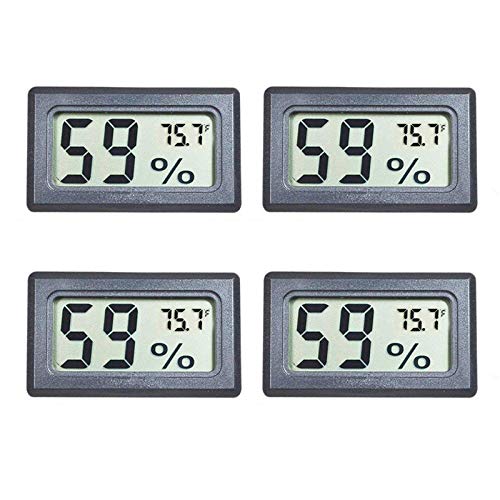
Veanic 4-Pack Mini Indoor Temperature Humidity Meter Review
A close look at the Veanic 4-pack mini humidity and temperature gauge, what its stated accuracy can and cannot support, and where it stops being the right instrument.
Read More→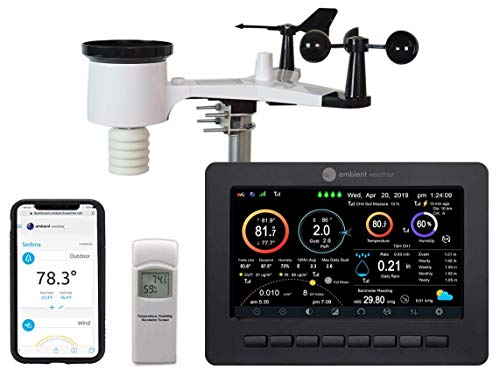
Ambient Weather WS-2000 Review: The First Hour and the First Believable Reading
A first-hour walkthrough of the Ambient Weather WS-2000, covering what the listing states, what it leaves out, and how to reach a first believable reading.
Read More→
EHDIS Manometer Review: A Dual-Port Differential Pressure Meter
A mechanism-first review of the EHDIS dual-port digital manometer, its stated accuracy, and the jobs it does and does not suit.
Read More→