As an Amazon Associate, Akermin earns from qualifying purchases. Product links on this page are affiliate links.
Your hygrometer is probably accurate to within about three percentage points of relative humidity, because that is the figure consumer sensors publish, and it is a wider window than most people picture when they read 45 percent off a screen. A display showing 45 percent is honestly reporting anything from 42 to 48 percent, and that is before drift, settling time and where you hung it. The only way to turn a guess into knowledge is a reference check, and a saturated salt environment gives you one verified point using nothing but table salt, water and a sealed bag.
What plus or minus 3 percent RH actually permits
The specification is written in points of relative humidity, not as a percentage of the reading. That distinction matters. Three percent of a 70 percent reading would be about two points; three percentage points is three points whether the air is at 20 percent or 80 percent. So the permitted window is a constant six points wide across the whole scale.
That is the figure on the mainstream sensors. The Govee H5179 states humidity accurate to plus or minus 3 percent RH and temperature to plus or minus 0.3 degrees Celsius, with a Swiss made sensor refreshing every two seconds. The smaller Govee H5074 states the same plus or minus 3 percent RH alongside temperature to plus or minus 0.54 degrees Fahrenheit. Where no figure appears at all you have no claim to work with: the Temtop S1plus puts humidity on its display next to particulate and temperature, but a humidity accuracy figure is Not stated in the listing bullets, so there is nothing to verify the sensor against except your own reference check.
Here is what the six point window does to a decision. Suppose you are holding a case between 65 and 72 percent RH.
| Displayed reading | Honest range at plus or minus 3 points | Inside a 65 to 72 percent target? |
|---|---|---|
| 62 percent | 59 to 65 percent | Probably not, act |
| 66 percent | 63 to 69 percent | Yes, with a little room below |
| 70 percent | 67 to 73 percent | Yes, with a little room above |
| 74 percent | 71 to 77 percent | Possibly already too damp |
Only the middle two readings give you a clear answer. At 62 and at 74 the specification alone cannot tell you which side of the line you are on, which is the whole argument for checking the offset rather than trusting the number.
The salt test, and what a single point check can and cannot prove
A saturated salt solution holds the air above it at a fixed relative humidity that depends on the salt, not on how much water you used. Sodium chloride holds roughly 75 percent RH at normal room temperature, shifting by a fraction of a point across the range of temperatures a kitchen sees. Magnesium chloride holds roughly 33 percent, which gives you a second point down in the dry half of the scale.
The method is a slurry, not a solution: enough salt that undissolved crystals remain visible, dampened until it looks like wet sand. Seal it with the hygrometer in a rigid container or a zip bag, leave it alone for eight to twelve hours, and read the display through the bag without opening it. Opening the bag floods it with room air and restarts the clock. Our walkthrough of how to calibrate a hygrometer covers the container choices and the common mistakes.
What the result proves is narrow and worth being clear about. It tells you the error at one humidity, at one temperature, approached from one direction. It does not tell you the error at 40 percent, it does not reveal hysteresis, and it does not measure response time. A sensor that is dead on at 75 percent can still read four points low at 30 percent, because the relationship between water uptake in the polymer film and measured capacitance is not a straight line.
Placement errors that dwarf the sensor specification
Relative humidity is relative to temperature, which means a correct sensor in the wrong spot produces a wrong answer about the room. Air at 20 degrees Celsius and 50 percent RH has a dew point near 9 degrees. Put the sensor against a cold external wall at 12 degrees and the thin layer of air it is actually sampling can sit near 80 percent RH. The sensor is not broken. It is reporting the microclimate you asked it about.
The common placement faults, in rough order of how much damage they do:
- Flat against an external wall. In cold weather this reads high by tens of points, not by the three the specification allows.
- In direct sun. Solar gain warms the sensor above the room, which drives the relative humidity reading down sharply even though the water content of the air has not changed.
- In the airflow from a vent, radiator or dehumidifier. You are measuring the appliance, not the room.
- On the floor or at ceiling height. Vertical gradients of five to ten points in a tall or poorly mixed room are normal.
- Inside a closed cupboard or case, read within minutes of closing it. The enclosure needs hours to settle, and the sensor needs to settle with it.
A two second refresh rate encourages the wrong instinct here. The number changes quickly, so it looks like the measurement has kept up. It has not. The display is fast and the physics is slow.
Two hygrometers disagreeing is not proof that either is broken
The most common reason people start doubting a hygrometer is that they bought a second one and it showed a different number. Work the arithmetic before replacing either. Two sensors each permitted three points can sit six points apart and both be correct. Place them a metre apart in a room with a real gradient and you can add a few more points of genuine difference on top.
The useful test is to put both units side by side, touching, for at least an hour, and only then compare. A persistent gap that survives that treatment is informative. A gap recorded two minutes after unboxing one of them is not. Multi sensor sets make this easy to check, since the units are identical: a gateway paired set reports several nominally matched sensors to one app, so any spread you see between them is the spread between units of the same model under the same specification. Our notes on the Jedew hygrometer and the Allsun thermometer hygrometer go through what each listing does and does not publish about its sensor.
Deciding whether the reading is good enough for the job
Match the effort to the consequence of being wrong.
- General comfort and condensation awareness. The bare specification is fine. You are watching for movement from 40 to 65 percent, and three points of error never changes what you do.
- Mould risk decisions around 60 to 70 percent. Run one salt check so you know the sign and size of the offset, because here three points genuinely moves the decision.
- Humidors, instrument cases, archival storage. Verify at a point close to your target, not just at 75 percent, and re-verify annually. Record the offset on a label stuck to the unit.
- Anything where you are controlling to a band narrower than six points. Accept that a consumer sensor cannot resolve that band on its own, and either verify it against a reference or widen the band.
The honest summary is that a hygrometer is an excellent trend instrument and a mediocre absolute one straight out of the box. One afternoon with a bag of salt converts it into a decent absolute one, and a sensible mounting position does more for the reading than any specification on the listing.
Frequently Asked Questions
Does the salt test calibrate a hygrometer or only check it?
It only checks it unless the unit has a calibration adjustment, and most consumer units do not. What you get is an offset: if the display settles at 71 percent in a saturated sodium chloride environment that should sit near 75 percent, the sensor reads about four points low and you subtract that offset mentally from every future reading. A few hygrometers aimed at humidor owners have a recessed screw or a button sequence that writes the offset into the unit itself.
How long should a hygrometer sit before the reading is trustworthy?
Allow at least thirty minutes after moving it between rooms and several hours after moving it between very different humidity levels. A display refresh of two seconds tells you how often the number on the screen is redrawn, not how fast the sensing film reaches equilibrium with the air around it. Those are two completely different time constants and listings only ever publish the first one.
Can a hygrometer be right at one humidity and wrong at another?
Yes, and this is why a single point check is only a single point. Capacitive humidity sensors are not perfectly linear across the full scale, and they show hysteresis, meaning the reading at 60 percent approached from dry air differs slightly from the reading at 60 percent approached from damp air. A second reference point near the humidity you actually care about is worth more than a perfect result at 75 percent.
Is plus or minus 3 percent RH a good specification?
For comfort monitoring, condensation risk and plant care it is more than enough. For a cigar humidor targeting a narrow band, or a case holding a wooden instrument, it is marginal: the permitted error is comparable to the whole target window, so you want a verified offset rather than a bare specification. Laboratory reference hygrometers reach a few tenths of a percentage point and cost accordingly in complexity and calibration overhead.
Why do two hygrometers in the same room disagree?
Usually because both are correct. Two units each permitted three points of error can legitimately differ by six points while both remain inside specification. Add a genuine gradient across the room, different settling times and the warmth of nearby electronics, and an eight point gap between two working sensors is unremarkable.
Related Guides

Gain Express USB Temperature Data Logger Review: One Trade-off Decides the Job
A three-channel USB data logger with 16,000-record storage and built-in reporting software, reviewed around the Windows dependency that shapes ownership.
Read More→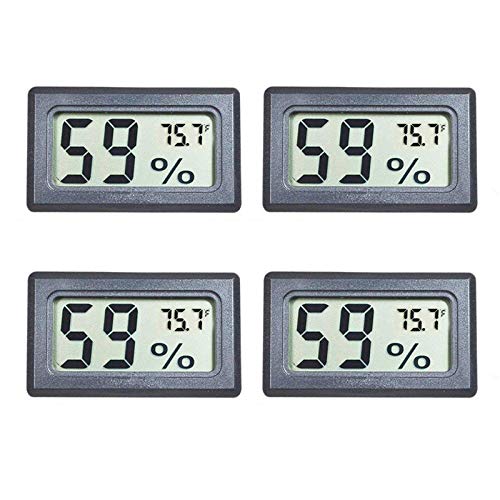
Veanic 4-Pack Mini Indoor Temperature Humidity Meter Review
A close look at the Veanic 4-pack mini humidity and temperature gauge, what its stated accuracy can and cannot support, and where it stops being the right instrument.
Read More→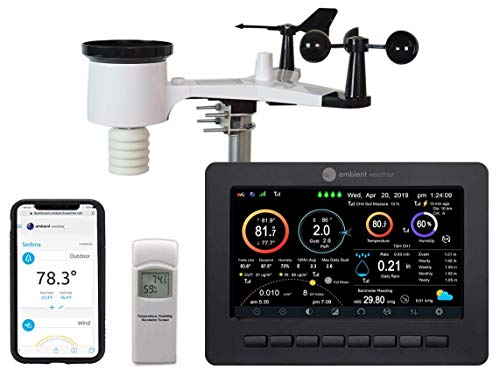
Ambient Weather WS-2000 Review: The First Hour and the First Believable Reading
A first-hour walkthrough of the Ambient Weather WS-2000, covering what the listing states, what it leaves out, and how to reach a first believable reading.
Read More→