As an Amazon Associate, Akermin earns from qualifying purchases. Product links on this page are affiliate links.
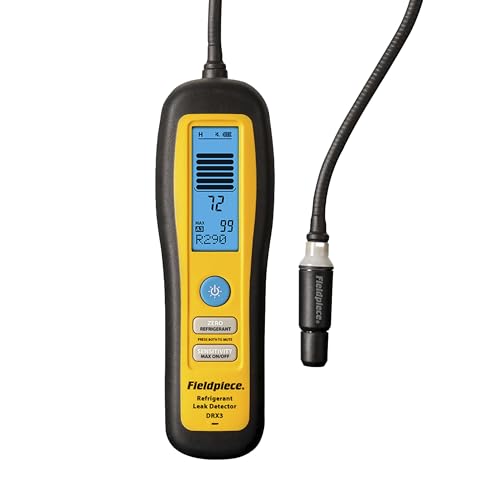
For furnace service, the Fieldpiece DRX3 Refrigerant and Combustible Gas is the pick if you also do refrigerant work, because its heated diode sensor covers combustible gases and A3, A2L and A1 refrigerants in one tool, and the listing publishes field-replaceable sensors and three sensitivity settings. The Testo 0632 0336 Gas Leak Detector is the pick if you want a dedicated combustible gas sniffer from an instrument brand and nothing else. The testo 310 Residential Combustion Analyzer Kit is not a leak sniffer at all; it is a combustion analyzer for O2, CO2, ambient CO and draft, which is the other half of furnace service. The TOPTES PT299 is a homeowner-grade telescoping sniffer, and the Leakbee 2-in-1 is a 12 volt RV wall alarm. Neither the TOPTES PT299 nor the Leakbee 2-in-1 belongs on a technician’s furnace route, and the method note below says why they were excluded from the picks.
Why a furnace call needs two different instruments
A furnace technician arrives at two separate detection problems on the same appliance. On the gas side, unburned fuel can escape at a union, a valve packing, a pilot assembly or a manifold joint. That is a leak location job, and it is done with a sniffer that responds to combustible gas in air. On the flue side, the question is whether the burner is actually burning what it is given, and whether the products of combustion are leaving the building. That is a combustion analysis job, and it is done with a different instrument that samples the flue gas stream.
The two jobs use different sensors and different sample paths. A combustible gas sniffer is designed to see a fuel concentration in ambient air, often down at a fraction of the lower explosive limit. A combustion analyzer is designed to pull a hot, wet, dirty sample through a water trap and a filter and measure oxygen, carbon dioxide, carbon monoxide, draft and temperature. A tool that does one of these jobs well rarely does the other.
That split is why this page has three picks and not five. Two of the supplied listings are built for other buyers entirely. The Leakbee 2-in-1 is a 12 volt DC wall-mounted alarm for an RV, wired into the coach, and the TOPTES PT299 is a battery handheld with a telescoping pole aimed at homeowners, RV owners and basement checks. Neither is a furnace service instrument, and neither is a substitute for the two jobs above.
What the listings actually publish, side by side
The table below uses only what each listing states. Where a listing is silent on a figure, the cell says so. Nothing here is estimated.
| Listing | Sensor or method stated | Gases or readings stated | Power stated | Best fit |
|---|---|---|---|---|
| Testo 0632 0336 | Not stated in the listing bullets | Combustible gas, by product title | Not stated in the listing bullets | Dedicated fuel gas sniffing |
| Fieldpiece DRX3 | Heated diode, field-replaceable | A3, A2L, A1 refrigerants, HC, HFC, HCFC, CFC, HFO, H2/N2 tracer gas, blends, heating gases | Field-replaceable batteries | Technicians who do both refrigerant and fuel gas |
| TopTes PT299 | Not stated in the listing bullets | Propane, methane, natural gas, LPG, gasoline | Battery x2 included | Home, RV, casual checks |
| testo 310 Residential Combustion Analyzer Kit testo 310 | Advanced sensor technology, type not stated | O2, CO2, ambient CO, draft, pressure, temperature, combustion efficiency | Not stated in the listing bullets | Flue gas analysis and efficiency checks |
| Leakbee R503 | Two independent sensors, types not stated | CO and gas leak, per listing | 12V DC +/-20% | Permanent RV wall alarm |
Two things stand out. First, only the Fieldpiece DRX3 Refrigerant and Combustible Gas publishes a sensor type, and it is the heated diode. Second, the testo 310 Residential Combustion Analyzer Kit is the only listing that publishes the actual readings a furnace technician needs to prove combustion. The TOPTES PT299 listing publishes a detection range of 1 percent LEL to 10 percent LEL, which is 100 to 5,000 ppm based on methane, and a 0.5 second response, but it does not name its sensor. The Leakbee 2-in-1 listing publishes physical dimensions and a 100 dB alarm figure, but no gas concentration figures at all.
For background on how these sensors differ, see how gas leak detectors work.
The heated diode, and what it can and cannot do
The Fieldpiece DRX3 Refrigerant and Combustible Gas is the only listing here that names its sensor: a heated diode. A heated diode sensor works by heating a ceramic or semiconductor element and measuring how its electrical behaviour changes when halogenated molecules touch the surface. That makes it naturally suited to refrigerants, which are halogenated, and it is why the listing can claim coverage of HC, HFC, HCFC, CFC, HFO and blend refrigerants, plus A3, A2L and A1 classes. The same sensor responds to some combustible gases, which is why the listing also claims heating gases.
What a heated diode does not do is tell you the concentration in a calibrated way. It responds fast and it is sensitive, and that is exactly what a leak location tool needs. It is not a gas meter, and you should not treat a rising signal as a ppm reading. The listing’s multiple visual and audio feedback indicators that change with leak intensity are a locating aid, not a measurement. If you need a number, you need a different class of instrument.
The practical advantage of the heated diode in furnace work is speed of location. You sweep a joint and the signal climbs as you get closer. The field-replaceable sensor matters because these elements degrade with use and with exposure to contaminants, and a sensor you can swap in the field is the difference between a tool that stays on the van and a tool that goes back for service. The three sensitivity settings let you start coarse and finish fine, which is how you avoid chasing a background reading across a whole basement.
The three that fit furnace service, and why
Fieldpiece DRX3 Refrigerant and Combustible Gas Leak Detector
The only listing here that publishes both combustible gas detection and refrigerant coverage, with a field-replaceable heated diode sensor and three sensitivity settings.
Testo 0632 0336 Gas Leak Detector
A dedicated combustible gas sniffer from an instrument maker, for technicians who want one tool for fuel gas and nothing else.
testo 310 Residential Combustion Analyzer Kit
Not a leak detector. It reads O2, CO2, ambient CO, draft, pressure, temperature and combustion efficiency, which is how you prove the flue side of a furnace job.
The combustion analyzer is not a leak detector
The testo 310 Residential Combustion Analyzer Kit is included here because furnace technicians keep buying combustion analyzers expecting them to find gas leaks, and they do not. The listing describes a flue gas detector set for heating systems, with readings of O2, CO2, ambient CO, draft and pressure, temperature and combustion efficiency. That is a different measurement chain: a probe in the flue, a water trap, a filter and electrochemical or infrared cells inside the instrument.
What the testo 310 Residential Combustion Analyzer Kit proves is the burner side. Oxygen and carbon dioxide tell you about excess air and combustion quality. Ambient CO tells you whether carbon monoxide is spilling into the room rather than going up the flue. Draft tells you whether the chimney is pulling. Combustion efficiency is derived from the gas readings. None of those readings will tell you that a union on the gas valve is weeping a trace of fuel. For that you still need a sniffer like the Testo 0632 0336 Gas Leak Detector or the Fieldpiece DRX3 Refrigerant and Combustible Gas.
The listing also states a rugged housing with an integrated kink-resistant hose, a backlit display, quick-start, an integrated condensation tap and a magnet for hands-free use. Those are the details that decide whether an analyzer survives a heating season. The condensation tap in particular is not optional: a flue sample is wet, and water reaching the cells ends their life early.
If your work is mostly refrigerant side, the sensor discussion in A2L refrigerant leak detectors explained is the relevant background.
Why the RV alarm and the telescoping sniffer are not furnace tools
The Leakbee 2-in-1 is a 12 volt DC wall alarm for motorhomes, travel trailers and truck campers. The listing describes two independent sensors for CO and gas leak, a 100 dB alarm, a digital LED display, lever-nut connectors and a wall cutout size compatible with an existing 31011 detector. It is a permanent installation, powered from the coach battery system, and it is designed to wake a sleeping occupant. It is not a handheld, it is not swept along a pipe run, and it has no published detection range in the listing. For furnace service it is the wrong form factor entirely.
The TOPTES PT299 is a battery handheld with a telescoping pole, a 30 second warm-up, a 0.5 second response claim, a 75 dB buzzer, nine analog bars and a screen that turns red. The listing gives a detection range of 1 percent LEL to 10 percent LEL, which is 100 to 5,000 ppm based on methane, and an extension range of 2.20 inches to 6.30 inches, which the listing also writes as 5.60 cm to 16.00 cm. That extension figure is worth reading carefully: 2.20 inches is 5.59 cm, so the centimetre figure is consistent, but the range is short for reaching into a flue or behind a furnace jacket. The listing targets home, RV and basement users, and it is honest about that in its own wording.
Neither the TOPTES PT299 nor the Leakbee 2-in-1 is a bad product. They are simply aimed at a different buyer. A furnace technician who arrives with only these two would have no way to prove combustion and no way to sweep a gas train with a service-grade sensor.
Building the furnace kit around these picks
The sensible combination for a furnace route is one sniffer plus one analyzer. The Fieldpiece DRX3 Refrigerant and Combustible Gas covers fuel gas and refrigerants in one handheld, which is useful if you also service air conditioning or heat pumps. The Testo 0632 0336 Gas Leak Detector covers fuel gas alone. The testo 310 Residential Combustion Analyzer Kit covers the flue side. If you carry the Fieldpiece DRX3 Refrigerant and Combustible Gas and the testo 310 Residential Combustion Analyzer Kit you have both jobs covered, and the only overlap is the ambient CO reading on the testo 310 Residential Combustion Analyzer Kit, which is a safety check rather than a leak location tool.
Two maintenance points apply to any of these. First, a combustible gas sensor drifts and eventually dies, and the listing for the Fieldpiece DRX3 Refrigerant and Combustible Gas is the only one here that publishes a field-replaceable sensor. Second, a combustion analyzer needs its water trap emptied and its filter changed, and its cells have a finite life. Neither of those is optional, and neither is mentioned in most of the listings above.
If you are assembling a wider kit, the thinking in how to build a gas detection toolkit for field technicians covers the overlap between sniffers, analyzers and personal monitors. For the refrigerant side specifically, refrigerant leak detectors for heat pumps covers the class distinctions that matter when a system is charged with A2L.
Recommended Tools


Products shown because their documented specifications fit this guide. Price and availability are on Amazon and can change.
Frequently Asked Questions
Can a combustion analyzer find a gas leak on a furnace?
No. The testo 310 Residential Combustion Analyzer Kit measures O2, CO2, ambient CO, draft, pressure, temperature and combustion efficiency from a flue sample. It will tell you whether the burner is burning correctly and whether CO is spilling, but it will not locate a weeping union or valve packing on the gas train. For that you need a combustible gas sniffer.
Is the TopTes PT299 suitable for professional furnace service?
The listing targets home, RV and basement users, and it publishes a 1 percent LEL to 10 percent LEL range based on methane with a 0.5 second response. It does not name its sensor type, and it does not publish a calibration or certification statement. It is a reasonable homeowner tool, but it is not the instrument a technician would rely on to sign off a gas train.
Does the Fieldpiece DRX3 detect carbon monoxide?
The listing does not state carbon monoxide detection. It covers A3, A2L and A1 refrigerants, HC, HFC, HCFC, CFC, HFO, H2/N2 tracer gas, blends and heating gases. Combustible gas detection is not the same as CO detection, and a combustible gas sniffer does not substitute for a CO monitor or a combustion analyzer.
How often does a heated diode sensor need replacing?
The listing for the Fieldpiece DRX3 Refrigerant and Combustible Gas states that the sensor is field-replaceable but does not publish a replacement interval. Heated diode elements degrade with use and with exposure to contaminants, so the practical answer is that you replace it when sensitivity falls off against a known reference leak. No interval is stated in the listing bullets.
Can I use the Leakbee R503 as a portable furnace leak detector?
No. The Leakbee 2-in-1 is a 12 volt DC wall-mounted alarm for RVs, with a digital LED display and a 100 dB alarm. It is wired into the coach and is designed to sit in one place. It is not handheld, and the listing publishes no detection range. It is the wrong form factor for sweeping a furnace gas train.
What does the testo 310 not do?
The listing describes flue gas analysis for residential heating systems: O2, CO2, ambient CO, draft, pressure, temperature and combustion efficiency. It does not publish combustible gas leak detection, and it is not a refrigerant detector. It proves the burner and the flue, not the gas train.
Affiliate disclosure: Akermin earns a commission from qualifying Amazon purchases made through links on this page. Our editorial picks are based on documented specifications and owner feedback, not commissions.