As an Amazon Associate, Akermin earns from qualifying purchases. Product links on this page are affiliate links.
Neither probe design makes the sensor respond faster; the semiconductor at the tip works the same whether it sits on a flexible gooseneck or a rigid pen. What changes is how fast you can put that sensor an inch from the fitting. A gooseneck wins wherever the fitting is out of reach: the flex connector looped behind a range, the union on top of a water heater in a closet, the regulator inside an RV tank bay, the joint under a furnace cabinet. A fixed probe wins wherever the fitting is in the open and speed of deployment matters: a grill regulator, a dryer hookup you can see, a quick check of a cylinder valve, and any job where the tool needs to live in a shirt pocket. Most households are better served by a gooseneck; most people who carry a sniffer daily end up with both.
The Two Designs
A gooseneck sniffer carries the sensor at the end of a flexible metal conduit, 17 inches on the TopTes PT520A and 18 inches on the Klein ET120, which can be bent to shape and holds that shape. A fixed-probe sniffer puts the sensor at the end of a short rigid stem: about 4 inches on the TopTes PT210S, a compact pocket body on the PT199, and a slim pen with a clip on the Klein ET190. Both are handheld locators, both sweep the same way, and both need the same warm-up in clean air before use.
Where the Gooseneck Wins
- Range and cooktop connectors. The flex line loops down behind the appliance against the wall. A gooseneck reaches it without pulling the range out; a fixed probe usually does not.
- Water heater and furnace closets. The union, drip leg and gas valve sit above or beside a hot appliance in a tight space. A bent gooseneck gets the tip there while your hand stays clear of the flue.
- RV and camper fittings. Propane lines run inside cabinets, behind access panels and under the floor. The PT520A listing names RV use and pipelines, tanks, fireplaces and basements as targets for its 17-inch probe.
- Approaching from below. Propane and refrigerant vapors sink; natural gas rises. A gooseneck can be curled to come at a joint from underneath or above without contorting the whole tool.
- Keeping your face out of the plume. Length is distance. Probing a suspect joint from a foot and a half away is more comfortable and keeps the display in view.
Where the Fixed Probe Wins
- Speed to first reading. Pull it from a pocket, power on, warm up, probe. There is nothing to unclip, bend or stow.
- Carry. The PT199 is described as pocket-sized with a storage bag; the ET190 as slim, lightweight and pen-clip ready. A gooseneck tool lives in a toolbox or a case.
- Open fittings. Grill regulators, cylinder valves, exposed dryer hookups and outdoor meters are all in plain reach. The gooseneck adds nothing there.
- Control at the tip. A rigid probe goes exactly where you point it. A long gooseneck can droop or spring, which matters when you are separating two joints an inch apart.
- Cost of ownership. No flexible conduit to loosen over years of bending.
Three Sniffers Compared
| Item | TopTes PT520A (gooseneck) | TopTes PT199 (pocket, fixed) | Klein Tools ET190 (pen, fixed) |
|---|---|---|---|
| Probe | 17-inch flexible gooseneck | Compact pocket body | Slim pen body with pocket clip |
| Detection range (methane basis) | 50 to 10,000 ppm | 50 to 1,000 ppm | 50 to 2,000 ppm |
| Sensitivity modes | Not stated | Not stated | High and Low |
| Alerts | 7 colored bars, 75 dB alarm, mute button | Visual and audio, screen turns red at high levels | LED indicators and escalating tones |
| Response time | 0.5 seconds | 0.5 seconds | Not stated |
| Warm-up or zeroing | 30 seconds in clean air | 30 seconds | 30-second automatic zeroing |
| Power | 3 AAA (included) | 2 AAA (included); low battery below 2.4 V | Not stated |
| Auto power-off | 10 minutes, can be disabled | 5 minutes | Not stated |
| Working distance stated | 1 to 5 cm from the source | 1 to 5 cm | Not stated |
The ranges tell part of the story. The gooseneck PT520A covers the widest span, to 10,000 ppm, which keeps its bars meaningful close to a large leak; the PT199 tops out at 1,000 ppm and the ET190 at 2,000 ppm, enough for locating but quicker to peg. The ET190 is the only one of the three whose listing states two sensitivity modes. All three share the same 50 ppm floor, which is the point: the probe changes reach, not sensitivity. The head-to-head of the two TopTes tools is at PT520A versus PT199, and the gooseneck-against-gooseneck match is at Klein ET120 versus TopTes PT520A.
So Which Finds Leaks Faster?
On a fitting you can reach with either tool, they are equally fast: same sweep, same 0.5-second response on the two TopTes units, same warm-up. On a fitting you cannot reach with a rigid probe, the gooseneck is faster by exactly the time it would take to pull the appliance, remove the panel or crawl into the cabinet, which is often the whole job. On a fitting in the open, the fixed probe is faster by the few seconds it takes to get a gooseneck out of its case and bent to shape. Speed, in other words, is decided by where your fittings are.
Who Buys Which
- Homeowner with a gas range, water heater and furnace: a gooseneck. Every fitting that matters is behind or above something.
- RV or boat owner: a gooseneck for the cabinets and tank bay, with a pocket unit as an optional second tool for the outside connections.
- Renter with a gas range and nothing else: a pocket fixed-probe sniffer. It checks the visible connector and valve, stores in a drawer and moves with you.
- Technician or inspector: both. The pen sniffer rides in a pocket for the quick check; the gooseneck comes out for the real search.
- Grill and outdoor propane only: a pocket sniffer. The regulator, hose and cylinder valve are all in the open.
Whichever you choose, a sniffer locates; it does not watch the house. A fixed alarm does that, as handheld versus fixed gas detector explains, and a strong smell of gas is a reason to leave and call the utility before any probe comes out. Current gooseneck and pen models are ranked in the handheld gas leak detector roundup, and RV-specific alarms and sniffers are in the RV gas leak detector roundup.
Recommended Tools

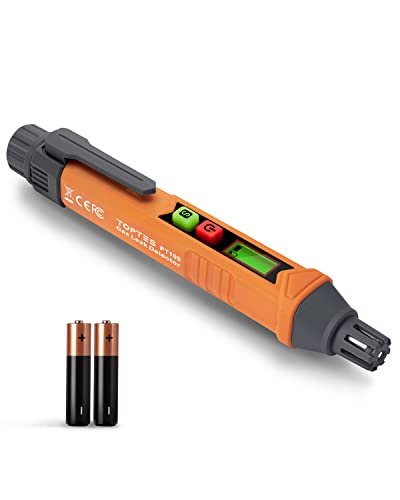
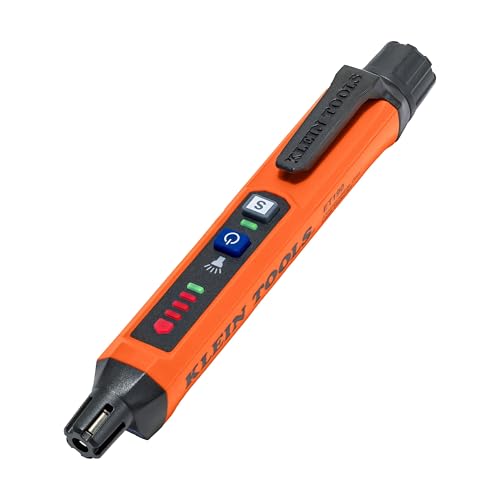
Products shown because their documented specifications fit this guide. Price and availability are on Amazon and can change.
Frequently Asked Questions
Does a gooseneck make the sensor itself more sensitive?
No. The sensor sits at the tip either way, and sensitivity comes from the sensor and its range. The TopTes PT520A gooseneck model and the fixed-probe PT199 share the same 50 ppm floor on their listings; the gooseneck simply puts that sensor where a rigid probe cannot go.
Can a fixed-probe sniffer reach the connector behind a range?
Sometimes, by pulling the range out or reaching in from the side with the drawer removed. A pocket unit such as the PT199 or the pen-style Klein ET190 works on the visible part of the connector and the shutoff valve, but the loop of a flex connector against the wall usually needs a gooseneck or a moved appliance.
Which probe design suits an RV better?
A gooseneck. RV propane fittings live inside the range cabinet, behind the refrigerator access panel, under the furnace and at the regulator in the tank bay, and the PT520A listing names RV use for that reason. A pocket sniffer is a fine second tool for the regulator and hose ends outside.
Do goosenecks wear out?
The flexible section is a metal conduit that holds its shape by friction, and owners of gooseneck sniffers occasionally report it loosening after years of bending. Storing it clipped straight rather than coiled tight, as the Klein ET120 design allows, helps. The sensor at the tip has its own life independent of the neck.
Affiliate disclosure: Akermin earns a commission from qualifying Amazon purchases made through links on this page. Our editorial picks are based on documented specifications and owner feedback, not commissions.