Best Moisture Meters for Concrete: Slab and Screed Picks Before Flooring Goes Down
A wet slab ruins the flooring laid over it, and most moisture meters were never calibrated for concrete. This guide compares the listings that state a concrete, screed or masonry mode, what depth and scale they claim, and where a surface meter stops and relative humidity probe testing begins, using only the figures the manufacturers publish.
As an Amazon Associate, Akermin earns from qualifying purchases. Product links on this page are affiliate links.
Our Top Picks
These meters were compared for concrete on whether the listing names concrete, screed or masonry, the stated depth and scale, any standard referenced, alerts and power, all from manufacturer listings. We did not run laboratory tests or in-situ probe comparisons; figures are the manufacturers' own and blanks are marked as not stated.
Best Overall
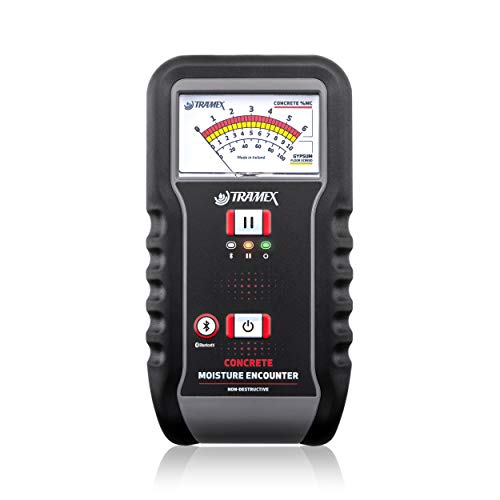
Tramex Concrete Moisture Encounter CME5
Non-destructive concrete meter for slabs and screeds, referenced to ASTM F2659.
Non-destructive analog meter for concrete flooring, slabs and screeds, as per ASTM F2659
Shallow depth to 0.4 in (9 mm) and deep depth to 1.25 in (30 mm)
0 to 100 comparative scale for building materials; pre-calibrated densities listed
Bluetooth app for moisture maps, geotags, time stamps and photos
All figures are taken from the manufacturers' Amazon listings at the time of research. Concrete readings from every meter here are comparative or manufacturer scales, not laboratory moisture content, and none replaces in-situ relative humidity testing for flooring. Where a listing gives no value the cell reads Not stated.
How to Choose a Concrete Moisture Meter
Four checks decide the purchase:
Concrete Named
A meter calibrated for wood or drywall reads a slab unpredictably. Three listings here name concrete or screed as a mode; the Klein names masonry only.
Scan, Then Probe
Surface meters map the slab and find the wettest zone. Flooring warranties rest on relative humidity probes placed in that zone, which a pinless meter can only estimate.
A Standard to Cite
The Tramex CME5 references ASTM F2659 for preliminary non-destructive evaluation. No other listing here references a standard.
Max Hold and Alarms
A max value or a user-set alarm turns a large floor into a fast sweep and marks where the probes should go.
Can a pinless meter certify a concrete slab for flooring?
No. Surface meters, including the Tramex CME5 with its ASTM F2659 reference, are preliminary tools that map where a slab is wettest. Flooring manufacturers generally require in-situ relative humidity probe testing, a method that measures inside the slab, and a pinless reading is only an estimate of that. Scan first, then place the probes in the zones the scan flags.
What does the 0 to 100 scale on a concrete meter mean?
It is a comparative scale rather than a moisture percentage. The Tramex listing describes it as a 0 to 100 comparative scale for materials other than wood; the VVV CME-822 states 0 to 70% on its own scale. Neither number is a laboratory moisture content, so the value is useful for comparing points on the same slab and tracking change over time, not for quoting an absolute.
Why does my wood moisture meter give strange readings on concrete?
Because it is calibrated for the density and conductivity of wood. Concrete is far denser, contains aggregate, rebar and salts, and reads differently at every depth. A meter without a concrete or masonry mode produces a number that only means something against a dry reference on the same slab, and the Klein ET140 listing, for example, states masonry but not concrete among its calibrated materials.
Does a pin meter work on a concrete floor?
Poorly, and it leaves holes. Resistance readings on concrete are affected by salts and by the surface finish, and the pins cannot reach the core of a slab. Pin and pinless combination meters such as the Protimeter SurveyMaster name concrete on the listing for their non-invasive mode; the pin side is for wood and drywall confirmation.
How do I track a screed drying before the floor goes down?
Mark fixed points across the floor, including corners and any area near a wall or a leak path, and take readings at the same points on each visit with the same meter in the same mode. A max value function such as the CME-822 states, or app mapping on the Tramex, records the wettest zone. When the readings stop falling, that is where the RH probes go.
Reviews
Tramex Concrete Moisture Encounter CME5 Best Overall
The CME5 is the concrete meter because it is the one listing here built around the slab rather than adapted to it. Tramex describes a non-destructive analog meter for instant measurement of moisture in concrete flooring, slabs and screeds, and references ASTM F2659, the standard practice for preliminary evaluation of concrete moisture with a non-destructive meter. That reference is what a flooring contractor can cite for scanning a slab before probing it.
The listing states two depths, 0.4 in (9 mm) shallow and 1.25 in (30 mm) deep, which lets the user compare surface against core and, on a covered slab, reduce the influence of the covering. The 0 to 100 comparative scale is what it reads on building materials; the listing also carries wood scale text shared with the ME5.
Bluetooth connects it to the Tramex app for moisture maps with geotags, time stamps and photos, which is the right output for a slab survey. It is a preliminary scanning tool by its own standard reference; in-situ relative humidity probes still certify a slab for flooring.
VVV-Group CME-822 Concrete Moisture Meter Best Lower-Cost Concrete Mode
The CME-822 is the lower-cost route to a meter that treats concrete as its main material rather than an afterthought. The manufacturer states a non-destructive electromagnetic sensor for concrete slabs, floor screed, cement mortar and structural walls, with adjustable material codes for concrete, mortar, gypsum and a reference mode, so the reading is not a wood calibration pressed into service.
The features are aimed at a slab survey: a max value function that captures the wettest point during a sweep, a buzzer and warning light above a threshold the user sets, automatic temperature compensation and a backlit LCD for basements and garages. The stated range is 0 to 70%, which is a manufacturer scale rather than a laboratory moisture content, and the listing gives no reading depth.
It references no standard, states no calibration check and has no logging, so its role is drying progress and locating the wet corner of a floor before the RH probes go in. For a first slab meter that names the right materials, it does that job at the lowest tier here.
RDINSCOS Six-Mode Pinless Moisture Meter Best Value
The RDINSCOS six-mode meter is the general-purpose pinless meter in this group that happens to name screed and concrete as their own modes, which is rare below the professional tier. The manufacturer states six dedicated modes, softwood, hardwood, drywall, plaster, screed and concrete, and a pinless reading depth of 19 mm, which is close to the 3/4 in that most general meters state.
Alerts are user-set: choose a moisture limit and the meter gives a visual and audible warning above it, which turns a basement floor or wall sweep into a fast pass rather than a reading at every point. A 2.9 in white display and a 1200 mAh rechargeable battery are stated, so there is no 9V to replace.
The listing gives no scale for the concrete mode, no standard reference and no calibration check, so it belongs in the value slot as a damp finder for basement walls, garage floors and screed drying, with the understanding that a slab survey before flooring still ends with the Tramex-class scan and RH probes.
Short answer: the Tramex CME5 is the concrete meter for anyone laying flooring over a slab, because it is built for concrete and screeds, references ASTM F2659 and scans at two depths with app mapping; the VVV CME-822 is the lower-cost digital meter with concrete, mortar and gypsum material codes and a max-value hold for finding the wettest spot; and the RDINSCOS six-mode meter is the value pinless unit for basement walls and screed drying checks, with dedicated screed and concrete modes to 19 mm.
Why concrete defeats an ordinary moisture meter
Most moisture meters were calibrated on wood and pressed into service on walls. Concrete is denser, holds water in a pore structure rather than in fibers, carries salts that change its conductivity and is often finished with a hardener or a sealer that alters the surface the meter touches. A wood meter held against a slab produces a number, but the number relates to the calibration it was built for, not to the slab. That is why the first table column asks whether the listing names concrete, and why the picks are the three meters that describe concrete, screed or mortar as a mode of their own. The wider question of material calibration is covered in why moisture meter readings vary by material.
Surface scan versus in-situ probe: the limit that decides everything
Every meter on this page is a surface scanner, and the flooring industry does not certify a slab from a surface scan. The Tramex CME5 makes this explicit by referencing ASTM F2659, which is the standard practice for preliminary evaluation of concrete moisture with a non-destructive meter, and the word preliminary is the point. The moisture that matters to an adhesive or a laminate underlayment is deep in the slab, and it is measured with in-situ relative humidity probes set into drilled holes, the ASTM F2170 method, which a pinless meter can only estimate. The right use of a surface meter is to map the whole floor quickly, find the wettest zones and the drying trend, and then decide where the probes go. A contractor who skips the scan places probes blind; a contractor who skips the probes has no test the flooring manufacturer will accept.
The three concrete picks compared
The Tramex CME5 states two depths, 0.4 in (9 mm) and 1.25 in (30 mm), a 0 to 100 comparative scale and Bluetooth mapping with geotags and time stamps, on an analog display that owners of survey meters tend to prefer for watching a needle climb across a wet edge. The VVV CME-822 states an electromagnetic sensor with material codes for concrete, mortar, gypsum and a reference mode, a 0 to 70% manufacturer scale, automatic temperature compensation, a max value hold and user-set alarms, with no depth on the listing. The RDINSCOS states six modes including screed and concrete, 19 mm depth, user-set alerts and a rechargeable battery, with no scale given for concrete. None of the three states a calibration check, and only the Tramex references a standard.
The general-purpose meters in the table
Three meters appear for comparison rather than as picks. The Klein ET140 is a solid 3/4 in relative meter, but its listing names drywall, masonry, hardwood and softwood and not concrete, so a slab reading from it is a comparison number only. The Protimeter SurveyMaster names concrete among its materials and combines a non-invasive mode with pins, plus an automatic calibration check every 50 power cycles, which makes it the choice for an inspector who meets slabs occasionally but does not survey them; the home inspector moisture meter guide covers it in full. The Extech MO265 states a 0.75 in (22 mm) pinless depth and a remote pin probe for building materials without naming concrete, and has its own review on this site.
Relative scales, pins and slab surfaces
Two more limits belong in any slab report. Readings from all of these meters are comparative or manufacturer scales, not moisture content, so a value is meaningful against other points on the same slab and against the same point on an earlier visit, not as an absolute. And pins do not belong on concrete: they leave holes, they read the surface rather than the core and salts skew the resistance, so the pin side of a combination meter is for wood and drywall confirmation only. Surface finish matters too; a sealed or hardened slab reads differently from a broom finish, and a reference point on the same finish keeps the comparison fair. For choosing between the sensing methods generally, see how to choose between pin and pinless moisture meters.
Related guides
The pinless moisture meter guide compares depth and material modes across the wider range, and the drywall guide in this cluster covers basement walls where the finish is gypsum rather than block.
How We Research
Products were compared on manufacturer listing text: whether concrete, screed or masonry is named, sensor type, stated reading depth, scale, standard referenced, calibration provisions, alerts and power. Owner feedback was reviewed for recurring reports of readings that vary with slab finish and surface temperature. We did not run laboratory tests or in-situ probe comparisons and publish no moisture measurements of our own. Amazon data supplies images, availability and links only.
Compact articulating borescopes whose listings name aircraft work: the DXZtoz dual-lens 0.25 in, the four-way Teslong TF600 3.9 mm and the DXZtoz 3.9 mm.
Borescopes whose listings state a 3.9 mm probe: the two-way Teslong TD500, the four-way Teslong TF600 and the plain NIDAGE, plus DXZtoz, Dearsee and Anykit.