As an Amazon Associate, Akermin earns from qualifying purchases. Product links on this page are affiliate links.
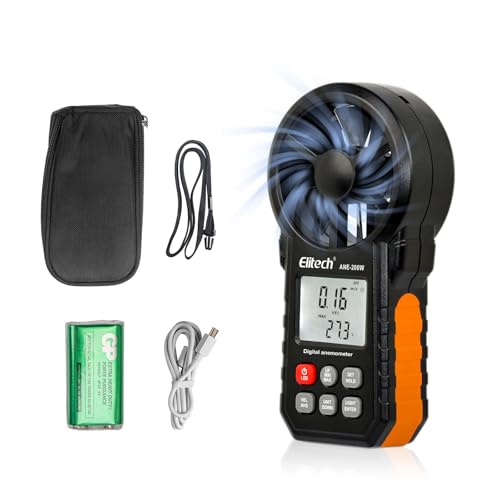
Elitech · Elitech ANE-200W HVAC Anemometer, Air Flow & Temp Meter with Bluetooth | Temperature Measurement, USB Data Export, Air Flow CFM/CMM Measurement, Drone Flights & HVAC Use
View on AmazonPrice and availability are shown on Amazon and can change at any time.
The Elitech ANE-200W is a vane-style anemometer aimed at HVAC balancing, duct traversing and fume hood checks. The listing publishes wind velocity, airflow in CMM and CFM, temperature, Bluetooth app logging and USB PC export, but it does not publish sensor type, accuracy, velocity range or resolution. If you need a documented accuracy figure before you buy, this listing will not give it to you. If you need a general-purpose airflow and temperature meter with logging, the ANE-200W covers the features the listing names.
The sensing element: what the ANE-200W actually measures
The listing calls the ANE-200W an HVAC anemometer and states that it measures wind velocity, air flow in CMM and CFM, and temperature. It does not name the sensor type. That is the first thing to understand, because the mechanism decides how you use the meter.
Handheld anemometers in this class normally use one of two principles. A vane anemometer has a small propeller or impeller that spins in the airstream; the meter counts rotations and converts them to velocity. A hot-wire anemometer heats a thin element and measures how much the airflow cools it. The listing does not say which principle the ANE-200W uses, so a buyer cannot tell from the page whether the sensor is a vane or a hot wire. That matters because vane sensors are generally better at higher velocities and at reading through grilles, while hot-wire sensors are generally better at low velocities and at taking point readings inside ducts. The listing does not publish a velocity range, so you cannot check the low end or the high end against the job.
The airflow calculation is the part the listing does describe in outline: the meter supports setting an area value so that velocity is converted to volume flow. That is standard practice. You measure velocity at a point or a traverse, enter the duct cross-section, and the meter multiplies. The listing says area values can be set, but it does not publish the area range or the units for area. CMM and CFM are the published airflow units.
What the display and modes tell you, and what they leave out
The listing is more forthcoming about user-facing features than about sensor specifications. It states real-time, average, maximum and minimum wind velocity modes. The average is described as an average of 30 readings, which is a useful detail: it tells you the averaging window is fixed at 30 samples, not a user-set time constant. For a duct traverse, a fixed 30-sample average can smooth out turbulence, but you cannot change the window to suit a slow or fast duct.
Data hold freezes a reading for recording. A wind chill indicator is included; the listing does not explain how wind chill is calculated or which temperature and velocity inputs it uses. Temperature units switch between Celsius and Fahrenheit, and velocity units switch between m/s, ft/min, knots, km/h and mph. The listing does not publish the resolution or accuracy for any of those units.
The screen is described as a large backlit LCD, and there is an integrated LED work light for dark ducts. Auto power-off is included to save battery. Those are practical for plant rooms and ceiling voids. The listing does not state battery type, battery life or whether the backlight and work light affect runtime.
Bluetooth, the app and the USB export: logging without a published sample rate
The ANE-200W has built-in Bluetooth and works with a mobile app called Anemometer26, according to the listing. The app is described as showing real-time monitoring and a data curve display. PC software over USB is also listed, with data logging, analysis and export to Excel for reporting. The listing says users can record data intervals and manage stored records on the device or in the app.
What the listing does not publish is the logging interval range, the memory capacity, or the file format beyond the Excel export mention. Those are the numbers that decide whether the meter is suitable for a long-term trend log or only for spot checks. If you need to leave a meter in a duct for an hour and download a time series, the listing gives you no way to confirm the sample rate or the number of records it can hold.
The Bluetooth link is described as real-time monitoring, which suggests a live connection to the phone rather than store-and-forward logging. The listing does not say whether the app can log with the phone out of range. For commissioning work where you need a record of a traverse, the PC export is the more useful path, but the listing does not state whether the PC software is included or a separate download.
The specification gap: accuracy, range and resolution are not published
For an instrument sold for HVAC balancing and fume hood verification, the accuracy figure is the one that decides whether the measurement is defensible. The ANE-200W listing does not publish an accuracy specification for velocity, airflow or temperature. It also does not publish a velocity range, a temperature range, or a resolution. Those are not minor omissions. A balancing report that cites a measured velocity is only as good as the stated tolerance of the meter that produced it.
The listing does publish the functions: CMM and CFM airflow, average, max and min, data hold, wind chill, unit switching, area setting, record intervals, Bluetooth app and USB export. It does not publish the sensor type, the response time, or the calibration method. If you are comparing this meter with another anemometer, the other listing may publish an accuracy figure and this one does not. That asymmetry should weigh in your decision.
Where the listing makes a claim that is hard to verify, treat it as stated but unconfirmed. The 30-reading average is a specific claim and is plausible for a handheld meter. The wind chill indicator is stated without a method. Neither is a substitute for a published accuracy figure.
Where the ANE-200W stops being the right instrument
This is an airflow and temperature meter. It is not a pressure meter, so it cannot measure duct static pressure or differential pressure across a filter. It is not a combustion analyser and it does not measure gas concentration. If your task is to verify a fume hood, the listing says the meter is intended for fume hood verification, but a face-velocity check is only one part of that test; the listing does not claim to perform the full hood certification.
For general environmental monitoring around a building, airflow is only one variable. If you are tracking temperature and humidity over time, a dedicated logger is the better fit; our guide to Bluetooth temperature data loggers covers that class. If you are checking air quality rather than air speed, an airflow meter will not tell you particle or CO2 levels; see how to choose an environmental meter for the wider category. And if you need a documented accuracy figure for a commissioning report, the absence of one in this listing is a reason to look at a meter whose listing publishes it, such as the hot-wire AM-286 covered in our anemometer buying guide.
The ANE-200W verdict: features are clear, accuracy is not
The Elitech ANE-200W is a feature-rich handheld anemometer with Bluetooth app monitoring, USB PC export, average, max and min modes, a backlit display and a work light. The listing describes those functions clearly. What it does not describe is the sensor type, the accuracy, the velocity range or the resolution. For a buyer who needs a general airflow and temperature meter and can work without a published tolerance, the ANE-200W is a reasonable candidate. For a buyer who must document accuracy in a balancing or fume hood report, the missing specification is the deciding problem. Ask the seller for the accuracy and range before you buy, or choose a meter whose listing publishes them.
Recommended Tools


Products shown because their documented specifications fit this guide. Price and availability are on Amazon and can change.
Frequently Asked Questions
Does the ANE-200W measure air velocity and airflow at the same time?
The listing states it measures wind velocity and calculates air flow in CMM and CFM once an area value is set. It does not state whether velocity and airflow are displayed simultaneously or whether you switch between them.
What is the accuracy of the ANE-200W?
The listing does not publish an accuracy figure for velocity, airflow or temperature. That is the main specification gap. You would need to confirm it with the manufacturer or seller before relying on the meter for a documented measurement.
Can I log data over Bluetooth and export it to Excel?
The listing states Bluetooth monitoring through the Anemometer26 app and PC software over USB with export to Excel. It does not publish the logging interval range, memory capacity or whether the PC software is included.
Is the ANE-200W a vane or a hot-wire anemometer?
The listing does not name the sensor type. That matters because vane and hot-wire sensors behave differently at low velocities and in duct traverses. Without the sensor type you cannot predict its low-end performance.
Can the ANE-200W be used for fume hood verification?
The listing names fume hood verification as an intended use. It does not claim to perform a full hood certification, and it does not publish the accuracy figure that a formal verification report would normally require.
What units does it support?
The listing states velocity units of m/s, ft/min, knots, km/h and mph, airflow in CMM and CFM, and temperature in Celsius and Fahrenheit. Resolution and accuracy per unit are not published.
Affiliate disclosure: Akermin earns a commission from qualifying Amazon purchases made through links on this page. Our editorial picks are based on documented specifications and owner feedback, not commissions.
Related Guides

Gain Express USB Temperature Data Logger Review: One Trade-off Decides the Job
A three-channel USB data logger with 16,000-record storage and built-in reporting software, reviewed around the Windows dependency that shapes ownership.
Read More→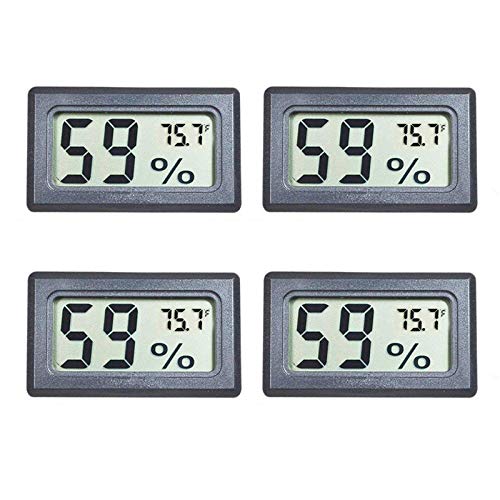
Veanic 4-Pack Mini Indoor Temperature Humidity Meter Review
A close look at the Veanic 4-pack mini humidity and temperature gauge, what its stated accuracy can and cannot support, and where it stops being the right instrument.
Read More→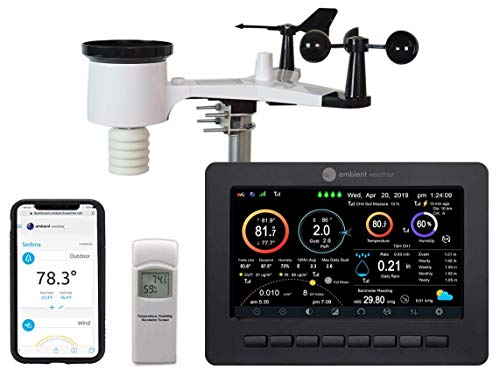
Ambient Weather WS-2000 Review: The First Hour and the First Believable Reading
A first-hour walkthrough of the Ambient Weather WS-2000, covering what the listing states, what it leaves out, and how to reach a first believable reading.
Read More→