As an Amazon Associate, Akermin earns from qualifying purchases. Product links on this page are affiliate links.
Choose an environmental meter when you need air velocity, temperature, humidity, light and sound readings occasionally and would rather carry one instrument than four. Check each function’s specification separately: vane range starting at 0.4 m/s or below with a flow mode; temperature and humidity accuracy of ±0.8 °C and ±3 percent RH with wet-bulb and dew-point calculation; a lux range to at least 20,000 with a cosine dome; and a sound range of 35 to 130 dB with A weighting, understanding that the sound section is unclassified. For measurements against standards, use the dedicated instrument instead.
What is inside
| Function | Typical spec in a 5-in-1 (Extech EN300 class) | Dedicated instrument equivalent |
|---|---|---|
| Air velocity | Vane, 0.4 to 30 m/s, ±3%; some with flow mode | Larger vane or hot-wire with traverse averaging |
| Temperature | Thermistor or Type K, ±0.8 °C; range −20 to 60 °C ambient, wider with probe | Thermocouple thermometer with multiple probes |
| Humidity | Capacitive, ±3 to 4% RH; wet bulb and dew point calculated | Thermohygrometer with ±2% and faster response |
| Light | Silicon sensor, 0 to 20,000 lux, cosine dome | Lux meter with stated f1′ and wider range |
| Sound | 35 to 130 dB, A weighting, unclassified | Class 2 or Class 1 meter with Leq and calibrator |
When the trade is right
- HVAC technicians checking grilles, supply temperatures and humidity on service calls.
- Facilities and building surveyors doing walk-round assessments.
- Safety officers screening lighting and noise before deciding whether a formal survey is needed.
- Inspectors who need documented environmental conditions alongside another measurement.
When it is wrong
- Fume hood and cleanroom velocities: hot-wire needed.
- Noise assessments against exposure limits: Class 2 with Leq and a calibrator. See how to choose a sound level meter.
- Lighting compliance surveys with LED fixtures: a meter with stated spectral match. See how to choose a light meter.
- Damp diagnostics needing ±2 percent RH and dew point at surfaces: a probe thermohygrometer.
What to check before buying
- Each function’s range and accuracy, not just the count of functions.
- Flow mode with area entry for CFM or m³/h.
- Wet-bulb and dew-point calculation for coil and comfort work. See how to use a psychrometer.
- Vane head size and whether it detaches on a lead (helpful for reaching grilles).
- Type K thermocouple input for surface and immersion probes.
- Data hold, min/max, and logging or Bluetooth for reports.
- Battery type and life; a case.
Alternatives
Two smaller instruments often beat one large one: a probe thermohygrometer with dew point (testo 605i class) plus a dedicated anemometer (TopTes TS-301 or BTMETER BT-100 class) cover the most-used functions with better performance and a similar total cost. See how to choose an anemometer for HVAC work and how to choose a humidity meter. Instruments are in the environmental monitoring category.
Recommended Tools

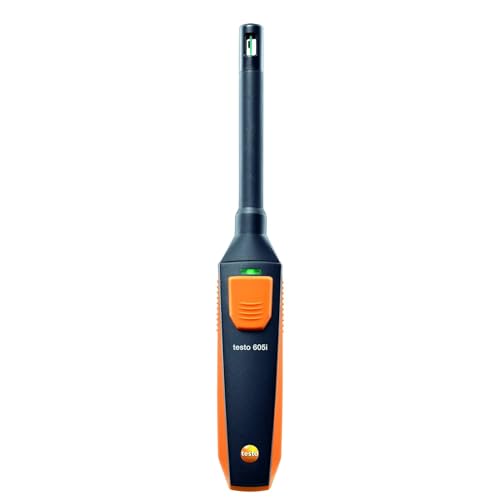
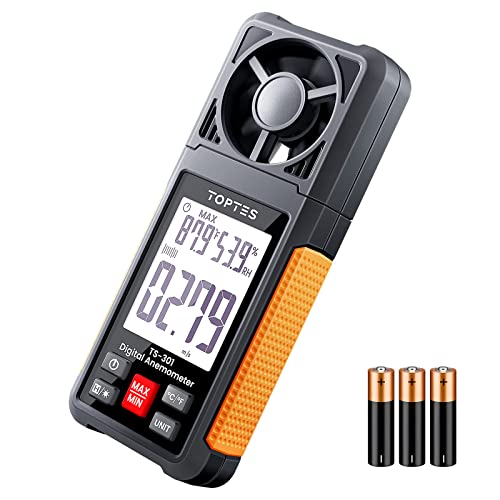
Products shown because their documented specifications fit this guide. Price and availability are on Amazon and can change.
Frequently Asked Questions
Is a 5-in-1 environmental meter as accurate as separate instruments?
Usually a little less in each function: a smaller vane, an unclassified sound section, a basic light sensor. For surveys and checks it is adequate; for measurements against a standard, use the dedicated instrument.
Who should buy an environmental meter?
HVAC and facilities technicians, building surveyors, safety officers and inspectors who need occasional readings of several quantities and do not want to carry four meters.
What functions matter most?
Air velocity with flow calculation and temperature with humidity (and wet bulb or dew point) get the most use. Light and sound are useful for occasional checks.
Affiliate disclosure: Akermin earns a commission from qualifying Amazon purchases made through links on this page. Our editorial picks are based on documented specifications and owner feedback, not commissions.
Related Guides

CPS LS790B Leak-Seeker Review: Non Combustible Is the Deciding Word
An ion pump refrigerant leak detector individually calibrated to find a leak rate better than a quarter of an ounce per year, with ten selectable sensitivity ranges, a water vapour filter and a bar graph plus tone display.
Read More→
BW Clip BWC2-H Review: Alarm Points Set Before the Clock Starts
A single gas hydrogen sulfide detector with one button operation, hibernation mode, automatic logging of the 35 most recent gas events and bump test results, and compatibility with IntelliDoX and MicroDock II docking.
Read More→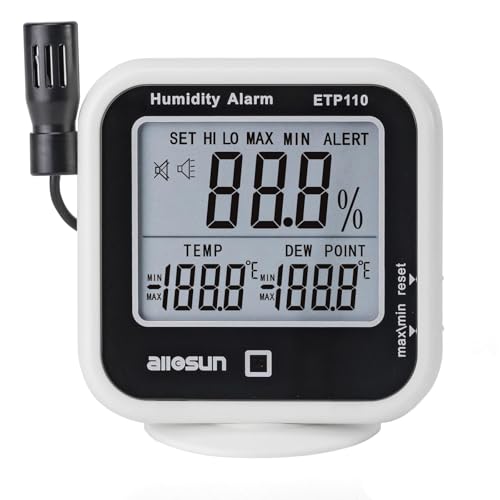
ALLOSUN Thermometer Hygrometer Review: Half a Metre of Lead and No Tolerance
A battery powered thermometer and hygrometer showing temperature, relative humidity and dew point, with a settable humidity alarm, a sensor on a lead of about 50 cm, maximum and minimum memory and a large LCD.
Read More→