As an Amazon Associate, Akermin earns from qualifying purchases. Product links on this page are affiliate links.
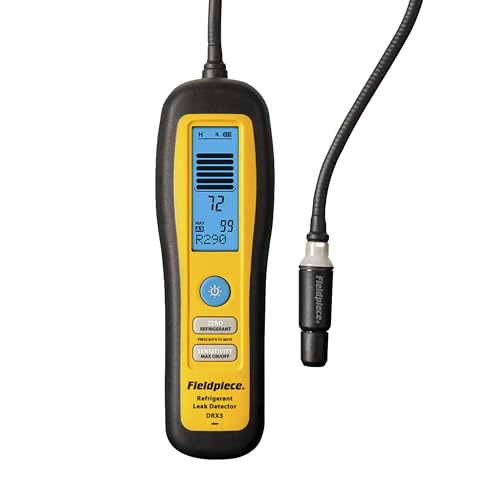
For locating a leak on a propane heater, the Fieldpiece DRX3 is the pick because its listing states a heated diode sensor, refrigerant and combustible gas coverage, and high, medium and low sensitivity settings, which is the combination that lets you sweep a joint and then narrow to it. The Testo Gas Leak Detector is the other professional instrument here, but its listing publishes no sensor type, sensitivity or alarm figure, so you are buying on the brand and the title alone. If your actual job is continuous protection of an occupied space rather than service work, the Precogni RV Propane and CO Detector is the only pick here that monitors carbon monoxide as well as propane, and the TOPTES PT210S and PT760 Kit and the TOPTES PT177 are pocket sniffers for quick confirmation rather than diagnosis. None of the five is a substitute for a calibrated combustible gas indicator used for confined space entry, and none of them measures carbon monoxide except the Precogni RV Propane and CO Detector.
Why a propane heater is a different leak hunt from a refrigerant circuit
Propane is heavier than air. It pools in the bottom of a cabinet, a crawl space or a burner compartment, so a leak on the outlet of a regulator or the base of a gas valve may never pass the nose at standing height. A heater service call also mixes two failure modes that a refrigerant detector never sees: a fuel leak that can ignite, and incomplete combustion that produces carbon monoxide with no smell at all. A detector that finds propane does not find carbon monoxide. Only the Precogni RV Propane and CO Detector in this comparison is listed as doing both.
The second difference is the plumbing. Refrigerant work is mostly brazed and flare joints on sealed circuits. Propane work is threaded pipe, flare fittings, flexible connectors and a gas valve with a diaphragm, plus a burner orifice that clogs. A leak detector for this work has to be sensitive enough to catch a joint that weeps rather than sprays, and it has to recover quickly between joints so you are not chasing a cloud you created yourself. That is why sensitivity settings and zeroing behaviour matter more here than raw maximum sensitivity. The grill-side version of this job is the same mechanism on a smaller scale.
Sensor type, warm-up and response: the three numbers that decide the purchase
Sensor type sets the character of the tool. A heated diode sensor, which the Fieldpiece DRX3’s listing states it uses, works by burning combustible gas on a heated element and reading the change in conduction; it is fast, it recovers quickly, and it is the classic choice for pinpointing a leak rather than merely alarming. The Fieldpiece DRX3’s listing also states the sensor is field-replaceable, which matters because heated diodes eventually contaminate and go deaf. The TOPTES PT210S and PT760 Kit and the TOPTES PT177 do not state a sensor type. The Testo Gas Leak Detector does not state a sensor type either. The Precogni RV Propane and CO Detector states a sensor system that monitors carbon monoxide and propane simultaneously but does not name the technology.
Warm-up is the number people skip. The TOPTES PT177’s listing is explicit: the unit must be powered on and warmed up for 30 seconds in a clean, gas-free environment, and it auto-calibrates over that period. If you switch it on beside a leaking fitting, you have just taught it that propane is the new zero. The TOPTES PT210S and PT760 Kit’s listing quotes a 0.5 second alert but does not state a warm-up period. The Fieldpiece DRX3’s listing states auto and manual zero modes, which lets you re-zero deliberately in clean air. The Testo Gas Leak Detector and the Precogni RV Propane and CO Detector publish neither figure.
Response time is the third number, and it is not the same as sensitivity. The TOPTES PT177 quotes 0.5 to 3 seconds depending on concentration. The TOPTES PT210S and PT760 Kit quotes within 0.5 seconds. A fast alarm tells you gas is present; it does not tell you where. Locating is a separate skill built on sensitivity settings and probe technique, which is the subject of how these instruments actually sense gas.
| Pick | Sensor type stated | Warm-up stated | Response stated | Sensitivity settings stated |
|---|---|---|---|---|
| Testo | Not stated | Not stated | Not stated | Not stated |
| Fieldpiece DRX3 | Heated diode, field-replaceable | Not stated; auto and manual zero modes | Not stated | High, medium, low |
| Precogni | Not stated; dual LP and CO sensing | Not stated | Not stated | Not stated |
| TOPTES kit | Not stated | Not stated | Within 0.5 seconds | High and low modes |
| TOPTES PT177 | Not stated | 30 seconds in clean air | 0.5 to 3 seconds | Not stated; auto-calibration |
the Testo Gas Leak Detector and the Fieldpiece DRX3: the two instruments sold as service tools
The Fieldpiece DRX3 is the only pick here whose listing gives you enough to plan a leak hunt. The heated diode sensor is the mechanism that makes a detector good at finding the source rather than just the cloud, because it responds and clears quickly as you move the probe along a pipe. The three sensitivity settings let you start low, find the general area, then switch up to confirm the exact joint. The listing also covers A3, A2L, A1 refrigerants, HC, HFC, HCFC, CFC, HFO, H2/N2 tracer gas and blends as well as heating gases, so the same tool does a heat pump or air conditioning call. Field-replaceable batteries and a field-replaceable sensor are maintenance features, not marketing ones: both are consumables in daily service. What the listing does not publish is a minimum detection level in ppm, a warm-up time or a response time, so you cannot compare its sensitivity numerically against anything else on this page. If you also work on sealed refrigerant circuits, the HVAC technician selection covers that overlap.
The Testo Gas Leak Detector is a Testo gas leak detector with a model number and no published sensor type, sensitivity, warm-up or alarm specification. That is not a criticism of the instrument; it is a statement about the data. Buying it is a decision based on the brand and the seller’s description, and you should treat any performance expectation as unverified until you read the manual. If you need a documented sensitivity figure before purchase, the listing does not give you one, and no amount of comparison on this page can manufacture it.
The five detectors, and what each is actually for
Testo Gas Leak Detector
A branded handheld gas leak detector whose listing gives a model number and nothing else, so it is a brand-led purchase rather than a specification-led one.
Fieldpiece DRX3
The only pick whose listing states a heated diode sensor, refrigerant and combustible gas coverage, and three sensitivity settings, which is what leak location on a heater circuit needs.
Precogni RV Propane and CO Detector
A hardwired 12 volt dual detector that watches propane and carbon monoxide at the same time, for the space the heater serves rather than the service call itself.
TOPTES PT210S and PT760 Kit
Two pocket detectors in one purchase, one pen-shaped and one with a 12 inch extendable probe, both quoting a 0.5 second alarm response.
TOPTES PT177
A pocket sniffer with a shirt clip, a 30 second warm-up requirement and a 0.5 to 3 second alarm window, aimed at homeowners and RV users.
the Precogni RV Propane and CO Detector is not a service tool, and that is the point
The Precogni unit is a replacement for a hardwired RV propane and carbon monoxide alarm. It is powered from 12 volts DC, mounts with supplied hardware, and its listing states a 60 month operational life from first power-up with an end-of-life indicator. It monitors carbon monoxide and propane simultaneously and shows status with LEDs: green for normal, red for a CO leak, an LP leak, or a system fault. It does not have a probe, it does not have sensitivity settings, and it cannot be used to sweep a joint. It is a fixed sentry for the space the heater heats.
This matters because a heater that is burning badly can put carbon monoxide into a cabin or a room while showing no propane leak at all. A combustible gas sniffer will not warn you about that, and neither will your nose. If the heater lives in a vehicle or a small enclosed space, the fixed dual detector and the handheld sniffer are complementary purchases, not alternatives. Owners report that the end-of-life indicator is the feature that stops these units from silently ageing out, which is the usual failure mode of a hardwired alarm. For the wider RV context, see detector choices for RV interiors.
the TOPTES PT210S and PT760 Kit and the TOPTES PT177: pocket sniffers, and where they stop being enough
The TOPTES PT210S and PT760 Kit is a two-detector kit. The PT210S is pen-shaped with a 4 inch probe and a red screen plus a 75 decibel buzzer. The PT760 has a 12 inch extendable probe, a rechargeable battery, a colour-changing display and alarm tones that vary with concentration, plus a built-in flashlight and automatic shut-off. Both are listed as detecting propane, natural gas and methane, both quote alerts within 0.5 seconds, and both have high and low sensitivity modes. The 12 inch probe is the feature that earns its place on heater work, because burner compartments and flue transitions are exactly where your hand does not fit.
The TOPTES PT177 is a single pocket sniffer with a shirt clip, five red LEDs and a 75 decibel alarm that intensify with concentration. Its listing is unusually honest about procedure: 30 seconds of warm-up and auto-calibration in clean air before use, detection and alarm in 0.5 to 3 seconds, a low battery warning that flashes below 2.4 volts, and automatic shut-off after 5 minutes of inactivity. That last feature is a nuisance on a service call and a safety feature in a drawer. Neither the TOPTES PT210S and PT760 Kit nor the TOPTES PT177 states a sensor type or a minimum detectable concentration, so neither can be compared numerically with the Fieldpiece DRX3. Treat both as confirmation tools: they tell you gas is there, and in the right hands they can narrow it down, but they are not calibrated instruments and they do not hold a reading you can put in a report.
The mistake that makes every one of these read wrong
The commonest error on a propane heater call is zeroing the detector in contaminated air. The TOPTES PT177’s listing spells out the fix: warm up for 30 seconds in a clean, gas-free environment. If you power up in the burner compartment after a failed ignition, the instrument may accept the background as normal and then under-read for the rest of the visit. The Fieldpiece DRX3 gives you auto and manual zero modes, so you can deliberately re-zero when you move from a gassy area to clean air. With any of these, if you smell gas, ventilate first, then zero, then hunt.
The second mistake is chasing the cloud instead of the joint. Once a detector alarms, the gas has already spread. Move the probe slowly, at a few centimetres per second, starting below the joint because propane sinks, and watch for the point where the reading climbs fastest rather than where it is highest. The third mistake is treating any of these as a safety monitor. A handheld sniffer is a diagnostic tool; it is not an alarm, it does not run unattended, and it does not detect carbon monoxide except in the case of Precogni RV Propane and CO Detector. If the job requires entry into a confined space or a formal gas-free certificate, you need a calibrated combustible gas indicator with a documented bump test, which is a different class of instrument and is covered in the confined space detector comparison.
Recommended Tools



Products shown because their documented specifications fit this guide. Price and availability are on Amazon and can change.
Frequently Asked Questions
Can I use a refrigerant leak detector on a propane heater?
Only if the listing states combustible gas coverage. The Fieldpiece DRX3 explicitly lists heating gases alongside refrigerants, so it is intended for both. A refrigerant-only detector tuned for halogenated gases may not respond to propane at all. Check the listing before you assume.
Will any of these detect carbon monoxide from a badly burning heater?
Only the Precogni RV Propane and CO Detector. Its listing states dual carbon monoxide and propane monitoring. The Testo Gas Leak Detector, the Fieldpiece DRX3, the TOPTES PT210S and PT760 Kit and the TOPTES PT177 are combustible gas detectors and do not detect carbon monoxide. A propane sniffer that stays silent tells you nothing about the flue.
How long do I need to warm up a gas sniffer before use?
the TOPTES PT177's listing requires 30 seconds in clean, gas-free air with auto-calibration. The Fieldpiece DRX3 provides auto and manual zero modes but does not state a warm-up time. The Testo Gas Leak Detector, the Precogni RV Propane and CO Detector and the TOPTES PT210S and PT760 Kit do not publish a warm-up figure. If the listing is silent, follow the manual rather than guessing.
What does the listing not tell me about the Testo Gas Leak Detector?
Almost everything measurable. No sensor type, no sensitivity, no warm-up, no response time, no alarm level. You are buying a Testo gas leak detector on brand and title. That is a legitimate choice, but it is not a specification-led one.
Are the cheap pocket sniffers accurate enough to sign off a heater?
They are useful for finding a leak, and the TOPTES PT210S and PT760 Kit and the TOPTES PT177 both quote fast alarm times. But neither listing states a sensor type or a minimum detectable concentration, and a sniffer is not a calibrated instrument. For a documented leak test or a confined space entry, use a calibrated combustible gas indicator with a bump test record.
Do I need both a handheld detector and a fixed alarm?
If the heater serves an occupied space, yes. The handheld finds the leak during service. The fixed unit, like the Precogni RV Propane and CO Detector, watches the space continuously for propane and carbon monoxide while nobody is looking. A handheld detector cannot do that job because it is off and in a bag.
Affiliate disclosure: Akermin earns a commission from qualifying Amazon purchases made through links on this page. Our editorial picks are based on documented specifications and owner feedback, not commissions.