As an Amazon Associate, Akermin earns from qualifying purchases. Product links on this page are affiliate links.

KAIWEETS · KAIWEETS Digital Clamp Meter Multimeter with D-Shaped Jaw for AC/DC Current & Voltage, Auto-ranging 4000 Counts Voltage Tester with Flashlight Backlight, Measuring Temperature Continuity Diode NCV
View on AmazonPrice and availability are shown on Amazon and can change at any time.
This is the meter for a homeowner or general electrician who wants one handheld tool for AC and DC current, voltage, temperature and non-contact voltage checks, and who values a jaw that clamps securely onto awkward cables. It is the wrong meter for anyone who needs a published accuracy figure, a documented CAT rating per function, or a jaw wide enough for large busbars. The listing gives a good feature picture but withholds the numbers that a professional verification workflow depends on.
The D-Shaped Jaw: A Small Shape Change With Real Consequences
Most clamp meters use a rounded or teardrop jaw. The KAIWEETS uses a D shape and the listing states the jaw opens to 1.1 inches. That opening is the number that matters, because a clamp meter can only measure current in a conductor it can enclose. A 1.1 inch opening will take a single insulated conductor from a domestic circuit, a solar string cable, or a car battery lead. It will not take a bundle of parallel cables, a wide busbar, or a three-phase set at once.
The D shape changes how the jaw sits on the cable. A flatter inside face can locate against a cable more positively than a round jaw, which is why the listing calls it secure. The practical gain is less fumbling in a dark ceiling void or a crowded panel. The practical limit is unchanged: the meter measures the current in whatever single conductor passes through the jaw, and the reading is only as good as the centring of that conductor.
For anyone working on domestic wiring, a car, or a small solar array, 1.1 inches is workable. For an industrial panel with large feeders, it is not, and no amount of feature list changes that. This is the first place the buyer should decide whether the product fits.
What the Listing Publishes, and the Numbers It Withholds
The title gives 4000 counts and auto-ranging. The bullets give the measurement families: AC and DC current, AC and DC voltage, temperature with a thermocouple included, non-contact voltage, capacitance, frequency, resistance, continuity and diode. It also states IEC61010-1 and CAT III 600V certification, a 15 minute auto power off, a backlight, a flashlight, a low battery indicator, test lead storage, and two sets of leads with a carry case.
What the listing does not publish is the part a professional buyer will look for first. There is no accuracy specification for any function, no resolution figure, no burden voltage, no jaw opening tolerance, and no statement of which functions the CAT III 600V rating applies to. On a clamp meter, the CAT rating is not a single badge for the whole instrument. It is a statement about the input circuits that are exposed to the supply. A listing that gives the rating without naming the functions leaves the buyer to assume, and assumption is the wrong basis for choosing a safety instrument.
That gap does not make the meter unsafe. It makes it unverifiable from the listing alone. A buyer who needs to record accuracy in a method statement, or who works on circuits where the CAT rating must be demonstrated, should ask the manufacturer for the declaration of conformity before buying. A buyer doing domestic fault finding can reasonably proceed on the stated certification.
The Orange Screen Warning Is the Most Useful Line in the Bullets
The listing states the screen turns orange when voltage exceeds 80V or current exceeds 1A. That is a better safety feature than it first appears. A clamp meter is often used in a live panel where the user is looking at the jaw and the cable, not at the display. A colour change is peripheral vision information. It tells the user that the conductor they are about to clamp, or have just clamped, is live at a level that warrants care.
The thresholds are fixed at 80V and 1A as stated. They are not adjustable and the listing does not say whether they differ by function. Treat the warning as a prompt to check, not as a measurement. It does not replace proving dead before touching conductors, and it does not tell you the voltage, only that it has crossed a line.
The NCV function is a separate feature and should be understood the same way. The listing says the buzzer speeds up as the signal strengthens. That is a proximity indicator, not a voltage measurement. It will not tell you whether a cable is at 12V or 230V, and it can respond to induced voltage on a disconnected conductor. Use it to find which cable in a bundle is live, then confirm with the voltage function before working on it.
Where the Feature Set Earns Its Place, and Where It Does Not
The temperature function with a supplied thermocouple is genuinely useful for a general electrician. It turns the meter into a tool for checking motor case temperature, panel hot spots, or the difference between supply and return on a heating circuit. It is not a substitute for a thermal camera, which images a whole panel rather than a single contact point. Readers who need that should look at thermal cameras for electrical inspection instead of expecting a clamp meter to do the job.
The capacitance and frequency functions widen the meter’s use in motor and HVAC work. Frequency is useful when checking a variable frequency drive output, though the listing does not state the frequency range or accuracy, so the reading should be treated as indicative. For drive work specifically, a meter with published bandwidth is the better choice, and the comparison at clamp meters for VFD measurements sets out what to look for.
The DC current function is the one that most often disappoints buyers of general purpose clamp meters. Many low cost clamp meters use a Hall sensor for DC and a current transformer for AC, and the DC path is the less accurate of the two. The listing gives no DC accuracy figure, so a buyer planning to measure solar string current or automotive charging current should not assume the DC reading is precise. It is a presence and trend indicator unless the manufacturer publishes a figure. For work where DC current accuracy matters, see clamp meters for DC motor checks.
The Buyer This Meter Fits, and the Buyer It Does Not
This meter fits the homeowner who wants one tool for checking circuits, testing a car battery, confirming a solar panel is producing, and measuring the temperature of a motor or a pipe. It fits the general electrician who wants a second meter for quick current checks and non-contact voltage finding, and who values the D jaw for gripping cables in tight spaces. It fits the DIY installer who needs a temperature function and a continuity beeper without buying two instruments.
It does not fit the industrial electrician working on three-phase distribution, because the jaw is too small for large feeders and the CAT rating is not mapped to functions. It does not fit the solar installer who needs a documented DC accuracy for commissioning, because the listing does not publish one. It does not fit the technician who needs inrush capture, because the listing does not mention an inrush function. It does not fit the person who needs a data logger, because the listing describes a handheld meter with no logging or memory function.
If you recognise yourself in the second paragraph, the honest advice is to stop here. The KAIWEETS is a competent general purpose instrument, but the missing published numbers are exactly the ones a professional verification workflow needs. A buyer in that position should choose a meter whose listing publishes accuracy per function and a CAT rating per input, even if it costs more.
Maintenance, Leads, and the Long Term
The listing states 36 months of service and lifetime technical support. It also states a low battery indicator and a 15 minute auto power off. Those two together mean the meter will usually be found with a flat battery if it is left in a bag for months, because the auto power off protects the battery only while the meter is on. Keep a spare cell and check the indicator before a job.
The two sets of leads are a sensible inclusion, one for electrical work and one for temperature. Store them using the lead storage feature rather than coiled around the meter, because a lead that is repeatedly bent at the plug will fail at the plug, not in the middle. Inspect the lead insulation and the plug shrouds before each use. A clamp meter’s safety depends as much on the leads as on the meter body, and the listing gives no lead rating, so treat the supplied leads as general purpose and replace them with rated leads for any work near the CAT III limit.
The D jaw should be kept clean. A film of dirt or a nick on the jaw faces changes the magnetic circuit and biases the current reading. Wipe the jaw faces with a dry cloth and check for damage. The listing does not state a calibration interval, so a user who needs traceable readings should establish one with the manufacturer.
The Verdict: A Good General Meter With a Narrow Fit
The KAIWEETS D-jaw clamp meter is a sensible buy for a homeowner or general electrician who wants one tool for current, voltage, temperature and non-contact voltage checks, and who works on cables up to 1.1 inches. The D jaw is a real ergonomic gain in tight spaces, and the orange screen warning is a useful peripheral safety cue. It is the wrong buy for an industrial electrician, a solar commissioning technician, or anyone who needs published accuracy per function and a CAT rating mapped to inputs. For those buyers the missing numbers are disqualifying, not a detail. Buy this one if the feature list matches your work; skip it if your work requires the numbers the listing withholds.
Recommended Tools


Products shown because their documented specifications fit this guide. Price and availability are on Amazon and can change.
Frequently Asked Questions
Does the KAIWEETS clamp meter measure DC current accurately?
The listing states that it measures DC current but does not publish an accuracy figure for that function. Without a stated accuracy, treat the DC reading as a presence and trend indicator rather than a precise measurement. If you need documented DC accuracy for solar or automotive work, ask the manufacturer for the specification before buying.
What does CAT III 600V mean on this meter?
The listing states IEC61010-1 and CAT III 600V certification. It does not say which input functions the rating applies to. On a clamp meter the rating is normally tied to the input circuits exposed to the supply, so the buyer should confirm the per-function rating with the manufacturer before relying on it near the stated limit.
Can I use the NCV function to confirm a circuit is dead?
No. The listing describes NCV as a non-contact detection function with a buzzer that speeds up as the signal strengthens. That is a proximity indicator, not a measurement. It can respond to induced voltage and it gives no voltage value. Prove dead with the voltage function on a known good meter before touching conductors.
What size cable will the jaw take?
The listing states the jaw opens to 1.1 inches. That is enough for a single domestic circuit conductor, a solar string cable, or a car battery lead. It is not enough for a bundle of parallel cables or a wide busbar, and the meter measures only the current in the single conductor passing through the jaw.
Does it have an inrush current function?
The listing does not mention inrush capture. If you need to measure motor starting current, choose a meter whose listing states an inrush function. The comparison at clamp meters with inrush sets out the options.
Is the temperature function a substitute for a thermal camera?
No. The supplied thermocouple measures temperature at a single contact point. A thermal camera images a whole panel and shows the distribution of heat. For panel inspection, a thermal camera is the right tool; for checking a motor case or a pipe, the thermocouple is adequate.
Affiliate disclosure: Akermin earns a commission from qualifying Amazon purchases made through links on this page. Our editorial picks are based on documented specifications and owner feedback, not commissions.
Related Guides
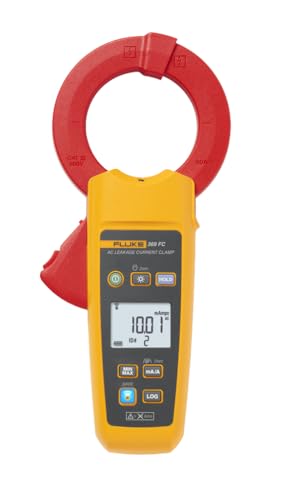
Fluke FLUKE-369 FC Leakage Current Clamp Meter Review: What the Listing Leaves Out
A source-led review of the Fluke 369 FC that highlights the unpublished specifications and their practical consequences.
Read More→
HiLetgo LCR-T4 Component Tester Review: The First Hour
A first-hour review of the HiLetgo LCR-T4 kit, covering what it measures, what the listing leaves out, and when a different instrument is the better answer.
Read More→
Klein Tools CL900 Clamp Meter Review: What the Listing Leaves Out
A specification-by-specification review of the Klein Tools CL900 that flags every gap in the published listing.
Read More→