As an Amazon Associate, Akermin earns from qualifying purchases. Product links on this page are affiliate links.
Verdict
The Seaward PV:1525 is a purpose-built string tester for photovoltaic systems operating up to 1500 V DC. Where a clamp meter or multimeter reads a voltage or current, a PV tester runs the commissioning sequence: open-circuit voltage, short-circuit current through an internal switch rated for the string, insulation resistance at a high test voltage, and continuity of protective conductors. Those are the tests IEC 62446 calls for when a PV installation is handed over, and doing them with a purpose-built instrument is both faster and safer than improvising. The PV:1525 is not currently listed on Amazon US. For a contractor who commissions commercial or utility PV, the documentation supports it as the right category of instrument; for a residential installer working at 600 V, a rated clamp meter such as the Fluke 393 FC covers the routine checks.
Who It Is For
- Commissioning engineers on commercial and utility-scale PV.
- Electrical contractors who must produce IEC 62446 test records at handover.
- Operations and maintenance teams who periodically re-test strings for insulation faults.
Our guide to choosing a solar PV tester explains the difference between a tester and a meter.
Documented Specifications
| Item | Documentation |
|---|---|
| System voltage | PV strings up to 1500 V DC (manufacturer) |
| Tests | Open-circuit voltage, short-circuit current, insulation resistance, continuity (manufacturer) |
| Standard | Test sequence aligned with IEC 62446 commissioning (manufacturer) |
| Irradiance | Via a separate Seaward Solar Survey meter |
| Amazon US availability | Not listed at the time of writing |
The insulation test voltages, current limits, accuracy and memory or download features are on the manufacturer’s datasheet. We have not reproduced figures we could not confirm from a current document.
The Commissioning Sequence
Open-circuit voltage confirms that the string has the expected number of modules connected with the right polarity; a string reading a module’s worth low has a bypassed or disconnected panel. Short-circuit current confirms that the modules are producing in proportion to the irradiance at that moment; a low reading points to shading, soiling or a failed module. Insulation resistance, measured between the array conductors and earth at a test voltage above the operating voltage, finds damaged cable insulation and moisture ingress before they become ground faults that trip the inverter or start a fire. Continuity confirms the equipotential bonding of frames and racking. A PV tester performs these in order, at the string, and stores the results per string. The manual procedures for the first two tests are described in measuring open-circuit voltage and measuring solar panel current.
Why a Dedicated Tester
Short-circuiting a 1500 V string through a multimeter is not an option; the current is real and the arc on disconnection is dangerous. A PV tester makes and breaks that circuit with an internal switch rated for the job. Insulation testing needs a high-voltage source that a multimeter does not have. And the record-keeping that handover requires is easier when the instrument stores results by string. Those three points are the case for a dedicated instrument, and they apply more strongly as system voltage rises. The trade-off is that a PV tester does one job; it is not the meter for troubleshooting an inverter or checking an AC circuit.
Irradiance and Correction
String current depends on sunlight, so a short-circuit current reading means little without the irradiance at the moment it was taken. Seaward pairs its PV testers with the Solar Survey meters, which measure irradiance, module temperature and ambient temperature, so results can be corrected to standard test conditions and compared with the datasheet. The Solar Survey 200R is the companion model.
Strengths
- Rated for 1500 V systems.
- Runs the full IEC 62446 commissioning sequence.
- Safe short-circuit and insulation testing by design.
- Results stored per string for handover records.
Limitations
- Not currently listed on Amazon US.
- Single-purpose; not a general troubleshooting meter.
- Needs a separate irradiance meter for corrected results.
How It Compares
The Fluke 393 FC is a 1500 V rated clamp meter that measures string voltage, current and DC power but does not perform insulation testing. The Seaward Solar Survey 200R is the irradiance meter that complements either instrument. For the tools a residential installer actually needs, see building a basic solar testing toolkit.
How We Research
This review is based on the manufacturer’s published documentation for the PV:1525 and the Amazon listings for the related instruments. We did not run laboratory tests.
Recommended Tools
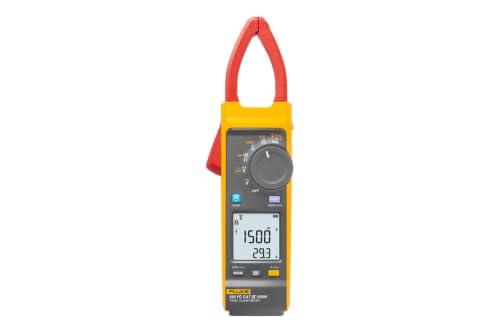

Products shown because their documented specifications fit this guide. Price and availability are on Amazon and can change.
Frequently Asked Questions
Is the Seaward PV:1525 on Amazon US?
Not at the time of writing. The listed alternatives on this site are the Fluke 393 FC solar clamp meter, which is rated to 1500 V, and the Seaward Solar Survey irradiance meter used alongside a string tester.
What does a PV tester do that a multimeter does not?
It performs the short-circuit current test with an internal switch rated for the string, and the insulation resistance test at a high test voltage, in a sequence designed for commissioning. A multimeter can read open-circuit voltage but is not built for the other two.
Why 1500 V?
Commercial and utility PV strings now operate up to 1500 V DC. A tester rated to 1000 V is outside its design limits on those systems.
Does it measure irradiance?
Not on its own. Seaward pairs its PV testers with the Solar Survey irradiance meters so that string results can be corrected to standard test conditions.
Affiliate disclosure: Akermin earns a commission from qualifying Amazon purchases made through links on this page. Our editorial picks are based on documented specifications and owner feedback, not commissions.