
Why Multimeter Readings Jump Around
Unstable readings come from the circuit, the leads, the range or the meter. Each has a signature.
Read Article→Plain-language explanations of the measurements, sensors and numbers behind environmental monitoring.
Unstable readings come from the circuit, the leads, the range or the meter. Each has a signature.
Read Article→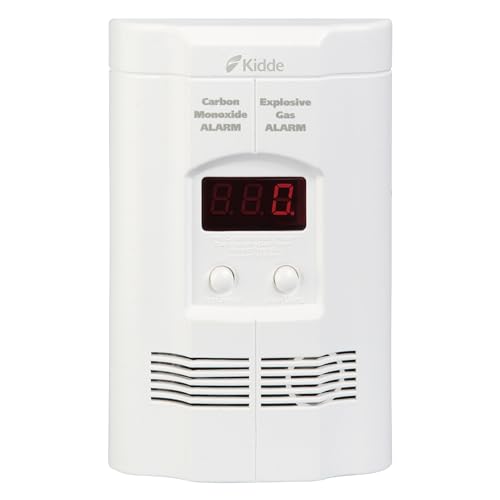
If gas is piped into your home and you sleep there, yes. A natural gas alarm covers the hours your nose cannot: while you sleep, when you are congested or away.
Read Article→A heated sensing element changes electrically when flammable gas touches it. Fixed alarms compare that to a threshold; sniffers show it as a rising scale.
Read Article→A tester that senses the electric field around a live conductor through the insulation. First check, never the last.
Read Article→Count rooms with gas appliances, not square feet: one combustible gas alarm per room that has one, CO alarms on every level, and one sniffer per household.
Read Article→A dead wire that reads 60 volts. It is capacitive coupling, and a low-impedance mode makes it vanish.
Read Article→
Propane falls. It is heavier than air, so a leak sinks, spreads along the floor and pools in low spots, which is why propane alarms mount near the floor.
Read Article→Mount a propane detector low, within about 12 inches of the floor, in the room with the propane appliance or wherever leaking gas would pool.
Read Article→How much transient energy the meter can survive. It is about where in the installation you are, not the voltage.
Read Article→Natural gas rises. Methane is lighter than air, so a leak drifts upward and collects under the ceiling, which is why natural gas alarms mount high.
Read Article→Multimeters for voltage, resistance and components; clamp meters for current without breaking the circuit.
Read Article→
Four sensor types cover consumer gas detection: semiconductor (MOS) in sniffers and plug-in alarms, catalytic bead and infrared for LEL readings, and electrochemical cells for CO.
Read Article→