Best Plumbing Inspection Cameras: 8 Reliable Picks for Finding Hidden Pipe Problems
A blocked drain and a suspect supply joint need two different cameras: one that pushes a hundred feet down a sewer line on a reel, and one that goes eighteen inches behind a vanity unit. This hub separates the reel systems from the handheld scopes and compares each group on the figures its listing publishes.
Independent Research
Verified Specifications
Honest Recommendations
Reel Or Scope
Self Leveling Wins
Measure The Distance
As an Amazon Associate, Akermin earns from qualifying purchases. Product links on this page are affiliate links.
Our Top Picks
Nine cameras split into two groups that are often confused: reel-mounted drain cameras with 100 ft or more of pushrod, and handheld scopes with a few feet of flexible cable. The table states which each one is. Where a listing is sold for a different application entirely, the Type column says so. We ran no tests.
Best Overall
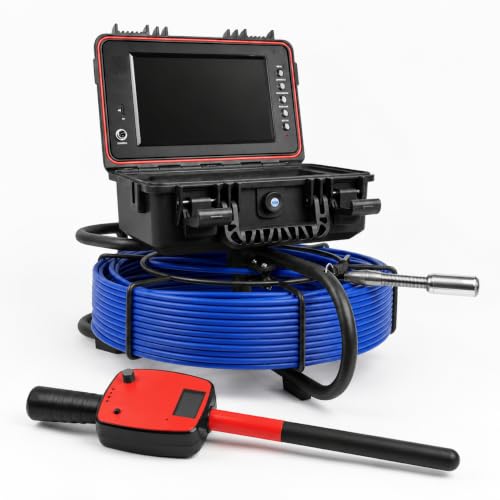
SumKea 100 ft Self-Leveling Sewer Camera
A stated 100 ft of pushrod with a self-leveling head.
Stated 100 ft cable on a reel for sewer and drain runs
Self-leveling camera head keeps the image upright
Listing names residential plumbing, HVAC ducts, sewer lines and chimneys
The first four rows are reel-mounted drain cameras and the last five are handheld scopes with a few feet of cable. The final row is sold for firearm barrel inspection; it appears because a 45 inch flexible probe suits narrow pipe runs, and its listing makes no plumbing claim.
How to Choose a Pipe Inspection Camera
Start with the pipe, not the camera:
Reel or Scope
A 100 ft reel surveys a sewer lateral. A 5 ft scope checks behind a vanity or inside a trap. Buying the wrong one is the most common mistake in this category.
Self-Leveling
A pushrod rotates as it travels. Without a self-leveling head the picture arrives sideways and you cannot tell which side of the pipe a defect is on.
Distance Marking
A defect you cannot locate is a defect you cannot quote for. A marked or counted cable turns a video into an excavation point.
Recording
Clients and insurers want evidence. A built-in DVR writing to an SD card is the difference between a finding and a claim.
Screen Size
Drain footage is low contrast and murky. A 7 inch screen shows a hairline fracture that a 4.3 inch screen loses in the noise.
What is the difference between a drain camera and a borescope?
A drain camera is a self-contained reel with 100 ft or more of semi-rigid pushrod that you feed down a pipe from a cleanout. A borescope has a few feet of thin flexible cable and goes behind a fitting or into a trap. They look similar in search results and they do different jobs.
Why does self-leveling matter?
A pushrod twists as it travels around bends, so the camera can arrive at a defect rotated by any amount. A self-leveling head uses gravity to keep the image upright, which is what lets you say a crack is at the bottom of the pipe rather than just somewhere on it.
How much cable do I need?
One hundred feet covers most residential laterals from a cleanout to the street connection. Deep setbacks, commercial runs and multi-storey stacks can need more, which is what the 165 ft option is for. Extra length costs weight and adds friction through bends.
Do I need a locator as well?
If you intend to dig, yes. A distance marking on the cable tells you how far in the camera is along the pipe, not where that point is in the ground. A sonde in the camera head with a surface locator is what puts a mark on the lawn, and none of these listings state one.
Can a camera tell me why a drain keeps blocking?
Often yes, because the common causes are visible: root intrusion at a joint, a bellied section holding water, a collapsed pipe, scale, or a foreign object. What it cannot do is measure fall or prove a pipe is out of alignment, which needs a level survey or a pressure test.
Reviews
SumKea 100 ft Self-Leveling Sewer Camera Best Overall
Self-leveling is the feature that turns a drain camera from frustrating to usable, and it is the reason this leads. A pushrod camera rotates freely as it travels, so without self-leveling the image arrives sideways or upside down and you lose track of which side of the pipe a defect is on. A self-leveling head keeps the picture upright by gravity, so a crack at the bottom of the pipe reads as a crack at the bottom of the pipe.
One hundred feet is the practical span for residential work: a run from a cleanout to the street connection, or a full stack and lateral. SumKea also names HVAC ducts, pool and petrol pipes, high-rise drains and chimneys, which is a broader application list than most in this class and suggests a pushrod stiff enough for vertical work.
The listing does not state screen size, resolution, recording capability or a distance counter. A distance counter in particular is what turns a finding into an excavation plan, so if you need to tell a client the break is 42 feet out, confirm that before ordering.
SumKea 165 ft Self-Leveling Sewer Camera Best Long Reach
Sixty five extra feet of pushrod sounds like a small upgrade and is often the difference between reaching the problem and guessing at it. A residential lateral to a street main can easily exceed a hundred feet on a deep setback, and a commercial run or a multi-storey stack routinely does. If the work is repeat drain inspection rather than occasional, buying the reach once is cheaper than discovering the limit on site.
The head is the same self-leveling design as the 100 ft model, with the same stated application list covering residential plumbing, construction pre-wall checks, HVAC ducts, sewer lines and chimneys. Choosing between the two is purely a question of how far your longest job runs.
There is a real cost to the extra length. More pushrod means a heavier, bulkier reel to carry and more friction pushing through bends, so a longer camera is harder work in a tight basement. The listing states no screen, no recording and no distance counter, so the same questions apply as to its shorter sibling.
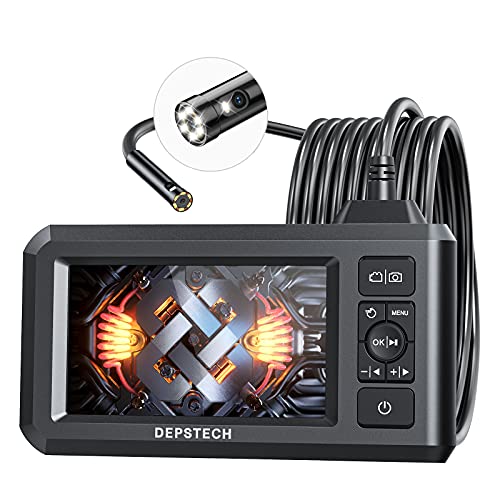
This is the only reel camera here that states all three of the things a plumber usually needs: how far the cable reaches, how far in the camera currently is, and a way to record what it found. ZELCAN states 100 ft with length measurement, a 4.3 inch HD colour screen and a built-in DVR with a 32 GB TF card.
The length measurement is the unglamorous feature that changes the job. A recording of a collapsed section is evidence; a recording of a collapsed section at 38 feet from the cleanout is an excavation quote. Without it you are estimating from how much rod is left on the reel, which is exactly as approximate as it sounds.
The listing does not state a self-leveling head, which is the trade against the SumKea units. Without it the picture rotates as the rod twists, and you learn to read a sideways pipe or to rotate the rod by hand at each finding. For occasional work that is livable; for daily drain surveys the self-leveling head is worth the difference.
Short answer: the SumKea 100 ft camera is the drain camera to buy for residential work, with a stated 100 ft of pushrod and a self-leveling head that keeps the picture upright. Step up to the SumKea 165 ft if your laterals run long or the building is multi-storey, and take the ZELCAN 100 ft if a distance marking and a built-in DVR matter more to you than self-leveling.
Two products, one search term
Search for a plumbing inspection camera and half the results are reels and half are borescopes. A reel system carries 100 ft or more of semi-rigid pushrod on a drum with a camera head at the end, and it is designed to be fed down a cleanout into a sewer lateral. A handheld scope has a few feet of thin flexible cable and is designed to go behind a vanity, into a trap, through an access panel or along a short waste branch. They are both cameras on a cable and they solve different problems. Four rows in the table are reels and five are scopes, and the Type column says which, because buying the wrong one is the commonest and most expensive mistake here.
Self-leveling is not a luxury on a pushrod
A pushrod does not travel down a pipe in a fixed orientation. It twists as it negotiates bends, it rolls along the invert, and it arrives wherever it arrives. Without a self-leveling head the picture reaches you rotated by an unknown amount, which sounds cosmetic and is not: the distinction between a crack at the crown of the pipe and a crack at the invert is the distinction between a minor defect and an active leak, and you cannot make it if you do not know which way is up. Both SumKea units state a self-leveling head. Neither of the other two reels does, and the workaround is to stop at each finding and rotate the rod by hand until the water line is at the bottom.
Distance marking is what turns a video into a quote
Finding the problem is half the job. Telling a client where it is, so it can be dug up once rather than exploratively, is the other half. The ZELCAN listing is the only one here that states cable length measurement, and it is the reason that camera earns a place despite lacking self-leveling. Be clear about what the measurement gives you: distance along the pipe from the entry point, not a position in the ground. Pipes bend, and thirty eight feet of cable can be thirty two feet of lawn. Locating the point on the surface needs a sonde in the camera head and a receiver above ground, and none of these listings state one, so treat that as a separate purchase if excavation is part of your service.
Screen size and recording
Drain footage is the hardest kind of video to read: low light, low contrast, water, silt and a curved surface filling the frame. Screen area matters more here than in almost any other inspection work, which is why the ChoosePRO listing stating a 7 inch display is worth noting against the 4.3 inch panels. Recording matters for a different reason. A client who cannot see what you saw has only your word for a four figure excavation, and an insurer will want the file. Two of the four reels state a DVR with a 32 GB card. For the handheld scopes, recording is generally absent from the listings and you should assume it is not there.
Where the short scopes actually earn their place
None of this makes handheld scopes redundant. A great deal of plumbing diagnosis happens in the first two feet: a leaking compression joint behind a cabinet, a blocked trap, a soil stack junction reached through an access panel, a weep on a valve inside a boxed-in duct. A 5 ft scope with an articulating head gets there in a minute without cutting anything open, and the Boresoeil and LumenScope entries steer well enough to look back at the underside of a fitting. Reaching a hundred feet down a sewer is a different day’s work. Our guide to drain inspection camera system choices works through the reel side in detail.
Cameras were compared on manufacturer listing text: cable length and any distance marking, screen size, recording capability, self-leveling head and the applications the listing names. Three rigid scopes sold solely for firearm barrel inspection were removed and the one remaining firearm-listed scope is flagged in the table. We ran no tests and publish no measurements. Amazon data supplies images, availability and links only.
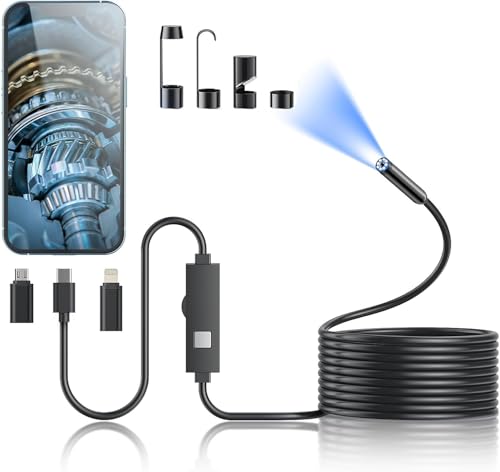
A phone powered 16.4 ft borescope with a 7.9 mm probe, 1920 by 1440 capture, eight adjustable LEDs and a stated immersion depth of 3.28 feet for one hour.
A one ounce Android thermal attachment with a 256 by 192 detector, per pixel chart export, nine measurement areas and waveform graphs. Not compatible with iOS.