As an Amazon Associate, Akermin earns from qualifying purchases. Product links on this page are affiliate links.
Yes, but only the handheld kind. A sniffer held against a fitting will respond to a leak of a few tens of parts per million; the Klein ET120 and TopTes PT199 listings both give a detection range beginning around 50 ppm of methane, and the Amprobe GSD600 lights its first LED above 40 ppm. A fixed wall or plug-in alarm will not, and that is by design. It is set to sound at a fraction of the lower explosive limit, commonly 10 to 25 percent LEL, which for methane is thousands of parts per million. A connector that weeps a trace of gas all winter can sit in a room with a working alarm and never trigger it. The two tools answer different questions, and knowing which one to ask is the point of this article.
Two Very Different Thresholds
Methane becomes ignitable at about 5 percent by volume, or 50,000 ppm. A residential alarm that trips at 10 percent of that limit is responding at roughly 5,000 ppm, and one set at 25 percent at about 12,500 ppm. A pocket sniffer that starts reacting at 50 ppm is a hundred times more sensitive than the most sensitive fixed alarm setting. That is not a flaw in the alarm. An alarm sensitive enough to catch a 50 ppm wisp would sound every time someone lit a burner, sprayed a cleaner or opened a bottle of nail polish remover, and a household that has learned to ignore its alarm has no alarm at all. The units and the arithmetic are explained in ppm versus LEL in gas detection and what LEL means on a gas detector.
What Counts as a Small Leak
In practice, a small leak is one you cannot smell from the middle of the room but a sniffer or a soap test can find at the fitting. The usual suspects:
- A flexible appliance connector whose flare nut was hand-tightened and never wrenched.
- A range or dryer connector kinked when the appliance was pushed back against the wall.
- Thread sealant that has dried and cracked on an old union or drip leg.
- A grill or RV regulator hose end that has hardened with age.
- A standing pilot valve seat that no longer closes fully.
- A shutoff valve stem packing that seeps when the valve is turned.
Most of these release gas at a rate that ventilation carries away as fast as it arrives, which is why a room can smell faintly of gas near one cabinet and nowhere else. Where it becomes a problem is inside a closed cabinet, a furnace closet with a solid door, or a camper with the windows shut, where the gas has nowhere to go.
How to Find a Small Leak
Sweep, do not wave. Warm the sniffer up in clean air, then move the tip slowly along every joint, holding it within the distance the maker specifies (TopTes gives 1 to 5 cm for the PT199) and pausing at each fitting. Response takes a moment and recovery takes longer, so a fast pass can miss the very leak you are looking for; why gas sensor response time matters covers the timing. Natural gas rises, so check above a joint as well as at it; propane sinks, so check below. A model with graded output helps here: the GSD600 steps its LEDs at more than 40, 80, 160, 320 and 640 ppm, so the bar tells you which of two nearby fittings is the worse one. Models with two sensitivity ranges, such as the Klein ET190 with its High and Low modes, let you search wide and then narrow down. Confirm a positive with soapy water where you can reach the joint with a brush; bubbles do not respond to hairspray.
Which Tool for Which Leak
| Leak scenario | Fixed alarm | Handheld sniffer | Soap solution |
|---|---|---|---|
| Weeping flare nut on a range connector | Will not sound | Finds it in seconds | Confirms the exact spot |
| Faint smell in a closed furnace closet | May sound eventually if gas accumulates | Locates the fitting | Works on accessible joints only |
| Grill regulator hose in the open air | Not applicable outdoors | Works with the wind at your back | Best tool outdoors; wind does not affect it |
| Cracked pipe or failed union releasing gas quickly | Sounds; this is its job | Not the moment for a sniffer; leave | Not the moment; leave |
| Meter creeping with all appliances off | Will not sound | Sweep every fitting; if none respond, call the utility | Not practical for a whole system |
Do Small Leaks Matter?
They matter for three reasons that have nothing to do with explosions. They cost money on the bill. They grow, because whatever loosened or cracked the fitting keeps acting on it. And they teach a household to accept a faint gas smell as normal, so that the day a real leak starts nobody reacts. That last one is the strongest argument for owning a sniffer even in a home with a fixed alarm on every level. If you want the details of how far down a given instrument can read and what limits it, gas detector sensitivity takes that up; if a sniffer seems to have lost its edge, how to calibrate a gas detector explains what can be done about it.
Where Finding Stops and Leaving Starts
A sniffer is for the faint, localized smell that you are calmly investigating with the windows open. The moment the smell is strong, the alarm is sounding, or a reading climbs and keeps climbing, the search is over: leave the building without touching a switch and call the gas utility or 911 from outside. No instrument changes that. The sniffers best suited to tracing small leaks are ranked in the handheld gas leak detector roundup, and the fixed alarms that handle the large ones are in the gas leak detector guide.
Recommended Tools
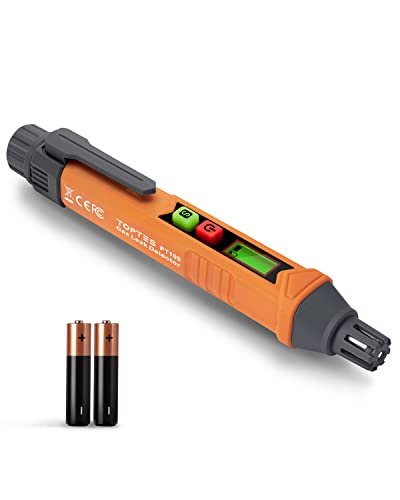

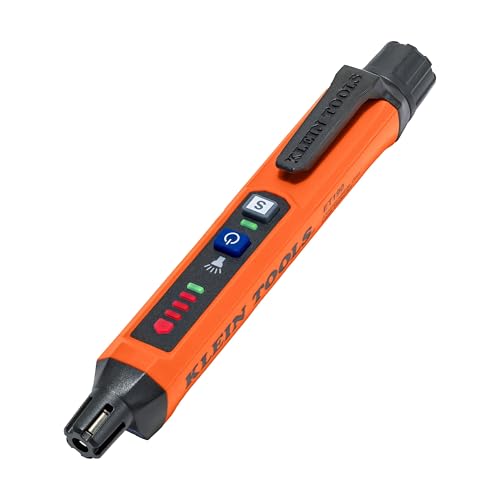
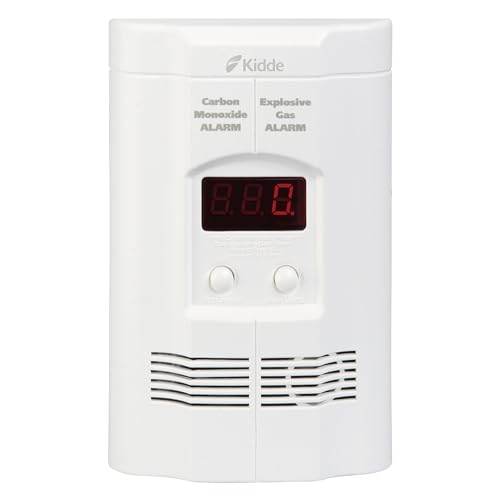
Products shown because their documented specifications fit this guide. Price and availability are on Amazon and can change.
Frequently Asked Questions
Is a leak that is too small to trigger the wall alarm still dangerous?
Not immediately, but it is not harmless. A small leak wastes gas, can grow as the fitting corrodes or loosens further, and in a closed cabinet or closet can build to a much higher local concentration than the room reading suggests. Find it and have it fixed; do not wait for the alarm.
Can soapy water find leaks that a sniffer cannot?
Sometimes. A soap solution on a fitting shows bubbles at the exact point of escape and works with no warm-up and no batteries, which is why technicians still use it. A sniffer is faster over many fittings and reaches places you cannot brush. Use both on a stubborn joint.
Will a small leak eventually set off a fixed alarm?
Only if the gas accumulates faster than the room loses it. In a ventilated kitchen a small leak may never reach the alarm setpoint. In a sealed closet it can. Do not count on the alarm to find small leaks; it is there for the large and sudden ones.
My gas bill went up but I smell nothing. Could it be a leak?
Possibly, though weather, a new appliance or a rate change are more common causes. Sweep every accessible fitting with a sniffer and check whether the meter dial moves with all appliances shut off. If the meter creeps, call the utility.
Affiliate disclosure: Akermin earns a commission from qualifying Amazon purchases made through links on this page. Our editorial picks are based on documented specifications and owner feedback, not commissions.
Related Guides

WiFi Natural Gas Alarm Review: One Unit Reveals the Whole Design
A WiFi natural gas alarm with an LCD showing gas concentration status and temperature, a stated response within 30 seconds, an alarm of at least 85 decibels and notifications to a phone app.
Read More→
Forensics Detectors Cl2 Review: 5 Percent of Full Scale Is 2.5 ppm
A rechargeable chlorine detector with an electrochemical sensor reading 0 to 50 ppm at 0.1 ppm resolution, a response time under 30 seconds, adjustable audible, visual and vibrating alarms and a supplied calibration certificate.
Read More→
Smart Sensor SO2 Detector Review: 0.1 ppm Steps, No Accuracy Figure
A clip on sulfur dioxide monitor built on an electrochemical sensor, reading 0 to 20 ppm in 0.1 ppm steps, with adjustable high and low alarms signalled by sound, flash and vibration and a rechargeable cell quoted at 8 to 9 hours.
Read More→