As an Amazon Associate, Akermin earns from qualifying purchases. Product links on this page are affiliate links.
A gas detector makes two kinds of noise, and they mean opposite things. A loud, continuous or rapidly repeating alarm, often with a flashing red light and the word GAS on a display, means the sensor is reading gas: leave the building, leave the switches alone and call the gas utility or 911 from outside. A single short chirp that repeats at a steady interval, with long silence in between, is the unit reporting on itself: a low backup battery, a sensor fault, an end-of-life condition or a restart after a power cut. The sections below sort the common patterns, but the manual for your model is the final word, because every brand encodes its chirps differently.
Alarm or Chirp: Tell Them Apart First
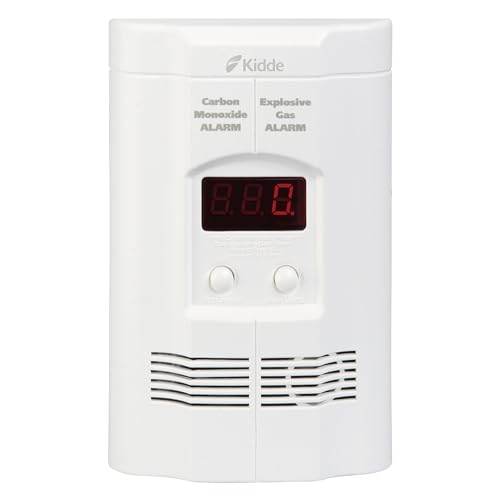
Before you decode anything, settle which kind of sound you are hearing. An alarm is meant to wake a sleeping household; the Kidde combination units and the Safe T Alert 30-442 are both listed at 85 dB, and the tone is sustained or pulses in a fast pattern. A chirp is a single, brief tone with a gap of many seconds or more before the next. If you are unsure, look at the unit: an alarm lights the red indicator and, on models with a display, shows GAS or a CO number; a chirp usually comes with a yellow or amber light or a code. If it is an alarm, stop reading and go outside. A detector supplements the leave-and-call rule; it does not replace it.
Common Patterns and What They Usually Mean
| What you hear and see | Likely meaning | What to do |
|---|---|---|
| Loud continuous or fast-pulsing alarm, red light, display says GAS | Combustible gas at the alarm setpoint | Leave, do not touch switches, call the utility or 911 from outside |
| Loud alarm with a different pulse pattern, display shows a number | Carbon monoxide (on combination units) | Get everyone to fresh air and call 911; CO is odorless |
| Single chirp at a fixed interval, amber light | Low backup battery | Replace the backup battery; on 9-volt or AA models this is the most common chirp |
| Single chirp at a fixed interval that fresh batteries do not stop | End of life or sensor fault; some units show a code such as ERR or END | Check the manual; replace the unit |
| One beep or brief light cycle when power returns | Restart and warm-up | Nothing; test once the unit is back to normal |
| Alarm during or just after cooking, cleaning or painting, then it stops | Nuisance trip from an aerosol, alcohol or solvent vapor | Ventilate, then relocate the unit farther from the source |
| RV alarm chirps or shows a low-voltage warning | House battery below the alarm’s operating range | Charge the battery; the 25-742 and 35-742 list a low-voltage warning |
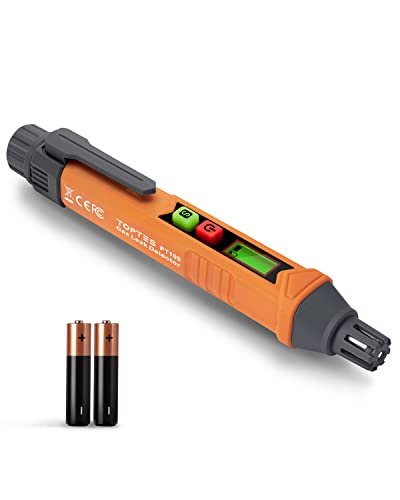
| Handheld sniffer beeps constantly in clean air | Zeroed in gas, low batteries or an interferent | Fresh air, new batteries, restart and full warm-up |
The Low-Battery Chirp
On plug-in alarms with a backup battery, the chirp usually means the backup cell is low even though wall power is fine. Replace the 9-volt or AA cells and the chirp stops. Two details trip people up. First, some units keep chirping for a short while after a battery change until they reset; unplug for a moment and plug back in if the manual says so. Second, a nearly flat battery can pass the day and fail at night when the room cools, which is why the chirp seems to come and go. The Kidde COPDLG listing makes a point of stating that it does not produce low-battery chirps, a design choice aimed at exactly this annoyance; the article on plug-in versus battery gas detectors covers what the backup battery does and does not power.
The End-of-Life Chirp
If new batteries do not stop the chirp, the unit is very likely telling you its sensor has reached the age the manufacturer set for it. Combination CO and gas alarms built to UL 2034 commonly have this feature. There is no fix; the unit is replaced. Pulling the plug to stop the noise leaves the room unprotected, so treat the chirp as a shopping reminder. When to replace a gas detector covers the other signs that a unit is finished, including ones that never chirp.
Alarms That Stop on Their Own
A gas alarm that sounds while someone is spraying oven cleaner, wiping a counter with alcohol, or using hairspray in the next room, and then goes quiet once the air clears, has most likely responded to a solvent rather than to gas. Semiconductor sensors respond to a wide range of reducing gases, and that is the price of their sensitivity. Take it seriously the first time: get out, ventilate and check for a gas smell before you assume it was the cleaner. If it repeats only with the same product, move the alarm farther from where that product is used, following the placement limits in where to place a natural gas detector. The full list of interferents is in what can cause false gas detector readings.
Handheld Sniffers That Will Not Settle
A sniffer that beeps steadily in clean air has usually been switched on at the wrong moment. Most pocket units zero themselves during warm-up, taking the air around them as clean; power one up next to a leaking fitting and it will read that as baseline and then complain about the fresh air elsewhere. Low batteries are the second cause and are flagged by an indicator on most models. Restart the tool outdoors or in a room with no appliances, wait the full warm-up, and try again. If it still will not settle, how to calibrate a gas detector explains what can and cannot be adjusted on a consumer sniffer.
What Not to Do
Do not remove the backup battery and leave the unit chirping into silence, do not tape over the horn, and do not plug an alarm into a switched outlet to make it easier to shut up. Each of those turns a working alarm into a decoration. If a unit chirps so often that you are tempted, the fix is a fresh battery, a new location or a replacement unit; options that are easier to live with are compared in the gas leak detector guide, and 12-volt units for campers in the RV gas detector roundup.
Recommended Tools


Products shown because their documented specifications fit this guide. Price and availability are on Amazon and can change.
Frequently Asked Questions
Why does my gas alarm chirp at night but not during the day?
A backup battery that is nearly flat delivers slightly less voltage when the house cools overnight, which is enough to cross the low-battery threshold and trigger a chirp. It stops in the morning as the room warms. Replace the backup battery; the chirp will return each night until you do.
Can I use the mute button to stop a gas alarm?
A mute or silence button on RV alarms such as the Safe T Alert series is meant to let you ventilate; the listing states the sensor reactivates if propane remains. It is not a way to ignore an alarm. Use it only once everyone is out of the vehicle and the source is shut off, and expect it to sound again if gas is still present.
My plug-in alarm beeped once when the power came back. Is that a leak?
Almost certainly not. Most units chirp once or briefly cycle their lights as they restart and begin warming up. A leak produces a continuous alarm, and on Kidde combination units the display reads GAS. If the single beep is followed by silence and a normal display, the unit is simply back online.
Why does my handheld sniffer beep continuously in clean air?
Three common causes: it was switched on next to the appliance and zeroed itself in gas, its batteries are low (the TopTes PT199 flags this below 2.4 volts, the PT210S below 2.5 volts), or a solvent or cleaner in the room is triggering the sensor. Move to fresh air, fit new batteries, restart and let it warm up fully.
Affiliate disclosure: Akermin earns a commission from qualifying Amazon purchases made through links on this page. Our editorial picks are based on documented specifications and owner feedback, not commissions.
Related Guides

WiFi Natural Gas Alarm Review: One Unit Reveals the Whole Design
A WiFi natural gas alarm with an LCD showing gas concentration status and temperature, a stated response within 30 seconds, an alarm of at least 85 decibels and notifications to a phone app.
Read More→
Forensics Detectors Cl2 Review: 5 Percent of Full Scale Is 2.5 ppm
A rechargeable chlorine detector with an electrochemical sensor reading 0 to 50 ppm at 0.1 ppm resolution, a response time under 30 seconds, adjustable audible, visual and vibrating alarms and a supplied calibration certificate.
Read More→
Smart Sensor SO2 Detector Review: 0.1 ppm Steps, No Accuracy Figure
A clip on sulfur dioxide monitor built on an electrochemical sensor, reading 0 to 20 ppm in 0.1 ppm steps, with adjustable high and low alarms signalled by sound, flash and vibration and a rechargeable cell quoted at 8 to 9 hours.
Read More→