As an Amazon Associate, Akermin earns from qualifying purchases. Product links on this page are affiliate links.
Different Events, Different Sensors
A smoke detector and a gas detector respond to different events at different points in time. A smoke detector senses the particles a fire throws into the air, which means something is already burning. A gas detector senses unburned fuel, meaning natural gas or propane that has leaked but not ignited. Neither sensor responds to what the other one is built for: a smoke alarm sits silent in a room full of natural gas, and a gas detector ignores smoke. Every home needs smoke alarms; a home with gas appliances also needs a gas detector, and the two do not overlap.
Side by Side
| Item | Smoke detector | Gas detector |
|---|---|---|
| What it senses | Airborne combustion particles | Unburned fuel gas (methane, propane, butane) |
| When in the event | After ignition | Before ignition |
| Sensor | Photoelectric chamber or ionization chamber | Heated semiconductor or catalytic element |
| Where it mounts | Ceiling or high wall, every level and sleeping area | High wall for natural gas, low wall for propane, in the appliance room |
| Power | Battery or hardwired with battery backup | Outlet or 12V, usually with battery backup |
| US standard | Smoke alarm listing | UL 1484 |
| Required by code | Yes, virtually everywhere | Rarely |
| Typical nuisance triggers | Cooking smoke, steam, dust | Aerosols, solvents, alcohol vapor |
How Each One Senses
A photoelectric smoke alarm shines a light across a chamber; smoke particles scatter the light onto a sensor and the alarm sounds. An ionization alarm passes a small current through the air in a chamber; smoke particles interrupt it. Both need particles. Natural gas and propane are clear gases with no particles at all, so from a smoke alarm’s point of view a leaking kitchen is clean air.
A gas detector uses a heated element whose electrical behavior changes when flammable gas touches it, and the alarm sounds at a fraction of the gas’s explosive limit. Smoke particles do not change the element. Some vapors do, which is where the two alarms’ nuisance behavior differs: a smoke alarm objects to burnt toast, while a semiconductor gas sensor objects to hairspray and rubbing alcohol. The mechanism is explained in what a combustible gas detector is, and the false-alarm triggers for gas sensors are listed in what can cause false gas detector readings.
The Timeline of a Gas Incident
- A fitting fails or a burner is left on unlit. Gas begins to enter the room. Nothing sounds.
- The odorant becomes noticeable. If someone is home and awake with a working nose, this is the first warning. Asleep, away or congested, it is missed.
- The concentration reaches the gas alarm’s setpoint. A correctly placed gas detector sounds here, typically in the 10 to 25 percent LEL region, with the room still far from ignitable.
- The concentration reaches the explosive limit. About 5 percent by volume for methane, about 2.1 percent for propane. Any spark, including a light switch or a refrigerator compressor starting, can ignite it.
- Ignition. Depending on the volume, this ranges from a flash to an explosion.
- Smoke. The smoke alarm sounds.
The gas detector is useful at step 3. The smoke alarm is useful at step 6, when it is far too late to prevent the event, though it still matters for anything that burns afterward. That is the whole argument for owning both.
Placement Differs
Smoke rises with heat, so smoke alarms go on the ceiling or high on the wall, on every level and in or outside each sleeping area, and usually not inside the kitchen itself because of nuisance alarms. Gas detectors go in the room with the gas appliance, and their height follows the fuel: natural gas rises, so its detector goes high; propane sinks, so its detector goes low. Kitchen placement, where the two alarms come closest to each other, is covered in the best gas leak detectors for kitchen roundup.
What Combination Alarms Cover
Combination alarms pair hazards that share a sensing approach or a location. Smoke and CO combinations are common. CO and explosive gas combinations are common too: the Kidde plug-in with 9V backup, the Kidde COPDLG and the First Alert BRK explosive gas and CO alarm all pair those two. Smoke with combustible gas is unusual, because the two sensors want different positions and different power. In practice a gas home ends up with smoke alarms on the ceilings, a CO alarm near the bedrooms, and a gas detector, either dedicated or combined with CO, in the appliance room. Which alarm senses what, including the CO detector that people most often mistake for a gas detector, is tabulated in does a carbon monoxide detector detect natural gas, and the CO comparison is in gas leak detector vs carbon monoxide detector.
Adding a Gas Detector to a Home with Smoke Alarms
Keep the smoke alarms where they are. Add a combustible gas alarm in the kitchen if the range is gas and in the furnace room otherwise, mounted for your fuel. Dedicated plug-in units such as the Adorelf, which shows a live reading with temperature and humidity, and combination CO and gas alarms are compared in the best gas leak detectors guide. Whichever you choose, the response to a gas alarm is not the response to a smoke alarm. A smoke alarm means get out and call the fire department. A gas alarm means get out without touching a single switch, appliance or phone on the way, because the spark is the danger, and call the gas utility or 911 once you are outside.
Recommended Tools
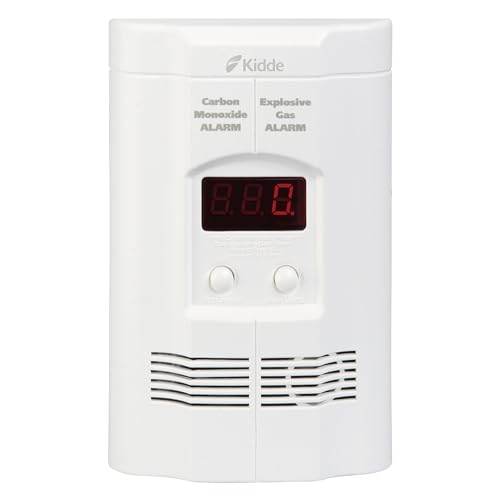


Natural-Gas-Detector with Plug-in Design, Gas-Leak-Detector with High Accuracy Sensor, Portable
View on AmazonProducts shown because their documented specifications fit this guide. Price and availability are on Amazon and can change.
Frequently Asked Questions
Will a smoke detector go off if there is a gas leak?
No. Unburned gas produces no smoke particles. A smoke alarm reacts only after the gas ignites, which is exactly the event a gas detector exists to prevent.
Can a gas detector be set off by burnt toast or cooking smoke?
Not by the smoke particles themselves. Semiconductor gas sensors can respond to vapors from cooking, especially alcohol in a sauce or a hot oil splatter, and to aerosols, which is why the detector should not sit right above the range.
Where does the gas detector go relative to the smoke alarm in a kitchen?
Smoke alarms are usually kept out of the kitchen itself to avoid nuisance alarms and placed in the hall outside. A natural gas detector goes inside the kitchen, high on a wall a few feet from the range; a propane detector goes low.
Is a smoke and CO combination alarm enough for a home with gas appliances?
It covers fire and carbon monoxide but not a fuel leak. Add a combustible gas alarm, or use a CO and explosive gas combination unit in the appliance room alongside the smoke alarms.
Affiliate disclosure: Akermin earns a commission from qualifying Amazon purchases made through links on this page. Our editorial picks are based on documented specifications and owner feedback, not commissions.
Related Guides

WiFi Natural Gas Alarm Review: One Unit Reveals the Whole Design
A WiFi natural gas alarm with an LCD showing gas concentration status and temperature, a stated response within 30 seconds, an alarm of at least 85 decibels and notifications to a phone app.
Read More→
Forensics Detectors Cl2 Review: 5 Percent of Full Scale Is 2.5 ppm
A rechargeable chlorine detector with an electrochemical sensor reading 0 to 50 ppm at 0.1 ppm resolution, a response time under 30 seconds, adjustable audible, visual and vibrating alarms and a supplied calibration certificate.
Read More→
Smart Sensor SO2 Detector Review: 0.1 ppm Steps, No Accuracy Figure
A clip on sulfur dioxide monitor built on an electrochemical sensor, reading 0 to 20 ppm in 0.1 ppm steps, with adjustable high and low alarms signalled by sound, flash and vibration and a rechargeable cell quoted at 8 to 9 hours.
Read More→