As an Amazon Associate, Akermin earns from qualifying purchases. Product links on this page are affiliate links.
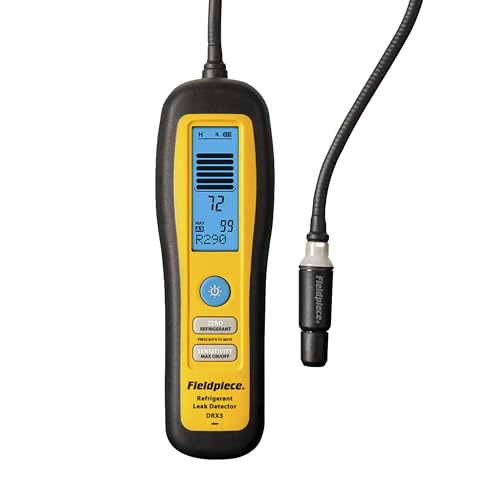
For the gas piping, burners and pilots in a commercial kitchen, P2 is the pick that does the most work: the listing states a heated diode sensor that finds combustible gases and A1, A2L and A3 refrigerants, with high, medium and low sensitivity settings and auto and manual zero, which is exactly the combination a kitchen service tech needs when the same van covers the range line and the walk-in. P4 is the pick when the job is protecting people rather than finding a leak: it is a four-gas monitor for oxygen, carbon monoxide, hydrogen sulfide and explosive gas, factory calibrated, with audio, visual and vibration alarms. P3 is the pick for ammonia only, and it is a monitoring meter for poultry and livestock buildings, not a kitchen leak locator, so buy it only if you are measuring NH3 in a plant room or a farm building. P1 is listed here as a Testo gas leak detector, but the listing gives no specifications at all, so it cannot be compared on range, sensor type or alarm behaviour.
Three gases, three instruments, and why a kitchen needs all three conversations
A commercial kitchen is not one gas environment. The range line, fryers, griddle and water heater run on natural gas or propane, and the failure you are hunting is a small leak at a union, a valve packing or a pilot assembly. The walk-in, reach-in and ice machine run on refrigerant, and since the move to A2L blends the leak question has changed: a slow leak on a new system is both a performance problem and, on some blends, a flammability question. If the site has a large ammonia refrigeration plant, the plant room is a third environment with its own gas, its own exposure limits and its own monitoring rules.
Those three jobs want different sensors. A heated diode or infrared sensor tuned for halogenated refrigerants will not see methane. An electrochemical ammonia cell will not see methane either. A catalytic or infrared combustible sensor will see methane and propane but not refrigerant. This is the single most common purchasing mistake in this category: buying one instrument and expecting it to cover the whole building. It will not, and the failure is silent, because the instrument simply reads zero on the gas it cannot see.
If you want the general mechanism, our page on how gas leak detectors work explains why the sensor chemistry determines the gas list, and the general gas leak detector roundup covers the domestic end of the market.
What the listing data actually tells you, pick by pick
The table below uses only what each listing publishes. Where a listing is silent, the cell says so rather than guessing.
| Pick | Gas targeted | Sensor stated | Range or resolution | Alarm | Power |
|---|---|---|---|---|---|
| P1 Testo 0632 0336 | Gas leak detection, unspecified | Not stated in the listing bullets | Not stated in the listing bullets | Not stated in the listing bullets | Not stated in the listing bullets |
| P2 Fieldpiece DRX3 | A3, A2L and A1 refrigerants; combustible gases; heating gases; HC, HFC, HCFC, CFC, HFO, H2/N2 tracer gas and blends | Heated diode, field replaceable | Not stated in the listing bullets; high, medium and low sensitivity settings | Visual and audio indicators that change with leak intensity | Field-replaceable batteries, described as long life |
| P3 AOPUTTRIVER | Ammonia (NH3) | Electrochemical | 0 to 100 PPM, 0.1 PPM resolution, response under 120 s | AL1 and AL2 thresholds, slow flash and buzzer, then rapid flash and buzzer at 80 dB | USB rechargeable lithium battery |
| P4 XLA Alert | Oxygen, carbon monoxide, hydrogen sulfide, explosive gas | Not stated in the listing bullets; factory calibrated | Error better than plus or minus 5 percent of full scale, response under 30 s | Audio, visual and vibration, three adjustable modes, alarm values stored | Rechargeable, capacity not stated |
Read the table as a coverage map. P2 covers the kitchen’s piping and its refrigeration. P4 covers the air a person is standing in. P3 covers ammonia. There is no overlap between P3 and the other two at all, and only P2 spans two of the three jobs.
Finding the leak versus proving the air is safe
These are different tasks and they are often confused. A leak detector is a search tool: you move the probe along a joint, a flare, a valve stem or a run of pipe and you watch for the reading or the tick rate to rise. Sensitivity matters here, because a leak that is invisible to a coarse instrument is still a leak, and on a busy line the goal is to find it before it becomes a call-back. P2’s high, medium and low settings exist for exactly this: high sensitivity to sweep, lower sensitivity to confirm and to stop the instrument saturating when you find the source. The auto and manual zero modes let you zero out background refrigerant in a small walk-in and then re-zero when you move to a different space.
A four-gas monitor does the opposite job. P4 does not locate anything. It sits on a person or on a bench and tells you when oxygen has dropped, when carbon monoxide or hydrogen sulfide has risen, or when explosive gas has reached a fraction of its lower explosive limit. The listing states factory calibration and a detection error better than plus or minus 5 percent of full scale, with a response under 30 seconds and audio, visual and vibration alarms. That is a personal protection specification, and it is the right instrument for a plant room, a basement boiler area or any confined space on the site. For the confined space case specifically, see four-gas selection for confined spaces.
One warning that belongs in any commercial kitchen discussion: a combustible gas sniffer does not detect carbon monoxide, and a refrigerant sniffer does not detect either. Carbon monoxide is a product of incomplete combustion, not a fuel leak, and it needs its own electrochemical cell. P4 has one. P2 does not, and its listing does not claim to.
The three picks, and the one the listing will not let us rank
Testo 0632 0336 Gas Leak Detector
Named as a gas leak detector by a brand known for combustion and HVAC instruments, but the supplied listing publishes no sensor type, no detection range, no alarm description and no battery information. It is included because it belongs in the category, not because there is anything to compare. If you are considering it, ask the seller for the sensor technology and the minimum detectable concentration before you commit, because those two numbers decide whether it can find a kitchen leak at all.
Fieldpiece DRX3 Refrigerant and Combustible Gas Leak Detector
The only pick here that targets both the kitchen’s gas piping and its refrigeration circuit. The listing states a field-replaceable heated diode sensor, detection of A3, A2L and A1 refrigerants plus combustible gases, support for HC, HFC, HCFC, CFC, HFO, H2/N2 tracer gas and blends, and heating gases. It has auto and manual zero and high, medium and low sensitivity settings, and visual and audio indicators that change with leak intensity. That combination is what lets you sweep a long run of pipe for a small leak without the alarm saturating on the first fitting.
AOPUTTRIVER Portable Ammonia Detector 0-100 PPM
An ammonia meter, not a combustible gas sniffer. The listing states an electrochemical sensor measuring 0 to 100 PPM with 0.1 PPM resolution, a response time under 120 seconds, simultaneous temperature and humidity display, adjustable AL1 and AL2 alarm thresholds with a slow flash and buzzer at level one and a rapid flash and buzzer at level two at 80 dB, and a rechargeable lithium battery with a storage case. It is aimed at poultry houses, pig barns and livestock buildings, which is where ammonia monitoring actually happens, and it will read ammonia in a plant room too, but it will not find a natural gas leak.
XLA Alert Portable 4 Gas Monitor
The personal protection instrument in this group. The listing states factory calibration for oxygen, carbon monoxide, hydrogen sulfide and explosive gas, a detection error better than plus or minus 5 percent of full scale, a response time under 30 seconds, zero and span calibration options, an ABS housing described as waterproof, dust proof and explosion proof to Exib IIB T3 Gb, and triple alarm modes with audio, visual and vibration plus data storage of alarm values. It tells you the air is becoming dangerous; it does not tell you where the leak is.
Ammonia in the plant room and why P3 is a different purchase
Ammonia refrigeration is common in larger food service and cold storage, and ammonia is toxic at concentrations far below the point where you would smell it as anything other than sharp. P3 is built for that world, but read the listing carefully: its stated applications are poultry houses, pig barns, coops and livestock facilities, where ammonia builds up from waste and affects animal health. The measurement problem is the same, an electrochemical cell reading 0 to 100 PPM at 0.1 PPM resolution, but the product is packaged for agricultural monitoring, with a tripod hole and a protective case for moving between buildings.
That does not make it wrong for a plant room. It makes it a fixed-point monitor rather than a leak locator. The AL1 and AL2 thresholds, with a slow flash and buzzer escalating to a rapid flash and buzzer at 80 dB, are designed to sit in a space and warn when concentration climbs. If you need to find the source of an ammonia smell, you need a different tool and a different technique, and the listing does not claim to provide one. There is also a second ammonia product in the wider market, P5, with a 0 to 200 PPM range and a stated accuracy of plus or minus 5 percent, but it is aimed at the same farm environment and it was not part of this comparison because it is functionally the same class of instrument as P3 and the listing adds no kitchen-specific capability.
Calibration, sensor life and the maintenance nobody schedules
Every instrument here drifts. P4’s listing is unusually explicit about it, offering zero calibration and span calibration and stating that engineers guide the user through the process. That is a signal, not a feature: a four-gas monitor that has not been span calibrated recently will still power on and still show a reading, and the reading may be wrong in the direction that matters. Oxygen cells in particular deplete with exposure and age, and a cell that reads 20.9 percent in clean air may be fine while a cell that reads 20.5 percent is telling you it is near the end of its useful life.
P2’s heated diode sensor is described as field replaceable, which is the practical answer to sensor death: the instrument body, the battery compartment and the electronics outlast the sensing element, so a replaceable sensor is what keeps the tool in service. P3’s electrochemical ammonia cell is not described as replaceable in the listing, and electrochemical cells have a finite life that shortens with exposure to the target gas, so a meter that lives in a barn will need attention sooner than one that lives in a case.
The maintenance nobody schedules is bump testing. A bump test exposes the instrument to a known concentration of the target gas to confirm the sensor responds and the alarm fires. It takes a minute and it catches the failure that calibration alone can miss, which is a sensor that reads correctly but no longer triggers the alarm. P4’s listing mentions data storage of alarm values, which is useful evidence that an alarm actually occurred, but it is not a substitute for a bump test. If you are building a service van around this work, the field technician toolkit guide covers what else belongs alongside these instruments.
Where this category stops being the right answer
A handheld detector is not a permanent gas detection system. If a commercial kitchen has a gas-fired appliance in a basement or an interior room, the code answer is usually a fixed detection and shut-off system, not a technician with a handheld. Handheld instruments are for finding leaks, commissioning, and personal protection during work, and they are not a substitute for a fixed installation with an automatic valve.
A handheld is also not a substitute for evacuation. If you smell gas, the correct action is to stop work, ventilate if it is safe, isolate the supply if you can reach it, and leave. No instrument changes that sequence. P4’s alarms are there to tell you to leave, not to tell you it is safe to stay.
And no instrument here replaces a pressure test or a combustion analysis. A leak detector confirms the presence of gas at a joint; it does not prove a system holds pressure, and it does not tell you whether a burner is running correctly. Those are separate tools and separate procedures. If your work is on the appliance side rather than the piping side, the appliance installer guide is the closer match.
Recommended Tools



Products shown because their documented specifications fit this guide. Price and availability are on Amazon and can change.
Frequently Asked Questions
Can one detector cover a commercial kitchen's gas piping, its refrigerants and its ammonia plant?
No. The sensors are gas-specific. P2 covers combustible gases and A1, A2L and A3 refrigerants because its heated diode sensor responds to both families. P4 covers oxygen, carbon monoxide, hydrogen sulfide and explosive gas with its own cells. P3 covers ammonia only. Buying one and assuming it sees everything is the most expensive mistake in this category, because a sensor that cannot see a gas reads zero rather than warning you.
Does P2 detect carbon monoxide?
The listing does not state carbon monoxide detection and the sensor is described as a heated diode for refrigerants and combustible gases, so treat it as not detecting CO. Carbon monoxide needs an electrochemical cell, which is what P4 carries. If CO is a concern in your kitchen, that is a separate instrument or a separate channel.
Is P4 suitable as the only gas detector for a commercial kitchen?
It is suitable as personal protection, not as a leak locator. It will warn you that explosive gas, CO, H2S or low oxygen is present in the air you are standing in, with alarms and stored alarm values. It will not tell you which joint is leaking. For that you need a search instrument like P2.
Why is P1 in this comparison if its listing has no specifications?
Because it belongs to the category and a reader may encounter it. The supplied listing gives a brand and a model description only, with no sensor type, no range, no alarm detail and no power information. We cannot rank it against the others on any technical basis, so we have not. Ask the seller for the sensor technology and the minimum detectable concentration before buying.
How often do these instruments need calibration or bump testing?
The listings do not publish a schedule, so follow the manufacturer's instructions and your site's procedures. What the listings do tell you is that calibration is expected: P4 offers zero and span calibration with engineer guidance, and P3 and P4 both rely on sensor technologies that drift with age and exposure. Bump testing before each use is the practical way to confirm the alarm still fires.
Can I use a farm ammonia meter like P3 in a commercial kitchen plant room?
It will measure ammonia there, since the sensor and range are the same, but the product is packaged for agricultural monitoring with a tripod hole and a carry case, and the listing's stated applications are poultry, pig and livestock buildings. It is a fixed-point monitor, not a leak locator. If you need to find an ammonia leak source rather than monitor a space, this is not the tool for that job.
Affiliate disclosure: Akermin earns a commission from qualifying Amazon purchases made through links on this page. Our editorial picks are based on documented specifications and owner feedback, not commissions.
Related Guides

WiFi Natural Gas Alarm Review: One Unit Reveals the Whole Design
A WiFi natural gas alarm with an LCD showing gas concentration status and temperature, a stated response within 30 seconds, an alarm of at least 85 decibels and notifications to a phone app.
Read More→
Forensics Detectors Cl2 Review: 5 Percent of Full Scale Is 2.5 ppm
A rechargeable chlorine detector with an electrochemical sensor reading 0 to 50 ppm at 0.1 ppm resolution, a response time under 30 seconds, adjustable audible, visual and vibrating alarms and a supplied calibration certificate.
Read More→
Smart Sensor SO2 Detector Review: 0.1 ppm Steps, No Accuracy Figure
A clip on sulfur dioxide monitor built on an electrochemical sensor, reading 0 to 20 ppm in 0.1 ppm steps, with adjustable high and low alarms signalled by sound, flash and vibration and a rechargeable cell quoted at 8 to 9 hours.
Read More→