As an Amazon Associate, Akermin earns from qualifying purchases. Product links on this page are affiliate links.
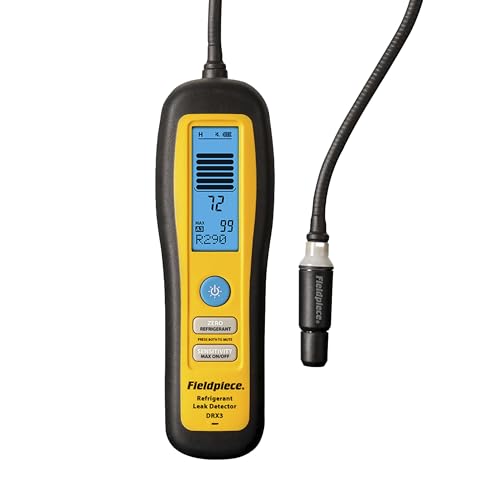
A refrigerant leak detector and a combustible gas detector are different instruments that happen to look alike. The refrigerant tool uses a heated-diode or infrared sensor tuned to halogenated refrigerants, the fluorinated and chlorinated compounds such as R-410A, R-134a, R-22 and R-1234yf. The combustible gas tool uses a sensor, usually a heated semiconductor element, tuned to fuels such as methane, propane and butane. Neither is documented to find the other’s gas, and treating them as interchangeable means missing leaks. The exception is a dual-chemistry unit such as the Fieldpiece DRX3, whose listing states A3, A2L and A1 refrigerants and combustible gases together. The sections below cover what each tool responds to, where hydrocarbon refrigerants blur the line, and which tool belongs in which kit.
What a Refrigerant Leak Detector Senses
Refrigerants in the A1 and A2L classes are halogenated compounds: chlorine or fluorine bonded to carbon. A heated-diode sensor breaks those molecules on a hot element and detects the halide ions released; an infrared sensor detects the way the molecules absorb infrared light. Both methods key on the halogen, which is why listings for these tools read as lists of refrigerant families. The Fieldpiece DR82 infrared listing states CFC, HCFC, HFC, HFO and blends, sensitivity under 0.03 oz/yr and a 10-year sensor. The Fieldpiece DR58 heated-diode listing states HFC, CFC, HCFC, HFO, H2N2 tracer gas and blends. Nothing in either list is a fuel gas. What a refrigerant leak detector is and how infrared and heated-diode sensing differ are covered separately.
What a Combustible Gas Detector Senses
A combustible gas sniffer such as the Klein ET120 is specified against methane: the listing states about 50 to 10,000 ppm based on methane, with High and Low ranges, five LEDs and an 85 dB alert. Sensors in this class respond to hydrocarbon fuels generally, which is why the TopTes PT520A listing names methane, propane, natural gas, LPG and butane, and why the UEi CD100A listing extends to acetone and ammonia. The common thread is oxidizable gases, not halogens. What gases a combustible gas detector detects goes through the full list. Fixed combustible gas alarms for homes carry a UL 1484 listing and are a separate category again; they watch a room continuously rather than being pointed at a fitting.
Side by Side
| Item | Refrigerant leak detector | Combustible gas detector |
|---|---|---|
| Target gases | Halogenated refrigerants: CFC, HCFC, HFC, HFO, blends | Fuel gases: methane, natural gas, propane, butane, LPG |
| Sensor types | Heated diode (consumable) or infrared (long-life) | Semiconductor (typical); catalytic bead in industrial units |
| Sensitivity units | oz/yr or g/yr of refrigerant, manufacturer-defined | ppm or percent LEL, referenced to methane |
| Example (documented) | Fieldpiece DR82: under 0.03 oz/yr, 10-year infrared sensor, IP54, 17-inch probe | Klein ET120: 50 to 10,000 ppm methane, High/Low ranges, 85 dB, 18-inch gooseneck |
| Finds a natural gas leak | Not documented | Yes |
| Finds an R-410A leak | Yes | Not documented |
| Finds an R-290 leak | Only if HC or A3 is listed (DRX3: yes; DR82: not listed) | Propane is a listed gas on most units, but the tool is not specified as a refrigerant detector |
| Dual-chemistry option | Fieldpiece DRX3: A3, A2L, A1 refrigerants and combustible gases, heated-diode sensor | |
Where Hydrocarbon Refrigerants Blur the Line
A3 refrigerants are the complication. R-290 is propane; R-600a is isobutane. They are refrigerants by use and fuel gases by chemistry, so a combustible gas sniffer’s sensor will respond to them while a halogen-keyed refrigerant sensor will not, unless the maker has designed for it. The Fieldpiece DRX3 listing is explicit: A3, A2L and A1 refrigerants, HC through HFO families, combustible gases and heating gases on one field-replaceable heated-diode sensor. The DR82 and DR58 listings do not mention HC or A3. As R-290 spreads through commercial refrigeration, this is the single most important line to read on a listing, and A2L refrigerant leak detectors explained covers the mildly flammable class that sits between A1 and A3.
Who Needs Which
- HVAC technician, residential AC: a refrigerant detector first; a combustible sniffer for furnace and gas valve work if the same person does heating. The refrigerant leak detector roundup covers the first purchase.
- Commercial refrigeration with R-290 equipment: a unit documented for A3, or a refrigerant detector plus a combustible sniffer.
- Plumber or gas fitter: combustible sniffer only. The combustible gas detector roundup covers fixed alarms and handhelds.
- Homeowner with gas appliances: fixed combustible gas alarms plus, optionally, one handheld sniffer. A refrigerant detector is not a homeowner tool.
- Home inspector: combustible sniffer and a CO meter; refrigerant leaks are outside the scope of a standard inspection.
What Neither Detects
Neither instrument detects carbon monoxide. CO is odorless, produced by incomplete combustion, and needs an electrochemical sensor of its own; a residential CO alarm carries a UL 2034 listing and, if it sounds, the response is to get to fresh air and call 911. A refrigerant sniffer, a combustible sniffer and a CO alarm are three tools, and gas leak detector versus carbon monoxide detector covers the third. For the combustible side, the same rule applies as always: a sniffer checks fittings in a room that smells clean, and a room that smells of gas is one to leave, without touching switches, before calling the utility or 911.
Recommended Tools


Products shown because their documented specifications fit this guide. Price and availability are on Amazon and can change.
Frequently Asked Questions
Will my Klein ET120 find a refrigerant leak?
It is not documented to. The ET120 listing states a detection range based on methane and describes it as a gas leak detector for combustible gases. Halogenated refrigerants such as R-410A are not combustible and are not what its sensor is specified for. Use a refrigerant detector.
Can an infrared refrigerant detector find a propane leak?
The Fieldpiece DR82 infrared listing states CFC, HCFC, HFC, HFO and blends. Propane is a hydrocarbon fuel and is not on that list. The DRX3 listing, by contrast, names A3 refrigerants, HC and combustible gases explicitly.
Do I need both tools in a home?
A homeowner with gas appliances needs a combustible gas sniffer and, more importantly, fixed alarms. A refrigerant detector is a technician tool; a homeowner who suspects an AC leak is better served by calling for service than by buying a sniffer for one job.
Affiliate disclosure: Akermin earns a commission from qualifying Amazon purchases made through links on this page. Our editorial picks are based on documented specifications and owner feedback, not commissions.
Related Guides

WiFi Natural Gas Alarm Review: One Unit Reveals the Whole Design
A WiFi natural gas alarm with an LCD showing gas concentration status and temperature, a stated response within 30 seconds, an alarm of at least 85 decibels and notifications to a phone app.
Read More→
Forensics Detectors Cl2 Review: 5 Percent of Full Scale Is 2.5 ppm
A rechargeable chlorine detector with an electrochemical sensor reading 0 to 50 ppm at 0.1 ppm resolution, a response time under 30 seconds, adjustable audible, visual and vibrating alarms and a supplied calibration certificate.
Read More→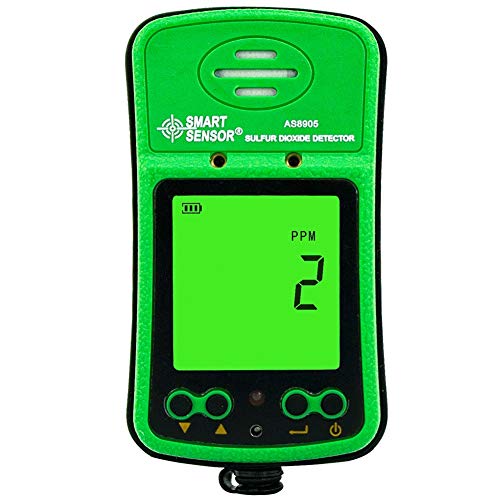
Smart Sensor SO2 Detector Review: 0.1 ppm Steps, No Accuracy Figure
A clip on sulfur dioxide monitor built on an electrochemical sensor, reading 0 to 20 ppm in 0.1 ppm steps, with adjustable high and low alarms signalled by sound, flash and vibration and a rechargeable cell quoted at 8 to 9 hours.
Read More→