As an Amazon Associate, Akermin earns from qualifying purchases. Product links on this page are affiliate links.
A combustible gas detector detects gases and vapors that can burn in air. For a home that means natural gas, which is mostly methane, and the LP gases propane and butane; every detector in this category responds to those. Depending on the sensor inside, it may also respond to hydrogen, alcohols, acetone and other solvents, gasoline vapor, ammonia and coal gas. What it does not detect is anything that does not burn: carbon monoxide, carbon dioxide, most refrigerants, radon and smoke all need a different sensor. The rest of this article lists what falls on each side of the line and why the sensor type moves it.
Gases Every Model Detects
- Methane and natural gas. The reference gas for almost every consumer detector; listings quote their ranges “based on methane.”
- Propane and butane (LPG). Heavier than air, so the detector must be positioned low to see them, but the sensor itself responds readily.
- Ethane and other light hydrocarbons present in utility gas in small amounts.
Whether the detector is a plug-in alarm such as the Kidde COPDLG, which its listing describes as detecting natural gas and propane, or a trade sniffer such as the UEi CD100A, these fuel gases are the design target.
Gases That Depend on the Sensor
Beyond the fuel gases, the list broadens or narrows with the sensing method. The four methods are described in gas detector sensor types; here is what each one adds or drops.
| Sensor | Also responds to | Does not respond to | Typical products |
|---|---|---|---|
| Semiconductor (MOS) | Hydrogen, alcohols, acetone, solvents, gasoline vapor, ammonia on some units, many reducing gases | CO2, refrigerants (for practical purposes), inert gases | Most pocket and gooseneck sniffers; most plug-in ppm monitors |
| Catalytic bead (pellistor) | Hydrogen and most flammable vapors that will burn on the catalyst | Anything in oxygen-poor air; response lost after silicone or lead poisoning | Industrial LEL monitors such as the TopTes Guard-101 LEL channel |
| Infrared (NDIR) | Hydrocarbons that absorb at the chosen wavelength | Hydrogen; gases outside the measured band | Fixed industrial sensors, some technician instruments |
| Electrochemical | Carbon monoxide only (in a CO alarm) | Methane, propane, butane | The CO half of combination alarms |
Manufacturer listings reflect this. The UEi CD100A names acetone, ammonia, butane, methane, natural gas, LPG and jet fuel. The RIDGID CD-100 micro adds ethanol, ammonia and hydrogen. The Forensics Detectors unit lists alcohols, acetone, ethanol, propane, butane, gasoline, diesel, isopropyl alcohol, toluene, LPG and LNG. Each is a semiconductor-class sniffer, and the long lists are a feature for a technician and a nuisance for a homeowner, since the same breadth is what makes hairspray and rubbing alcohol set them off. The semiconductor mechanism and its quirks are covered in semiconductor gas sensors, and the narrower, more selective infrared approach in infrared gas detectors.
What It Never Detects
- Carbon monoxide. CO comes from incomplete combustion, is odorless and needs an electrochemical cell. A combustible gas sensor is blind to it, and a CO alarm’s cell is blind to methane and propane. Combination units such as the Kidde models contain both sensors side by side; the article on gas leak detector versus carbon monoxide detector works through the difference.
- Carbon dioxide. Not combustible; measured by its own NDIR sensor at a different wavelength.
- Refrigerants. The common HVAC refrigerants are detected with dedicated instruments; what is a refrigerant leak detector explains that category.
- Radon, smoke and particulates. Entirely different hazards, entirely different sensors.
- Oxygen deficiency. Only a multi-gas monitor with an oxygen cell reports it.
Why “Based on Methane” Matters
Because the sensor responds to each gas with a different strength, a single calibration cannot serve them all. Consumer sniffers are calibrated against methane and their ppm or percent LEL figures are methane equivalents. Hold a methane-calibrated unit in propane and the display is still useful for locating the leak and ranking two fittings against each other, but the number is not a true propane concentration, and the alarm point on a fixed unit will not fall at exactly the same fraction of propane’s LEL (about 2.1 percent by volume) as it does for methane (about 5 percent). Some RV alarms, such as the Safe T Alert 20-441, are stated to alarm below 25 percent LEL for propane or methane, which reflects that both are within the sensor’s design. Where it matters is the display: this guide to ppm, LEL and volume explains what the numbers mean for gases other than the calibration gas.
Choosing by the List
For a home with natural gas or propane appliances, any model in the category detects what you need; the choice comes down to form, placement and readout, which the combustible gas detector explainer and the combustible gas detector roundup cover. For a workshop with solvents, a garage with gasoline or a job that includes hydrogen (battery rooms, some fuel cells) the extended list on the listing becomes the deciding factor, and an infrared unit is the wrong tool for hydrogen. The full field is in the gas leak detector guide.
Whichever list your detector carries, it is a warning device, not a decision maker. A gas smell or a sounding alarm means everyone leaves, no switch is touched on the way out, and the gas utility or 911 is called from outside; the detector’s job ends where that procedure begins.
Recommended Tools


Products shown because their documented specifications fit this guide. Price and availability are on Amazon and can change.
Frequently Asked Questions
Does a combustible gas detector detect gasoline or diesel vapor?
Semiconductor sniffers generally do; the Forensics Detectors listing names gasoline and diesel among its targets, and the TopTes PT299 lists gasoline. Response is not calibrated for those vapors, so treat the reading as presence, not quantity. Infrared sensors tuned to methane may respond weakly or not at all.
Will it pick up a refrigerant leak?
Do not count on it. Common refrigerants are not combustible in the way fuel gases are, and consumer sniffers are not designed for them. A refrigerant leak detector is a separate tool built around a different sensing method; see the refrigerant leak detector article linked below.
Does it detect sewer gas?
Sewer gas is a mix that includes methane and hydrogen sulfide, so a semiconductor sniffer held over a dry trap will often respond. That does not make it a sewer gas instrument; it cannot tell you which component it is reacting to or how much is present.
Why do listings say the range is "based on methane"?
Because the sensor is calibrated with methane and responds to other gases with a different strength. A reading of 500 ppm on a methane-calibrated sniffer held in propane is not 500 ppm of propane. The number is a methane equivalent, useful for finding the leak and comparing two fittings, not for stating a concentration of another gas.
Affiliate disclosure: Akermin earns a commission from qualifying Amazon purchases made through links on this page. Our editorial picks are based on documented specifications and owner feedback, not commissions.
Related Guides

WiFi Natural Gas Alarm Review: One Unit Reveals the Whole Design
A WiFi natural gas alarm with an LCD showing gas concentration status and temperature, a stated response within 30 seconds, an alarm of at least 85 decibels and notifications to a phone app.
Read More→
Forensics Detectors Cl2 Review: 5 Percent of Full Scale Is 2.5 ppm
A rechargeable chlorine detector with an electrochemical sensor reading 0 to 50 ppm at 0.1 ppm resolution, a response time under 30 seconds, adjustable audible, visual and vibrating alarms and a supplied calibration certificate.
Read More→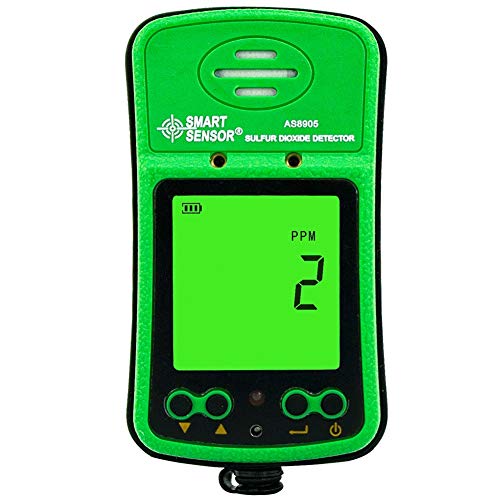
Smart Sensor SO2 Detector Review: 0.1 ppm Steps, No Accuracy Figure
A clip on sulfur dioxide monitor built on an electrochemical sensor, reading 0 to 20 ppm in 0.1 ppm steps, with adjustable high and low alarms signalled by sound, flash and vibration and a rechargeable cell quoted at 8 to 9 hours.
Read More→