As an Amazon Associate, Akermin earns from qualifying purchases. Product links on this page are affiliate links.
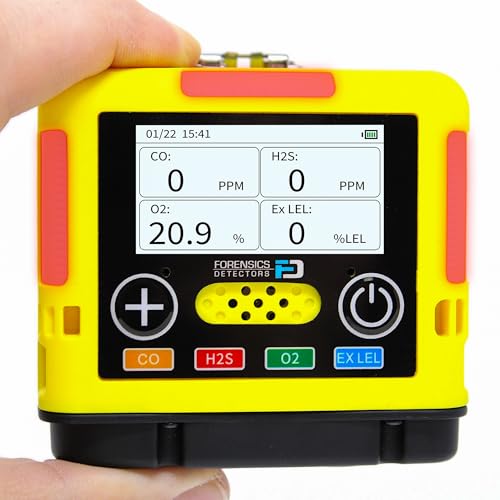
FORENSICS DETECTORS FD · 4 Gas Monitor | Mini & Small | USA NIST Calibration | O2, CO, H2S, LEL | USB Recharge |
View on AmazonPrice and availability are shown on Amazon and can change at any time.
The FORENSICS DETECTORS Gas Monitor is a compact four-gas monitor covering the standard confined space set: oxygen, carbon monoxide, hydrogen sulfide and combustible gas measured on the LEL scale. The listing states it arrives factory calibrated with calibration and QA certificates and that it is tested and verified in the USA. For a technician who needs a pocketable monitor with audio, visual and vibration alarms, that combination is the useful part of the offer.
The catch is that factory calibration is a starting point, not a maintenance schedule. The listing publishes no sensor ranges, no alarm preset values, no battery runtime and no ingress protection rating, so you cannot confirm from the bullets alone whether the LEL range suits your work or whether the alarm setpoints match your site rules. Buy it as a monitor you will put on a bump test and recalibration routine, not as a sealed instrument you can trust indefinitely.
The one line in the listing that decides everything
Read the FORENSICS DETECTORS Gas Monitor bullets in order and most of them describe hardware: nano sensors for four gases, adjustable audio, visual and vibration alarms, a rubberised ABS body that is water resistant, dust proof and explosion proof, USB charging. Those are the features a buyer scans first. The line that actually determines whether the instrument can be used on a regulated site is buried in the fifth bullet: it arrives factory calibrated, with calibration and QA certificates, tested and verified in the USA.
That matters because a four-gas monitor is only as good as its last valid calibration. A sensor that reads oxygen correctly on the bench can drift after months in a van, and a combustible sensor can lose sensitivity after exposure to silicones or leaded vapours. An instrument that ships with a dated calibration certificate gives you a defensible starting point and a paper trail. An instrument that ships without one leaves you guessing until your first bump test.
The listing does not publish the calibration date, the gas concentrations used, or the certificate format. It also does not state a recommended bump test interval. Those are the questions to put to the seller before the purchase order goes out, because on many sites the answer decides whether the unit is accepted at the gate at all.
What the four sensors cover, and what they do not
The sensor set is the conventional confined space quartet. Oxygen is measured as a percentage of volume, which is how you catch both oxygen deficiency and oxygen enrichment. Carbon monoxide and hydrogen sulfide are measured in parts per million and are the two acute toxics most often associated with combustion and with sewage or petrochemical work. Combustibles are measured on the LEL scale, meaning the instrument reads a percentage of the lower explosive limit rather than a raw concentration.
If the difference between ppm and LEL is not second nature, the site explains it in how ppm, LEL and volume relate in gas detection. The short version is that LEL is gas specific: the same percentage reading means a different actual concentration depending on which combustible the instrument is calibrated against. The FORENSICS DETECTORS Gas Monitor listing does not state which gas the LEL channel is calibrated to, and that is a genuine gap for anybody working with a known fuel.
What the instrument does not do is equally important. It does not detect every toxic gas. It has no channel for chlorine, ammonia, sulfur dioxide or hydrogen cyanide, so it is not a substitute for substance-specific detection where those hazards exist. It is also not a leak sniffer: it will not find a pinhole propane leak the way a dedicated detector does, and the site covers that distinction in whether gas detectors can find small leaks. Treat the FORENSICS DETECTORS Gas Monitor as a personal protective monitor for the four gases named, not a general purpose survey instrument.
Alarms, housing and charging: what is stated and what is missing
The listing says the alarms are adjustable and trigger when preset levels are reached, with audio, visual and vibration notification. Vibration matters more than buyers expect: in a noisy plant or with the unit clipped to a harness under clothing, the sounder may be masked, and the vibration is what reaches the wearer. What the listing does not publish is the preset values themselves, the sound pressure level of the alarm, or whether the setpoints can be locked to a site standard. Ask before you buy if your permit system specifies alarm thresholds.
The housing is described as rubber feel with high strength ABS and an anti-slip grip, water resistant, dust proof and explosion proof. Those are claims in the listing, not published ratings. No IP number and no hazardous area certification class appear in the bullets, so a buyer who needs an intrinsically safe instrument for a classified zone should obtain the certificate before relying on the explosion proof wording. The distinction between a rugged housing and a certified intrinsically safe device is not cosmetic.
Charging is by USB. The listing gives no battery capacity, no runtime figure and no charge time.
Where this monitor fits and where it stops being the right answer
The FORENSICS DETECTORS Gas Monitor suits a technician, contractor or facilities team that needs one pocketable instrument covering the common confined space gases, with alarms on the person and a calibration certificate in the case. It is the kind of unit you clip on before entering a pit, a tank, a sewer chamber or a plant room, and bump test at the start of the shift.
It stops being the right answer in three situations. First, when the hazard is a gas outside the four channels: a refrigerant leak in a plant room calls for a dedicated refrigerant detector such as the Aituzero Refrigerant Leak, not a four-gas monitor. Second, when the job is single gas monitoring over long periods and a small clip-on device is more practical; the HAOKESITE 0100ppm is an H2S-only clip monitor, and the site compares that class in H2S detector choices. Third, when the environment is a vehicle or living space with a fixed fuel supply, where a hardwired alarm such as the Leakbee RV Propane is the appropriate device rather than a portable monitor.
None of those alternatives replaces the FORENSICS DETECTORS Gas Monitor for confined space entry, and the FORENSICS DETECTORS Gas Monitor does not replace them. A four-gas monitor is a personal monitor, not a fixed alarm, and it does not satisfy a requirement for area monitoring or for a gas-specific survey.
The maintenance the listing does not describe
A four-gas monitor lives or dies on its routine. The listing mentions zero and span calibration options, which tells you the instrument supports both a fresh-air zero and a span adjustment against a known gas. That is the mechanism behind a bump test: you expose the sensors to a known concentration, confirm each channel responds within tolerance, and only then trust the readings.
What the listing does not provide is a calibration interval, a sensor replacement schedule, or a statement of expected sensor life. Those are the numbers that determine the real cost of ownership, and they differ by sensor type and by exposure history. The practical approach is to set a bump test before each use and a full calibration at an interval your site permits specifies, and to record both. The site’s guide to calibration kits explains what gas and regulator you need to do that properly.
One more omission worth naming: the listing does not state whether the sensors are user replaceable. If they are not, the instrument has a finite service life and should be budgeted as such.
Should you buy the FD mini four-gas monitor?
Buy the FORENSICS DETECTORS Gas Monitor if you need a compact personal monitor for oxygen, carbon monoxide, hydrogen sulfide and combustible gas, and you value arriving with calibration and QA certificates and a stated US test and verification. Those are the parts of the listing that carry real weight for a site that audits paperwork.
Do not buy it on the assumption that factory calibration removes the need for bump testing, and do not buy it for gases outside its four channels or for leak surveying. Before ordering, ask the seller for the alarm setpoints, the LEL calibration gas, the IP and hazardous area certification, the battery runtime and the sensor replacement policy. The listing is silent on all of these, and on a life safety instrument silence is a question, not an answer.
Recommended Tools


Products shown because their documented specifications fit this guide. Price and availability are on Amazon and can change.
Frequently Asked Questions
Does factory calibration mean I never need to calibrate it again?
No. Factory calibration establishes a documented starting point. The listing offers zero and span calibration options, which exist precisely because sensors drift. Plan a bump test before use and a full calibration on the interval your site permits require. The listing does not publish a recommended interval.
What does the LEL channel actually measure?
It measures combustible gas as a percentage of the lower explosive limit, not as a raw concentration in ppm. The listing does not state which gas the LEL channel is calibrated against, so confirm that before relying on the reading for a specific fuel.
Is it intrinsically safe for classified areas?
The listing says explosion proof, but it publishes no certification class and no IP rating. Obtain the certificate from the seller before taking it into a classified zone. Rugged housing and certified intrinsic safety are different things.
Will it detect a small propane leak in a room?
Not reliably as a leak survey tool. It is a personal monitor for the four named gases. For locating a small leak, a dedicated leak detector is the right instrument, as discussed in this guide to small leak detection.
How long does the battery last and how is it charged?
It charges over USB. The listing does not publish battery capacity, runtime or charge time, so ask the seller if shift length matters to your use.
Can I replace the sensors myself?
The listing does not say. If user replacement is not supported, treat the instrument as having a finite service life and budget accordingly.
Affiliate disclosure: Akermin earns a commission from qualifying Amazon purchases made through links on this page. Our editorial picks are based on documented specifications and owner feedback, not commissions.