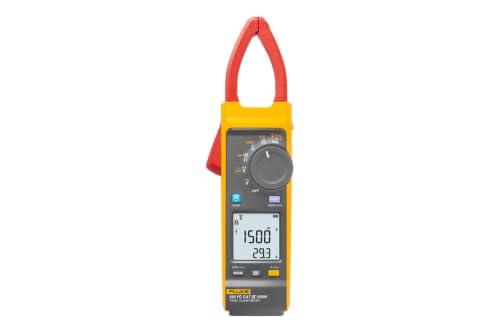
Fluke 393 FC Solar Clamp Meter
CAT III 1500 V, IP54 and a DC power measurement built for PV strings.
- CAT III 1500 V rating stated
- IP54 rated for outdoor and rooftop work
- DC power measurement stated
- Audible polarity indication stated
A clamp meter used on a solar array has to do two things an ordinary clamp does not: measure DC current accurately and survive string voltages that reach 1500 V. This hub compares what each listing states about safety rating, DC voltage ceiling and current range, and is explicit about which entries are PV test kits rather than clamp meters.
DC Current Is Different
Check the CAT
Check the Volts
As an Amazon Associate, Akermin earns from qualifying purchases. Product links on this page are affiliate links.
Every entry here is aimed at photovoltaic work, but they are not all clamp meters: two are multifunction PV test kits and one is a multimeter bundled with a wireless clamp, and the Type column says so. The comparison is on the three specifications that decide whether an instrument can legally and safely go on a string: the stated CAT rating, the stated DC voltage ceiling and the current range. Figures are the manufacturers own and we ran no tests.
CAT III 1500 V, IP54 and a DC power measurement built for PV strings.

The highest stated DC voltage and current figures on the page.

1000 A AC and DC with a stated 1700 V DC range at the lowest tier here.
No pick matches that combination yet. Try a wider budget or a different measurement.
| Product | Type | Stated CAT rating | Stated DC voltage | Stated current | Solar features stated | |
|---|---|---|---|---|---|---|
| Fluke 393 FC Solar Clamp Meter | Solar clamp meter | CAT III 1500 V | Not stated | Not stated | DC power, audible polarity, IP54 | View |
| Fluke 393FC with solar test lead kit | Solar clamp meter kit | CAT III 1500 V | Not stated | Not stated | DC power, IP54, solar test leads | View |
| Fluke 393FC with irradiance meter kit | Solar clamp meter kit | CAT III 1500 V | Not stated | Not stated | Irradiance meter and solar test leads | View |
| Klein Tools CL910 | General clamp meter | Not stated | Up to 2000 V | 2000 A AC and DC | Solar named as an application | View |
| ZIBOO 393 true RMS clamp | General clamp meter | Not stated | 1700 V DC range | 1000 A AC and DC | None stated | View |
| Extech MA1500 | General clamp meter | Not stated | Not stated | 1500 A AC and DC | True RMS and non-contact voltage | View |
| Fluke 283FC/PV kit | Multimeter with wireless clamp | CAT III 1500 V and CAT IV 1000 V | Not stated | 60 A wireless AC and DC clamp | Solar test leads included | View |
Note the pattern in the CAT rating column. The instruments that state a category rating state no current range, and the instruments that state large current ranges state no category rating. A measurement range and a safety rating are different claims and neither substitutes for the other. The last two rows are multifunction PV commissioning kits rather than clamp meters, included because they appear in the same searches.
Safety rating first, range second, features third:
The category and voltage rating describe what the instrument can survive, not what it can display. A modern PV string needs a rating that covers it, and no measurement range is a substitute.
Many clamp meters measure AC current only, because the transformer principle they use needs a changing field. A solar clamp must state DC current explicitly, usually meaning a Hall effect sensor.
A single string carries modest current and a combiner output carries a great deal. Choose the current range for the point you will actually clamp, not for the array total.
PV work happens on roofs and in fields. An IP rating, a backlight and a display readable in sunlight matter more here than on an indoor panel job.
Most clamp meters use a current transformer, which only responds to a changing magnetic field and therefore only reads AC. Photovoltaic string current is DC and produces a steady field, so the transformer sees nothing. Meters that read DC current use a Hall effect sensor instead, which is why DC current capability is stated separately and costs more.
One that covers the highest voltage the circuit can present, in the category that matches the location. Residential strings often stay under 600 V, commercial systems reach 1000 V and utility arrays 1500 V, and open-circuit voltage rises further in cold weather. Never use an instrument or a lead above its rating, and remember that the leads carry a rating of their own.
No, and confusing the two is the most dangerous mistake on this page. A measurement range is what the display can show. A category rating is the transient overvoltage the instrument is built to survive without failing dangerously. An instrument can have a large range and no meaningful safety rating at all.
Yes, every time. Hall effect sensors drift with temperature and are affected by nearby magnetic fields and by the earth field itself, so a DC clamp should be zeroed with the jaws closed and empty, in the position you will use it, immediately before the measurement. Skipping it is a common source of readings that are wrong by amps rather than milliamps.
Not for a current reading. Clamping the positive and negative together should read close to zero, because the currents cancel. That is in fact a useful check for leakage, but for load current the clamp goes around one conductor only, which on a PV cable often means separating the pair first.
The 393 FC is the instrument this category was created for. Fluke states a CAT III 1500 V rating, which is the specification that matters most and the one almost no general-purpose clamp meter carries: a standard CAT III 600 V or CAT IV 600 V clamp has no business on a modern PV string, and using one there is not a judgement call.
Two other stated features are specific to solar work rather than general electrical work. DC power measurement means the instrument reports watts on the DC side directly rather than leaving you to multiply two readings taken at different moments, which matters because irradiance changes between them. Audible polarity indication means the meter tells you which way the current is flowing without you having to look at the display, which on a roof, at arm's length, with the display in the sun, is a genuine safety feature rather than a convenience.
IP54 covers the dust and splashing water of outdoor installation work. The listing does not state the current ranges, the basic accuracy or the jaw opening, so a buyer working on large parallel combiner outputs should confirm the current ceiling with Fluke first. It is the most expensive way to measure current on this page and the one with the clearest safety credentials.
Where the Fluke leads on safety certification, the Klein CL910 leads on raw range. The listing states DC voltage measurement to 2000 V and current to 2000 A on both AC and DC, and names power distribution networks, solar panel installations and wind turbine systems as the intended applications. Those are the largest numbers in this comparison by a wide margin.
The current figure is the one that separates it in practice. A single PV string carries modest current, often under 15 A, but a combiner box output with eight or ten strings in parallel does not, and neither does the DC bus of a large battery installation. An instrument that tops out at a few hundred amps cannot measure at those points at all, and the 2000 A jaw capability puts the CL910 into the part of the system where the current has already been aggregated.
True RMS and auto-ranging are both stated, along with a worklight and a backlight for panel and combiner interiors. What the listing does not state is a CAT rating, and that omission is important: a 2000 V measurement range and a safety category rating are different claims, and only the second one describes what the instrument can survive. Confirm the category rating with Klein before using it on any string above the CAT rating of the leads you have.
The ZIBOO 393 offers the specification profile of a solar clamp at a fraction of the tier. The listing states 1000 A of AC and DC current measurement, 6000-count true RMS, and a 1700 V DC high voltage range, alongside the usual auto-ranging multimeter functions in the same body.
For a contractor who works on residential and small commercial arrays and needs DC current and DC voltage without buying into a premium instrument family, that is a reasonable set of numbers. True RMS matters less on the DC side than on the AC side, but the same meter will be used on inverter output and household circuits where it matters a great deal, and 6000 counts is standard for a general-purpose handheld.
The caution is the same as for the Klein and it is more serious at this tier. The listing states a 1700 V DC measurement range but no CAT rating, and those are not the same thing. A voltage range describes what the display can show; a category rating describes the transient energy the insulation and internal protection are designed to survive. Before this meter touches a string above the voltage class you would trust a general-purpose meter on, get the CAT rating from the manufacturer in writing.
Short answer: the Fluke 393 FC is the safest documented choice because it states CAT III 1500 V along with DC power measurement and audible polarity; the Klein CL910 covers the largest numbers on the page with 2000 V DC and 2000 A but does not state a CAT rating; and the ZIBOO 393 gives 1000 A on AC and DC with a 1700 V DC range at the lowest tier here, again without a stated category rating.
Look down the comparison table and a pattern appears. Every instrument that states a CAT rating states no current range, and every instrument that states an impressive current or voltage range states no CAT rating. That is not a coincidence in how the table was built; it is how these products are marketed. A measurement range is a display specification, describing the largest number the instrument can show. A category rating is a safety specification, describing the transient overvoltage the insulation, spacings and internal protection are designed to survive without the instrument failing in a way that injures the person holding it. A meter with a 2000 V range and no category rating is telling you what it can read, not what it can withstand. On a photovoltaic string, where the source cannot be switched off and DC faults sustain arcs, that distinction is the difference between a safe measurement and a serious one.
A conventional clamp meter is a current transformer with a hinged core. It works because alternating current produces a changing magnetic field that induces a voltage in the secondary winding. Direct current produces a steady field, induces nothing, and reads as zero. Meters that measure DC current use a Hall effect sensor in the jaw gap instead, which responds to field strength rather than field change. Two practical consequences follow. First, DC-capable clamps cost more and must state the capability explicitly; an unstated DC current function means the meter does not have one. Second, Hall sensors drift, so a DC clamp has to be zeroed with the jaws closed and empty immediately before each measurement, held in the orientation it will be used in. Technicians who skip that step get readings that are wrong by whole amps and never find out why.
PV current aggregates as you move toward the inverter. An individual module produces a short-circuit current that is usually well under 15 A. A string in series carries the same current as one module. A combiner box that parallels eight or ten strings carries eight or ten times that, and the DC bus of a battery installation can carry far more again during bulk charging. This is why the range spread in the table is so wide, from a 60 A wireless clamp in the Fluke 283FC/PV kit to 2000 A on the Klein CL910. Buy for the point you will actually measure. A technician checking individual strings at the combiner needs modest current and high voltage capability; an engineer working on the battery side of a commercial installation needs the opposite.
There is no isolator that makes a photovoltaic module safe in daylight. It sits at its open-circuit voltage until something loads it, and that voltage rises as temperature falls, so the worst case is a clear winter morning. Direct current does not cross zero a hundred times a second, so an arc that starts does not self-extinguish, which is why PV connector faults burn rather than trip. Work the sequence: isolate at the string and the combiner, break connections with the correct MC4 tool and never under load, check the instrument and the leads are both rated above the cold-weather open-circuit voltage, zero the DC clamp, and clamp one conductor rather than the pair. Treat every conductor as live throughout. Our clamp meter for solar PV guide goes through the selection in detail and the 1500 V DC multimeter guide covers the handheld that goes with it.
The specific guides that sit under this hub:
If you work on photovoltaic strings for a living, buy the instrument that states the safety rating, because that is the one specification you cannot verify yourself and cannot afford to be wrong about. If you need very large current readings at a combiner or a battery bus, the Klein has the range, but establish its category rating with the manufacturer before it goes near a string. If the budget is tight and the work is residential, the ZIBOO covers the measurements, with the same caveat applied more firmly. And if what you actually need is a commissioning certificate rather than a current reading, the last two rows of the table are the instruments, and they are not clamp meters at all.
Instruments were compared on manufacturer listing text: stated CAT and voltage ratings, stated DC voltage measurement range, stated AC and DC current ranges, ingress protection, and any solar-specific function such as DC power measurement, polarity indication or bundled test leads. Where a listing states a measurement range but no safety rating we report exactly that rather than inferring one. Entries that are commissioning kits rather than clamp meters are labelled in the Type column. We ran no tests and publish no measurements of our own. Amazon data supplies images, availability and links only.

A solar insulation resistance tester that works on energised PV strings up to DC 1000 V, with test voltages of 125, 250, 500 and 1000 V, a range to 4000 megohms, automatic discharge, 1000 stored result sets and USB or Bluetooth transfer.
Read Guide→
A 12 volt battery, cranking and charging system tester covering 100 to 2000 CCA that reports state of health, state of charge, voltage, current and CCA, drawing its own power from the battery under test.
Read Guide→
A handheld solar irradiance meter reading 0 to 1999 watts per square metre or 0 to 634 BTU per square foot per hour, with a selectable 199.9 or 1999 scale, maximum and minimum tracking, data hold and manual zeroing.
Read Guide→