As an Amazon Associate, Akermin earns from qualifying purchases. Product links on this page are affiliate links.

KAIWEETS · KAIWEETS Inrush Digital Clamp Meter 1000A with Backlit; Multimeter TRMS 6000 Counts, Amp Voltage Tester with VFD, LOZ Mode; Measures AC/DC Current Voltage Temperature Resistance NCV - Upgraded Screen
View on AmazonPrice and availability are shown on Amazon and can change at any time.
The KAIWEETS clamp meter is a general-purpose 1000 A AC/DC true-RMS clamp with a built-in inrush mode, NCV detection, VFD and LoZ settings, and a CAT IV 600 V / CAT III 1000 V safety rating. The listing states the inrush measuring time is about 100 ms and that the function works only in AC current mode and only when current exceeds 10 A. That combination makes it a sensible choice for checking starting current on AC motors, compressors and similar loads that draw well over 10 A. It is not the right tool for catching short transients faster than 100 ms, for DC inrush, or for low-current electronics work where the 10 A floor rules the inrush function out entirely. Buyers who need those things should look elsewhere; buyers doing routine AC starting-current checks will find the feature set matches the task.
The 100 ms inrush window is the specification that decides the job
Inrush current is the brief surge a motor, compressor or transformer draws when it first energises, before the magnetic field settles and the rotor comes up to speed. It can be several times the running current and it lasts only a fraction of a second. A clamp meter that samples slowly will miss the peak or average it away. The KAIWEETS listing states the inrush measuring time is about 100 ms. That is the window the instrument uses to capture the starting surge.
For a typical direct-on-line AC motor, a 100 ms window is long enough to include the starting peak and short enough to exclude the steady running current that follows. That is why the feature is useful for locating a startup problem: if the inrush reading is far higher than expected, the fault may be mechanical binding or a failing start capacitor; if it is far lower, the start winding or starting circuit may not be engaging. The listing makes exactly this point, saying the value helps locate a startup problem in the motor or the starting circuit.
The same 100 ms window is a limit. A surge that rises and falls inside 20 ms, such as some capacitor charging events or very fast electronic loads, may not be captured at its true peak. The listing publishes no peak-hold response time separate from the inrush window, so a buyer who needs sub-100 ms capture should treat this instrument as unproven for that job rather than assume it will catch everything. For more on matching a clamp to motor work, see clamp meters for DC motor checks.
The 10 A floor and the AC-only rule narrow the inrush function
The listing is unusually direct about two restrictions. First, the inrush function is only available in AC current mode. Second, when the current is greater than 10 A, the inrush function works well. Read together, those two sentences mean the inrush feature is designed for AC loads above 10 A. Below that threshold the listing does not promise useful inrush behaviour, and on DC there is no inrush function at all.
That matters because a lot of the loads people want to check are small. A domestic refrigerator compressor may run at only an amp or two, with a starting surge that is brief and modest in absolute terms. A small fan motor or a control transformer may never approach 10 A. For those, the inrush mode on this clamp is the wrong tool, and the honest answer is to use a meter with a lower inrush floor or a different measurement approach. The listing does not publish a minimum resolvable inrush current, so the exact behaviour between zero and 10 A is not stated.
The AC-only rule also means this is not a DC inrush instrument. If the job is checking the startup of a DC motor or a battery-fed system, the inrush function will not engage. The clamp still measures DC current, but without the inrush capture. Buyers who need DC inrush should look at a meter specified for it; the clamp meters with inrush page covers the category more broadly.
What the 1000 A range and true-RMS measurement actually cover
The listing states the clamp measures 1000 A AC/DC current and 1000 V AC/DC voltage, with true-RMS conversion and a 6000 count display. True-RMS matters on any load that is not a clean sine wave, which includes most modern motor drives, dimmers and switching supplies. A non-true-RMS meter can read low or high on distorted waveforms, and the error is not obvious from the display. The listing does not publish a crest factor or an accuracy specification, so the true-RMS claim should be read as a statement of method rather than a guarantee of a particular accuracy.
The 1000 A range is generous for domestic and light commercial work. Most panel feeders and motor branch circuits sit well below that. The practical question is not whether 1000 A is enough, but whether the jaw opening and the resolution at low currents suit the work. The listing does not publish the jaw size or the resolution at each range, so a buyer who needs to clamp around a specific busbar or cable should check those figures against the physical product before buying. The guide to choosing a clamp meter explains why jaw size and low-range resolution often matter more than the headline maximum.
The listing also states frequency, duty cycle, resistance, capacitance, diode, continuity and temperature functions. Temperature is included, which is useful for checking motor winding or bearing temperature after a run, though the listing does not state the thermocouple type or the temperature range. That is a gap worth noting: a temperature function without a published range and probe type is hard to compare against a dedicated thermometer.
VFD and LoZ modes, and why the listing’s safety rating is the other deciding figure
The listing states the clamp has Variable Frequency Drive Filtering (VFD) and low input impedance (LoZ) modes, described as providing higher accuracy readings. VFD filtering is relevant when measuring the output of a variable frequency drive, where the waveform is a pulse-width modulated approximation of a sine wave and a plain average-responding meter can be badly misled. LoZ mode presents a low impedance to the circuit, which drains ghost or capacitive-coupled voltage that would otherwise show up on a high-impedance meter as a false reading. Both are useful, and both are the kind of feature that separates a general multimeter from one aimed at electrical troubleshooting. The clamp meters for VFD measurements page goes into the mechanism further.
The other deciding figure is the safety rating. The listing states IEC 61010-1, CAT IV 600 V and CAT III 1000 V, with double insulation. CAT IV 600 V is the rating for measurements at the origin of the installation, such as service entrances and meter tails, where transient energy is highest. CAT III 1000 V covers distribution circuits and fixed installations. For a homeowner or tradesperson working on domestic panels and motor circuits, those ratings are appropriate. What the listing does not publish is the maximum interrupting rating or the fuse specification, so the safety case rests on the stated category rather than on a detailed breakdown. The CAT rating explainer covers what the categories mean in practice.
Where this clamp stops being the right answer
Three boundaries are worth stating plainly. First, the inrush function is AC-only and specified to work well above 10 A, so low-current AC starting checks and all DC inrush work fall outside its stated capability. Second, the listing publishes no accuracy figures, no jaw size, no resolution table and no temperature range, so a buyer who needs to prove a measurement to a particular tolerance cannot do so from the listing alone. Third, this is a meter, not an alarm or a logger. It displays a reading when you look at it; it does not record, trend or alert. For power quality recording over time, a different class of instrument is needed, such as the three-phase recorder in the ETCR 3-Phase, which is a power quality analyser rather than a handheld clamp.
The listing also states a 36-month product service and 7/24 customer service. Those are support terms, not measurement specifications, and they do not change what the instrument can measure. The honest summary is that the KAIWEETS clamp is a broad-function AC/DC clamp with a useful but clearly bounded inrush mode, and the buyer’s job is to check whether their inrush work sits above 10 A on AC. If it does, the feature set lines up. If it does not, the listing itself tells you to look elsewhere.
Verdict: right for AC starting-current checks above 10 A, wrong for everything below
The KAIWEETS 1000 A clamp meter is a sensible buy for a tradesperson or technician who needs routine AC inrush checks on motors and compressors that draw well over 10 A, with true-RMS, VFD and LoZ modes and a CAT IV 600 V rating as supporting strengths. The listing is clear that the inrush function is AC-only and works well only above 10 A, and it publishes no accuracy, jaw size, resolution or temperature range. Buyers whose work sits below that threshold, on DC inrush, or who need documented accuracy should treat those silences as disqualifying and choose a meter that publishes the figures their job requires.
Recommended Tools


Products shown because their documented specifications fit this guide. Price and availability are on Amazon and can change.
Frequently Asked Questions
Does the inrush function work on DC motors?
No. The listing states the inrush function is only available in AC current mode. The clamp measures DC current, but without inrush capture.
What is the smallest inrush current this meter will capture?
The listing does not publish a minimum resolvable inrush current. It states that when the current is greater than 10 A the inrush function works well, which implies the function is not specified for lower currents.
How long a window does the inrush measurement use?
The listing states the measuring time of the inrush current is about 100 ms. Surges shorter than that may not be captured at their true peak, and the listing publishes no separate peak-hold response time.
Is the accuracy published?
No. The listing states true-RMS and a 6000 count display but does not publish accuracy figures, resolution per range, or a crest factor. A buyer who needs to prove a measurement to a tolerance cannot do so from the listing alone.
What safety rating does it carry?
The listing states IEC 61010-1, CAT IV 600 V and CAT III 1000 V, with double insulation. It does not publish a maximum interrupting rating or fuse specification.
Does it measure temperature out of the box?
The listing states a temperature function but does not publish the thermocouple type, the temperature range, or whether a probe is included. Check the supplied accessories before relying on it for temperature work.
Affiliate disclosure: Akermin earns a commission from qualifying Amazon purchases made through links on this page. Our editorial picks are based on documented specifications and owner feedback, not commissions.
Related Guides
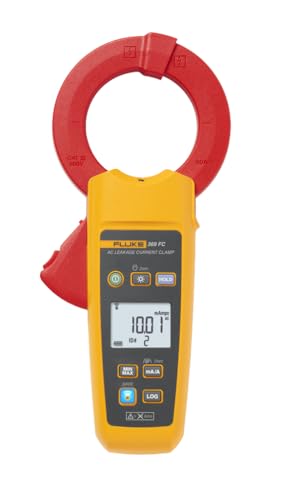
Fluke FLUKE-369 FC Leakage Current Clamp Meter Review: What the Listing Leaves Out
A source-led review of the Fluke 369 FC that highlights the unpublished specifications and their practical consequences.
Read More→
HiLetgo LCR-T4 Component Tester Review: The First Hour
A first-hour review of the HiLetgo LCR-T4 kit, covering what it measures, what the listing leaves out, and when a different instrument is the better answer.
Read More→
Klein Tools CL900 Clamp Meter Review: What the Listing Leaves Out
A specification-by-specification review of the Klein Tools CL900 that flags every gap in the published listing.
Read More→