
How to Understand NETD and Thermal Sensitivity
Read the millikelvin figure and its test conditions, then match it to the contrast your job produces.
Read Guide→Research-based buying guides that compare the leading options by documented specifications, real use cases and value.
Read the millikelvin figure and its test conditions, then match it to the contrast your job produces.
Read Guide→
Find the native array, compute the pixel patch at your working distance, and ignore every other number.
Read Guide→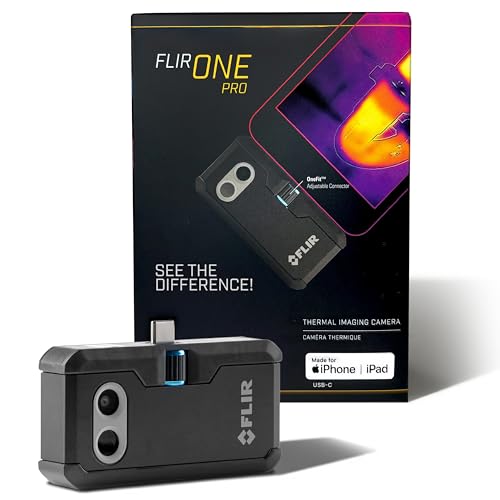
Connector, native resolution, whether it has its own battery, and an app that keeps the images. The phone does the rest.
Read Guide→Sensitivity for airflow and coil patterns, a wide lens for ducts and ceilings, and a range that covers compressors and flues.
Read Guide→Higher temperature range, tighter accuracy, small spot size at distance, and the discipline to stay clear of the arc-flash boundary.
Read Guide→Native 160×120 or better, NETD under 70 mK, manual span, visible overlay, and a workflow you will actually use.
Read Guide→
Match the tool to the question: damp, heat loss, air, electrics, hidden spaces. A core kit and what to add.
Read Guide→
Find the as-found values, the uncertainty, the reference and the traceability. The rest is administration.
Read Guide→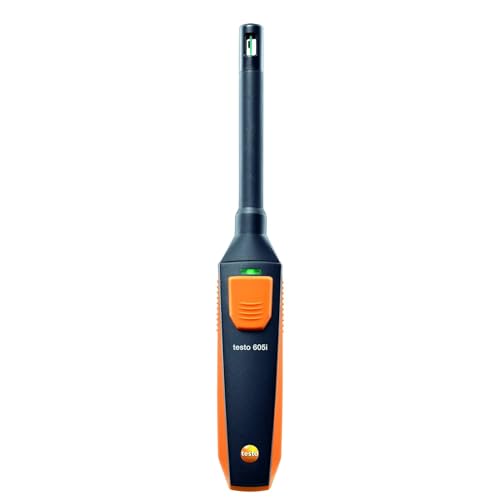
Three numbers on a datasheet, three different questions. A worksheet for comparing any two instruments honestly.
Read Guide→Define the question, pick sensors and intervals, place and label, calibrate, back up the data, and review it on a schedule.
Read Guide→
Ten inductance, capacitance and resistance meters sorted by what each listing states: test frequency, counts, secondary parameters and part identification.
Read Guide→
Twelve monitors compared on what they actually sense, from 16-parameter desktop units to plug-in CO2 alarms and combination carbon monoxide detectors.
Read Guide→