As an Amazon Associate, Akermin earns from qualifying purchases. Product links on this page are affiliate links.
Choose home inspection tools by the question. Damp and leaks: a pinless moisture meter to find and a pin meter to confirm. Heat loss, cold surfaces and insulation: a thermal camera, with an infrared thermometer for spot readings. Air: a hygrometer with dew point and a CO₂ monitor. Electrics: a non-contact voltage tester, an outlet tester and a multimeter. Hidden spaces: a borescope. Safety in homes with gas: a CO meter and a combustible gas sniffer. A homeowner’s core kit is a moisture meter, hygrometer and infrared thermometer; an inspector adds the thermal camera, borescope and electrical testers.
Questions and tools
| Question | Primary tool | Confirming tool |
|---|---|---|
| Is this wall, floor or ceiling damp? | Pinless moisture meter | Pin moisture meter; thermal camera to map extent |
| Where is the leak coming from? | Thermal camera (cool or warm trail) | Moisture meter; borescope |
| Where is insulation missing or heat escaping? | Thermal camera | Infrared thermometer on suspect surfaces |
| Will this corner or window get condensation and mold? | Hygrometer with dew point; infrared thermometer on the surface | Thermal camera for all cold surfaces at once |
| Is the house ventilated enough? | CO₂ monitor | Anemometer at extract fans |
| Is this outlet wired correctly and live? | Non-contact tester; outlet tester | Multimeter |
| Is this breaker or connection overheating? | Thermal camera | Clamp meter for load |
| What is inside this wall, duct or drain? | Borescope | |
| Is there a gas leak or CO? | Combustible gas sniffer; CO meter | Bubble fluid; certified alarms as the permanent protection |
| Is the radon level acceptable? | Radon monitor over 90 days | Laboratory detector |
The tools, briefly
- Moisture meters: pinless for scanning, pins for confirming and depth. See pin vs pinless and how to choose a moisture meter.
- Thermal camera: 160×120 native or better, NETD under 70 mK. See best thermal cameras for home inspection.
- Infrared thermometer: for surface spot readings; adjustable emissivity is useful. See thermal camera vs infrared thermometer.
- Hygrometer: ±3 percent RH with dew point. See how to choose a humidity meter.
- CO₂ monitor: NDIR, portable. See best CO₂ monitors.
- Electrical testers: non-contact voltage tester, plug-in outlet tester, CAT III multimeter. See best multimeters.
- Borescope: semi-rigid or articulating, 5 to 8 mm. See how to choose a borescope.
- Gas and CO: sniffer and meter for investigation; certified alarms for protection. See the gas detection category.
Kits
| Kit | Contents |
|---|---|
| Homeowner core | Pinless moisture meter, hygrometer with dew point, infrared thermometer, non-contact voltage tester, outlet tester |
| Homeowner extended | Add a phone thermal camera, a CO₂ monitor, a borescope |
| Inspector | Pin and pinless moisture meters, standalone thermal camera, infrared thermometer, probe hygrometer, CO₂ monitor, multimeter and testers, articulating borescope, CO meter, gas sniffer, anemometer |
Buying order
- Moisture meter: the most frequent finding.
- Hygrometer and infrared thermometer: condensation and mold diagnosis.
- Electrical testers: cheap and safety-relevant.
- Thermal camera: the biggest single upgrade in what you can see.
- Borescope: for confirming what the others suggest.
- Gas and CO instruments where gas appliances exist.
The workflow that ties them together is in thermal camera vs borescope and can thermal imaging find water leaks.
Recommended Tools


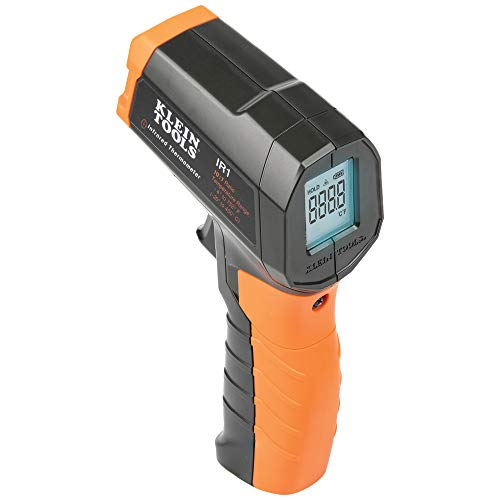

Products shown because their documented specifications fit this guide. Price and availability are on Amazon and can change.
Frequently Asked Questions
What is the single most useful home inspection tool?
A pinless moisture meter. Damp is the most common and most expensive hidden problem, and the meter finds it in seconds without marking surfaces.
Is a thermal camera worth it for a homeowner?
For a house with high heating bills, drafts or suspected missing insulation, yes; a mid-range camera pays for itself in one survey. For occasional checks, a phone-attached camera or hiring one is enough.
What should an inspector carry as a minimum?
Moisture meter (pin and pinless), thermal camera, infrared thermometer, hygrometer, non-contact voltage tester, outlet tester, flashlight and a borescope. A CO meter and combustible gas detector for homes with gas.
Affiliate disclosure: Akermin earns a commission from qualifying Amazon purchases made through links on this page. Our editorial picks are based on documented specifications and owner feedback, not commissions.
Related Guides

PHOEBUS LINK RCX100 Review: 40 mK Is the Figure This Job Needs
A handheld thermal camera with a 160 by 120 infrared detector, a 320 by 240 enhanced image, 40 mK sensitivity, a focus free 40 by 30 degree field of view, a 25 Hz refresh rate and still JPG image capture.
Read More→
Fluke 62 MAX+ Review: The Cold End Is Printed Three Different Ways
A non contact infrared thermometer for electrical, mechanical, HVAC and automotive surfaces, with dual rotating lasers that mark the edges of the measurement area, minimum, maximum, difference and average readings, and an IP54 rating.
Read More→
General Tools MMD7NP Review: Percent on Wood, Relative on Drywall
A pinless non invasive moisture meter that reads up to three quarters of an inch into a surface, with scales of 0 to 53 percent for softwood, 0 to 35 percent for hardwood and relative readings on wallboard, drywall and masonry.
Read More→