
How to Interpret AQI on an Indoor Air Monitor
AQI is a translation of one pollutant into a 0 to 500 scale. Know which pollutant, which country's scale and which averaging time.
Read Guide→Research-based buying guides that compare the leading options by documented specifications, real use cases and value.
AQI is a translation of one pollutant into a 0 to 500 scale. Know which pollutant, which country's scale and which averaging time.
Read Guide→
Three-phase loggers that record voltage, current, power and events for days, compared on channels, harmonics, event capture and memory from listings.
Read Guide→Read the ratios, not just the numbers. The gaps between the three sizes tell you what the source is.
Read Guide→
Clamps that resolve microamps, for nuisance GFCI trips, insulation leakage and ground faults. Fluke 368 FC, UNI-T UT251C+ and TEMPO CMA-360B compared.
Read Guide→
Put the monitor across the room, measure the decay, size and place the purifier from what you see, and automate the rest.
Read Guide→
Meters with a low-pass filter for the PWM output of a variable frequency drive, so motor-side readings mean something. Fluke 87V, 87V MAX and Fieldpiece SC480.
Read Guide→PM2.5 indoors and out, a sensor that handles smoke, and readings you can act on when the sky goes orange.
Read Guide→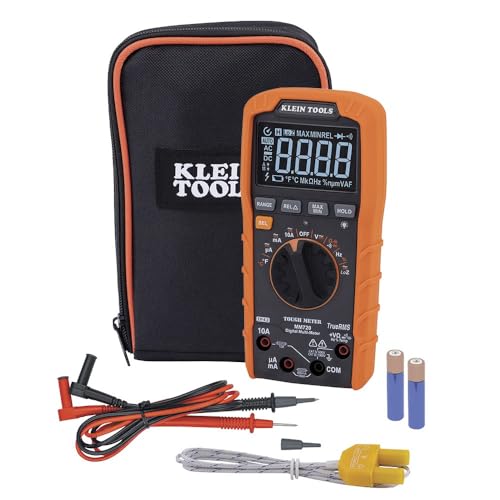
Multimeters with a LoZ mode that bleeds off induced ghost voltage so a dead conductor reads dead. Klein MM720, Fluke 117 and Klein MM700 compared.
Read Guide→
Electrochemical sensor, stated cross-sensitivity, a range that resolves 0.02 mg/m³, and a laboratory test for the number that matters.
Read Guide→
Continuous electronic monitor or laboratory detector; short-term and long-term averages; placement on the lowest lived-in floor.
Read Guide→
Borescopes whose tip is steered by a thumb joystick rather than a wheel or slider, compared on four-way versus two-way control, rotation, lock and probe.
Read Guide→
Accept that consumer VOC is a relative index, then pick a monitor that reports it honestly alongside real CO₂.
Read Guide→