
How to Choose a VOC Monitor
Accept that consumer VOC is a relative index, then pick a monitor that reports it honestly alongside real CO₂.
Read Guide→Research-based buying guides that compare the leading options by documented specifications, real use cases and value.
Accept that consumer VOC is a relative index, then pick a monitor that reports it honestly alongside real CO₂.
Read Guide→
Cameras that show a hot cell or warm connector on a sunlit array: the FLIR E8 Pro, the phone-based Thermal Master P4 (NETD under 35 mK) and the MiLESEEY TR20.
Read Guide→
A laser sensor with a fan, a stated sensor module, humidity handling and a history chart. The rest is preference.
Read Guide→Hot-spot cameras for panels and motors: the FLIR E8 Pro to 550 C, the Thermal Master Thor002 with six spot readings and a big screen, and the pocket FLIR C8.
Read Guide→Decide which pollutants matter in your home first, then match sensors, then everything else.
Read Guide→Three 320x240 cameras for heat-loss surveys: the FLIR E8 Pro for reports, the compact FLIR C8 and the MiLESEEY TR20 with a stated NETD under 40 mK.
Read Guide→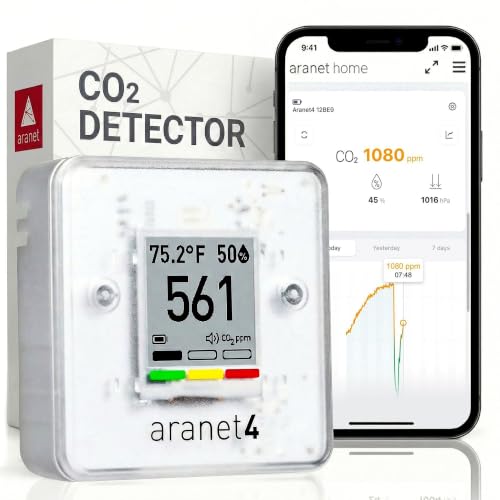
Same physics, different detector. Compare on accuracy, size, power, calibration behavior and price, not on the label.
Read Guide→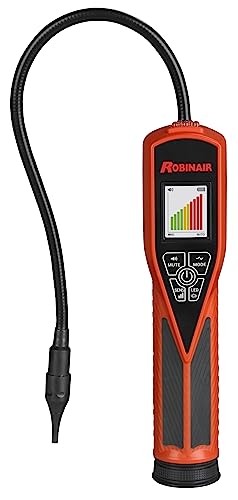
Detectors that read the 5% hydrogen / 95% nitrogen tracer mix for pressure-testing an empty system: a dedicated Robinair and two Fieldpiece units.
Read Guide→Find the setting, learn what it assumes, decide whether your room meets the assumption, and configure it accordingly.
Read Guide→
Detectors whose listings name A2L coverage, sorted by sensor type: an infrared Fieldpiece, a replaceable-sensor all-rounder and a certified heated diode unit.
Read Guide→A breath, a stopwatch and a chart. Two tests that separate the sensor's delay from the room's.
Read Guide→
The room that fills fastest. A visible monitor, a door rule and a log for facilities, in that order.
Read Guide→