As an Amazon Associate, Akermin earns from qualifying purchases. Product links on this page are affiliate links.
In a basement, mount the combustible gas alarm in the same part of the basement as the gas appliances, within about 12 inches of the ceiling for natural gas or within about 12 inches of the floor for propane, on a wall to the side of the appliances rather than above the flue, and out of the stairwell, the dryer vent stream, the sump area and any window well draft. In a finished basement with a drop ceiling, mount high on the wall just below the grid unless the manufacturer says otherwise. A carbon monoxide alarm is a separate device and goes on the basement level as well, placed per its own instructions. The rest of this article deals with what makes basements different from any other room.
Why a Basement Is Not Just Another Room
Three things set basements apart. First, they hold most of a house’s gas fittings: furnace, water heater, often a dryer, sometimes the meter. Second, they are poorly ventilated; a leak that would slowly dilute in a kitchen stays put below grade. Third, their geometry is unusual. Exposed joists divide the ceiling into channels, beams and ductwork split it into pockets, and the stairwell is a chimney to the floor above. For propane the basement matters for a different reason: it is the lowest point in the house, so a propane leak anywhere upstairs will eventually end up there, as described in does propane rise or fall.
Natural Gas: Working With Joists and Beams
Natural gas is mostly methane, lighter than air, and it collects against the underside of the floor above. In an unfinished basement that underside is not a flat plane; it is a set of joist bays. Gas spreads quickly along a bay and slowly across joists, and a main beam or a large trunk duct can hold gas on one side of the basement for some time. The practical rule is to put the alarm near the appliances, in the general area of the joist bays above them, rather than at the far end of the basement across a beam. A wall mount just below the joists, or a joist-face mount if the instructions allow it, both work. Avoid the bay that carries the furnace flue or a supply duct, since warm moving air disturbs the sensor, and avoid the bay above the dryer, where lint and heat collect. The appliance-level offsets are covered in gas detector placement near a furnace or water heater.
Propane: Low, but Not in the Pit
A propane alarm goes within about 12 inches of the floor, on a wall near the LP appliances. The temptation in a basement is to put it in the lowest spot of all, the sump pit or the floor drain area, because that is where the gas will pool. Resist it. Sump pits are wet, alarms are not rated for them, and the sensor would sit where it is hardest to hear, test and keep clean. Mount low on a nearby wall instead, where the spreading propane layer will reach it. Keep it away from the bottom of the stairs, where air moving down the stairwell would dilute the reading, and away from the exterior door of a walkout basement. The general low-mount rules are in where to place a propane detector; propane models suited to basements are compared in the propane detector roundup.
Finished Basements
Finishing a basement usually means a drop ceiling or drywall, a utility room with a door, and often a bedroom or family room. Each changes the picture.
- Drop ceiling. Methane rises through the gaps between tiles and collects in the plenum above them. Mount the natural gas alarm high on the wall just under the grid, following the manufacturer’s height instruction. Some instructions allow mounting above the tiles; if you do that, you need to be sure you can hear it and reach it for testing.
- Utility room with a solid door. The alarm goes inside the room with the appliances, not out in the family room. A closed door means the utility room can fill before an alarm outside it notices.
- Basement bedroom. The combustible gas alarm still belongs with the appliances. The bedroom gets a carbon monoxide alarm outside its door, for the reasons set out in do you need a gas detector in the bedroom.
- Laundry area. A gas dryer at the far end of the basement may justify its own alarm; see gas leak detectors for a gas dryer and laundry room.
Quick Reference
| Basement type | Natural gas alarm | Propane alarm | Keep away from |
|---|---|---|---|
| Unfinished, open | High on a wall or joist face near the appliances, same side of the main beam | Low on a wall near the appliances | Flue bay, duct bay, dryer vent, stairs, window wells |
| Finished, drop ceiling | High on the wall just below the grid, in the utility room | Low on the utility room wall | Inside the plenum unless permitted; the family room |
| Walkout basement | High, on an interior wall | Low, away from the exterior door threshold | The exterior door and its draft |
Plug-In Units and Outlet Height
Plug-in alarms such as the Kidde combination models or a ppm-display monitor such as the Orabal 4-in-1 sit at outlet height because that is where outlets are, and their instructions accept that. In a basement the outlets that matter are on the side walls near the appliances, not the one the furnace is plugged into behind its own cabinet. If the nearest outlet is at the bottom of the stairs or beside the window, that is the wrong outlet, and a battery or hardwired model that can go where the gas goes is the better choice; the trade-offs are in plug-in versus battery gas detectors.
Damp, Cold and Dust
Check the rated temperature and humidity range in the instructions before mounting anything on a basement wall. The failure mode is rarely humidity itself; it is condensation dripping from a cold exterior wall or an uninsulated pipe onto the unit. Mount on an interior wall, away from sweating surfaces and from the dryer’s lint stream.
Tracing a Basement Leak
When a basement alarm sounds, the response is the same as anywhere: go upstairs and outside, leave the light switches alone, and call the gas utility or 911. The alarm does not replace that; it triggers it. Later, once the utility has cleared the house, a gooseneck sniffer such as the TopTes PT520A is the tool for checking each union, drip leg and connector. The gas leak detector guide covers both the fixed alarms and the sniffers, and the companion article on garage placement handles the other below-the-living-space room.
Recommended Tools
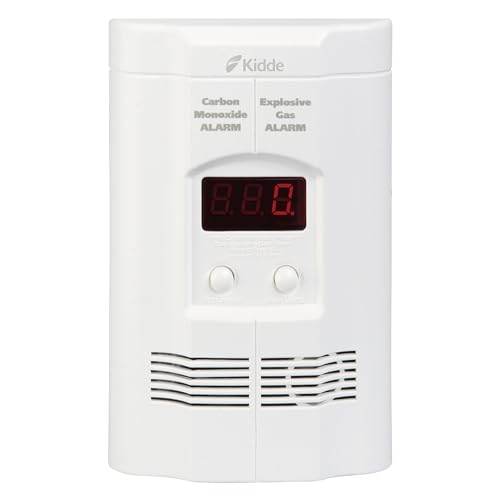


Products shown because their documented specifications fit this guide. Price and availability are on Amazon and can change.
Frequently Asked Questions
Should the gas alarm go at the top or the bottom of the basement stairs?
Neither. The stairwell is a draft path, so a sensor there sees diluted, moving air and responds late. Put the alarm near the appliances. If you want to hear it upstairs, choose a loud model or an interconnected system rather than moving the sensor toward the door.
Does a drop ceiling change where I mount a natural gas alarm?
Yes. Natural gas rises through the tile gaps and collects in the space above the tiles first. Mount the alarm high on the wall just below the ceiling grid as the manufacturer directs, and check whether the instructions permit mounting above the tiles; an alarm hidden in the plenum is harder to hear and to test.
Can I mount the alarm on a ceiling joist itself?
If the manufacturer permits ceiling mounting, a joist face near the appliances is a reasonable spot for a natural gas alarm. Keep it out of the bay that carries the flue or a warm-air duct, and away from the joist bay above the dryer.
My basement is damp. Will that hurt a gas detector?
Every sensor has a rated humidity range in its instructions; a typical damp basement is usually within it. The real problems are condensation dripping from a cold exterior wall or pipe onto the unit, and a sensor placed in the sump area. Mount on an interior wall away from sweating surfaces.
Affiliate disclosure: Akermin earns a commission from qualifying Amazon purchases made through links on this page. Our editorial picks are based on documented specifications and owner feedback, not commissions.
Related Guides
Carbon Monoxide Detector Test: What the Button Does and What It Cannot Prove
A guide to what a carbon monoxide detector test button verifies, what it misses, and how to check a CO alarm properly without exposing anyone to gas.
Read More→Why a Gas Detector Responds Near Solvents, Cleaners and Exhaust
This page explains the sensor cross-sensitivities and interference effects that cause gas detectors to respond near solvents, cleaners and exhaust, and how to interpret those responses.
Read More→
Kidde Plug-In Carbon Monoxide Detector with 9V Backup: A Maintenance-First Review
A close look at the Kidde plug-in CO alarm with 9V backup, digital display and 85 dB alarm, with emphasis on the maintenance and battery replacement the listing mentions only in passing.
Read More→