As an Amazon Associate, Akermin earns from qualifying purchases. Product links on this page are affiliate links.
The right spot for a gas detector in a garage depends on what the garage holds. For a natural gas water heater, furnace or unit heater, mount the alarm within about 12 inches of the ceiling on a side wall near the appliance. For stored propane cylinders, a propane heater or an LP-fueled vehicle, mount within about 12 inches of the floor near where the propane lives. Either way, stay off the wall with the overhead door, keep away from the gasoline cans and the workbench, and check that the alarm’s rated temperature range covers your winter. A garage with no gas appliance and no stored propane does not need a combustible gas alarm at all.
Decide Which Hazard You Have
Garages can hold both fuels at once, and they behave in opposite directions. Natural gas from a water heater connector is lighter than air and collects against the garage ceiling. Propane from a cylinder valve or a grill hose is heavier than air, sinks, spreads across the concrete, and flows under the door into the house if the house floor is lower, or into a floor drain. Because the two need different mounting heights, one alarm cannot cover both unless it is a plug-in combination unit whose instructions accept outlet height for either. A garage with a natural gas water heater and a shelf of grill cylinders technically wants one alarm high and one low. The comparison in natural gas detector versus propane detector explains why the fuels are not interchangeable at the sensor.
Natural Gas Appliance in the Garage
Treat it like a utility room with worse drafts. Mount the alarm high, to the side of the water heater or furnace, not above the draft hood or flue where warm air and any backdrafted exhaust rise. Choose an interior side wall rather than the wall with the overhead door: every time the door opens, air moves across that wall and the sensor reads diluted air. Keep the alarm away from any window or the side door for the same reason. The offsets from the appliance itself are the same as indoors, covered in gas detector placement near a furnace or water heater.
Stored Propane and LP Appliances
Grill cylinders are meant to be stored outdoors, and cylinder suppliers say so, but many end up on a garage shelf over winter. If yours do, mount a propane alarm within about 12 inches of the floor on a wall the spreading propane layer will reach, and keep the cylinder valves closed and the plastic plugs in. The same low placement covers a propane unit heater, a propane water heater or a forklift. Avoid the floor drain, the door threshold and any spot where a bumper or a bicycle will hit the unit. Propane alarms with a floor mounting design are in the propane detector roundup.
Gasoline, Solvents and Paint
This is the garage-specific problem. The heated semiconductor sensor in most consumer gas alarms responds to reducing gases in general, not to methane or propane alone. Gasoline vapor from a can or a mower tank, brake cleaner, carburetor spray, paint thinner, wet paint and windshield washer fluid can all raise the reading and, in enough concentration, trip the alarm. That does not mean the alarm is broken; it means it is doing what the sensor does. Place the alarm as far as the room allows from the fuel cans and the bench, ventilate before and after solvent work, and if a nuisance alarm happens, clear the air and see whether it returns at the same spot with nothing else going on. What can cause false gas detector readings lists the usual culprits, and what gases a combustible gas detector detects explains why the sensor cannot tell them apart.
Vehicle Exhaust and Carbon Monoxide
Running an engine in a garage produces carbon monoxide, and a combustible gas alarm does not detect it. A CO alarm does, but most CO alarm manufacturers specifically advise against installing one in a garage, because normal cold starts produce brief high readings that cause nuisance alarms. The standard advice is to put the CO alarm inside the house near the door that leads to the garage, and on each level. The article on gas leak detectors versus CO detectors covers the sensor difference; for the garage the practical rule is combustible gas alarm in the garage, CO alarm just inside the house.
Placement by Garage Setup
| Garage contents | Alarm and height | Wall | Avoid |
|---|---|---|---|
| Natural gas water heater or furnace | Natural gas alarm, within about 12 in of ceiling | Interior side wall near the appliance | Above the flue; the door wall; near the window |
| Stored propane cylinders | Propane alarm, within about 12 in of floor | Wall beside the cylinder shelf | Floor drain; door threshold; where it can be kicked |
| Propane unit heater | Propane alarm, low, offset from the heater | Side wall | The heater’s warm air path |
| Both natural gas appliance and stored propane | One high, one low, or a combination unit at outlet height per its instructions | Interior walls | Fuel can shelf; workbench |
| Vehicles only, no gas | No combustible gas alarm; CO alarm inside the house by the garage door | n/a | Installing a CO alarm in the garage itself |
Temperature, Dust and Power
Garages get colder and hotter than the rooms an indoor alarm was designed for. The instructions state an operating range; outside it, the reading and the alarm point are no longer what the manufacturer promised. RV alarms such as the Safe T Alert 30-442 list -40 to +158 degrees F, but they run on 12 volts DC and are built for vehicle wiring, not a wall outlet. For a plug-in, garage outlets are often at counter height, which sets the alarm’s height for you; pick one on a side wall away from the door and the bench. Sawdust coats sensor screens over time, so mount away from the dusty end and check the vents when you test.
Checking the Fittings
After connecting a new water heater, swapping a grill cylinder or storing a fresh tank, sweep the valve, hose and regulator with a handheld sniffer such as the pen-sized TopTes PT210S, with the door open and nothing running. If either the fixed alarm or the sniffer responds strongly to a natural gas fitting, stop there: open the overhead door on the way out, do not touch the opener switch or any other switch inside, and call the gas utility or 911 from outside. A detector finds the problem; the utility makes it safe. Fixed alarms for garages and other utility spaces are compared in the gas leak detector guide, and the companion article on basement placement covers the other appliance-heavy space.
Recommended Tools


Natural-Gas-Detector with Plug-in Design, Gas-Leak-Detector with High Accuracy Sensor, Portable
View on Amazon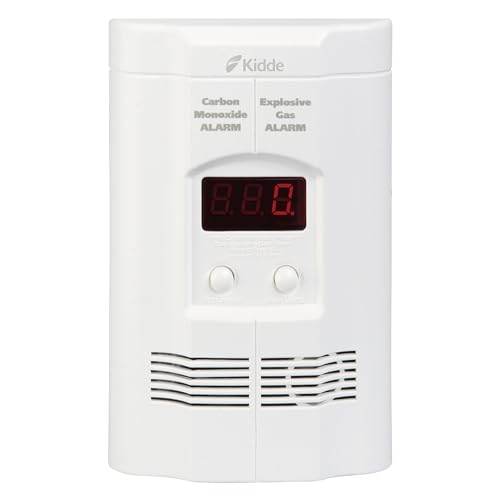

Products shown because their documented specifications fit this guide. Price and availability are on Amazon and can change.
Frequently Asked Questions
Can gasoline fumes set off a gas leak detector in the garage?
Yes. The semiconductor sensors in most consumer alarms and sniffers respond to gasoline vapor, solvents, paint and many aerosols. Keep the alarm away from the fuel can shelf, the mower and the workbench, and expect a chirp if you refuel a mower indoors with the door closed.
Do I need a gas detector in a garage with no gas appliances?
Only if you store propane cylinders there, in which case a low-mounted propane alarm makes sense. A garage with nothing but vehicles has no combustible gas source. Carbon monoxide from an engine is a real hazard, but most CO alarm manufacturers advise against installing in a garage because of nuisance alarms; the CO alarm goes inside the house near the door to the garage.
Will a garage gas detector work in winter?
Only within its rated operating temperature, which is stated in the instructions. RV alarms such as the Safe T Alert series list a range of -40 to +158 degrees F, but they are 12-volt units built for vehicles. Plug-in household alarms typically state a narrower indoor range; if your garage freezes, check that figure before buying.
Where does a propane detector go in a garage with a floor drain?
Low on a wall near the cylinders or the LP appliance, not at the drain. Propane will pool at the drain, but a sensor there gets wet, gets kicked and is hard to hear. Mount it where the spreading layer reaches it on a dry wall.
Affiliate disclosure: Akermin earns a commission from qualifying Amazon purchases made through links on this page. Our editorial picks are based on documented specifications and owner feedback, not commissions.