As an Amazon Associate, Akermin earns from qualifying purchases. Product links on this page are affiliate links.

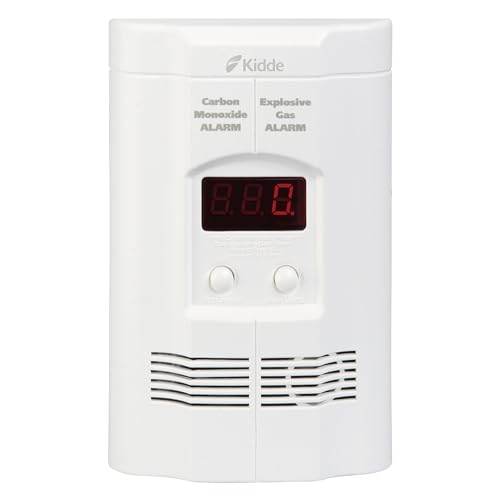
Kidde · Kidde Carbon Monoxide & Explosive Gas Alarm, Plug-in & AA Battery, COPDLG | Natural Gas and Propane Detection, Low-Level CO Alerts for Children, Seniors, & Pets, Digital Backlit Display, 5th Edition
View on AmazonPrice and availability are shown on Amazon and can change at any time.
Verdict
The Kidde COPDLG is the current version of the plug-in explosive gas and CO alarm that has been the default combination unit in American kitchens for years. The manufacturer specifies detection of low levels of CO, natural gas and propane; an 85 dB alarm; a backlit digital display that shows the CO level or the word GAS when explosive gas is present; a low-level CO alert at 30 to 70 ppm with its own pattern and a separate alarm pattern at 70 ppm; a rotating plug; two included AA backup cells in place of the old 9V; testing to UL 2034 5th Edition with an ETL listing; a 7-year limited warranty; and, per the listing, no low battery chirps. It replaces the 900-0113 and KN-COEG-3. The listing does not state the gas alarm setpoint, a UL 1484 listing or a peak level memory. For a household that wants one plug-in alarm to cover both hazards in the room with the range or the furnace, this is the mainstream choice.
Who It Is For
- Homes with natural gas or propane appliances that want CO and explosive gas coverage from one outlet-mounted unit.
- Renters, who can plug it in and take it with them; see gas leak detectors for an apartment.
- Owners of an expired KN-COEG-3 or 900-0113 looking for the direct successor.
It is not a substitute for CO alarms on other levels or outside bedrooms, and it will not tell you which fitting is leaking; the handheld versus fixed comparison covers what a sniffer adds.
Documented Specifications
| Item | Manufacturer or listing statement |
|---|---|
| Hazards | Carbon monoxide, natural gas, propane |
| Alarm volume | 85 dB |
| Display | Backlit digital; shows CO level, or GAS when explosive gas is present |
| Low-level CO alert | 30 to 70 ppm, distinct light and sound pattern; separate alarm pattern at 70 ppm |
| Power | Plug-in, 120 V, rotating plug; two AA backup cells included |
| Low battery | Listing states no low battery chirps |
| Standards | Tested to UL 2034 5th Edition; ETL listed |
| Warranty | 7-year limited |
| Replaces | 900-0113, KN-COEG-3 |
| Gas alarm setpoint, UL 1484 listing, peak level memory, sensor life | Not stated on the listing |
The Low-Level CO Feature
The most substantive change from the previous generation is on the CO side. Conventional CO alarms tolerate low concentrations for a long time before sounding, to avoid nuisance alarms; the COPDLG adds an earlier alert with its own light and sound pattern when CO sits between 30 and 70 ppm, which the manufacturer positions as protection for children, older adults, pregnant women and pets, and a separate full alarm pattern at 70 ppm. The listing does not say how long the low-level condition must persist. The distinction matters: the early pattern is a prompt to ventilate and find the source, the 70 ppm pattern is a prompt to leave. Anyone who wants to watch CO numbers below the alarm points should read CO meter versus CO alarm.
The Gas Side: GAS, Not a Number
For natural gas and propane the display simply reads GAS and the 85 dB alarm sounds. There is no ppm or percent LEL figure, and the listing does not state the setpoint; residential gas alarms commonly trip somewhere between 10 and 25 percent of the lower explosive limit, but that is background on the product class, not a Kidde statement. The listing also does not mention UL 1484, the standard for residential gas detectors, only UL 2034 for CO. A plug-in unit sits at outlet height, neither the ceiling where methane collects nor the floor where propane pools; Kidde accepts that compromise, and the manual governs where to plug it in. Plug-in versus battery gas detectors covers what that placement gives up.
AA Backup and the Rotating Plug
Two AA cells replace the 9V battery of the KN-COEG-3, and both are included. The backup exists so the alarm keeps working through a power outage. The rotating plug keeps the unit upright in a vertical or horizontal outlet. The claim of no low battery chirps is unusual; the listing does not say how a spent backup is signaled, so read the manual and glance at the display now and then.
Strengths
- CO and explosive gas in one plug-in unit, with a display for CO.
- Early low-level CO alert at 30 to 70 ppm.
- AA backup cells included; rotating plug.
- UL 2034 5th Edition testing, ETL listing and a 7-year warranty.
Limitations
- No numeric reading for gas; setpoint not stated.
- No UL 1484 listing stated for the gas side.
- Outlet-height placement is a compromise for both gases.
- Peak level memory, present on the 9V version listing, is not mentioned here.
How It Compares
The Kidde 9V-backup version is the closest relative: the same plug-in combination idea with a 9V backup, a digital display and a stated peak level memory, without the low-level CO alert. The First Alert GCO1CN is the other mainstream plug-in combination alarm; its listing gives few specifications. The Orabal 4-in-1 takes the opposite approach with a live ppm display for gas and no stated listing. Fixed alarms for natural gas homes are ranked in the natural gas detector roundup, propane options in the propane detector roundup, and the gas leak detector guide covers the whole category.
What the Word GAS Means
When the display reads GAS and the horn sounds, do not investigate. Get everyone out, leave light switches, the range and the phone alone until you are outside, and call the gas utility or 911. The alarm supplements that procedure by catching what you cannot smell while asleep; it does not change it.
How We Research
This review is based on Kidde’s published product information, the Amazon listing and patterns in owner reports. We did not run laboratory tests. Comments on typical setpoints and placement are general background, not manufacturer statements; where the listing is silent we say so.
Recommended Tools


Products shown because their documented specifications fit this guide. Price and availability are on Amazon and can change.
Frequently Asked Questions
What is different between the COPDLG and the KN-COEG-3 it replaces?
Per the listing, three things: the backup changes from a 9V cell to two AA cells, the CO side gains a low-level alert pattern at 30 to 70 ppm alongside the 70 ppm alarm, and the unit is tested to UL 2034 5th Edition. The plug-in form, 85 dB alarm and display that shows CO ppm or GAS carry over.
What does "3X the detection" mean on the COPDLG listing?
Three hazards: carbon monoxide, natural gas and propane. It is a marketing phrase for a combination alarm with a CO sensor and a combustible gas sensor, not a statement about sensitivity.
Will the COPDLG show how much gas it is detecting?
No. The backlit display shows a numeric level for carbon monoxide and the word GAS when explosive gas is present. The listing does not state the gas alarm setpoint. If you want a live gas number, a monitor such as the Orabal 4-in-1 shows ppm, though without the listing this alarm carries.
Why does the listing say there are no low battery chirps?
The listing makes that claim without explaining the mechanism. The backup cells only matter during a power outage, and the manual describes how a depleted backup is indicated. Check the display status rather than relying on a chirp to tell you the AA cells are spent.
Affiliate disclosure: Akermin earns a commission from qualifying Amazon purchases made through links on this page. Our editorial picks are based on documented specifications and owner feedback, not commissions.