Best Phase Rotation Meters: 8 Professional Picks for Accurate Phase Testing
Connect a three-phase motor with two phases swapped and it runs backwards, which for a pump, a compressor or a conveyor ranges from unproductive to destructive. A phase rotation meter answers that question in seconds. This hub compares eight instruments on their stated voltage ranges and methods.
As an Amazon Associate, Akermin earns from qualifying purchases. Product links on this page are affiliate links.
Our Top Picks
Instruments were compared on the stated voltage range, whether the listing describes contact or non-contact operation, whether motor rotation as well as phase sequence is stated, and any additional stated functions. All figures are the manufacturers' own.
Best Overall
Fluke 9040 Three Phase Rotation Indicator
The reference instrument for reading phase sequence at a panel.
Three phase indication stated on the listing
Purpose-built rotation indicator rather than a multi-function tool
Fluke service network and long-term parts availability
Simple three-lead connection with a direct indication
Only the Extech 480400 publishes a safety category on its listing, at CAT III 600 V. For every other instrument here the category rating must be taken from the manual before the leads go onto a live distribution board.
How to Choose a Phase Rotation Meter
Four points, in order of importance:
Category Rating
This instrument connects three leads to a live three-phase board. Only the Extech states CAT III 600 V here; confirm the rating for anything else before use.
Supply or Motor
Supply sequence and motor rotation are two different tests. The Amprobe PRM-6 and the Ideal tester state motor rotation; the sequence-only tools do not.
Voltage Range
The UNI-T states 40 to 690 V and the Amprobe up to 700 V, which covers 690 V industrial systems. Most others stop at 600 V.
Contact or Non-Contact
Non-contact units such as the Vanlison and KAISAL read through insulation, which is faster and avoids exposed terminals, but they depend on cable spacing and construction.
A three-phase induction motor turns in the direction the rotating field turns, and the field direction follows the phase sequence. Reverse any two phases and the motor runs backwards. For a fan or a conveyor that is merely unproductive. For a centrifugal pump, a screw compressor or a refrigeration compressor it can damage the machine in minutes, because those designs depend on rotating one way.
How do I correct a wrong rotation?
Swap any two of the three phase conductors at the point where the machine is connected, with the supply isolated, locked out and proved dead. Swapping two is all that is required; swapping all three returns you to where you started. Correct at the machine rather than at the supply, so you do not reverse every other load on the board.
What is the difference between a phase sequence tester and a motor rotation tester?
A phase sequence tester reads the order of an energised three-phase supply. A motor rotation tester works on a de-energised motor, detecting the direction it will turn by sensing the residual magnetism as the shaft is turned by hand, so the direction can be confirmed before the motor is coupled to a load. The Amprobe PRM-6 and the Ideal tester state both functions; most instruments here state only the first.
Can a non-contact phase rotation meter be trusted?
It reads the field around insulated conductors, so it avoids exposed terminals and is faster, but it depends on being able to separate three cables and on their construction and spacing. In a tight or armoured installation the fields overlap and the result can be ambiguous. Treat a non-contact reading as strong evidence, and confirm with a contact instrument when the consequence of being wrong is an expensive machine.
Do I need this tool for single-phase work?
No. Phase sequence only exists on a polyphase supply. For single-phase circuits the relevant checks are polarity, which a receptacle tester or a meter performs, and correct identification of line and neutral, which our outlet tester hub covers.
Reviews
Fluke 9040 Three Phase Rotation Indicator Best Overall
Some instruments exist to answer one question definitively, and the 9040 is one of them. Fluke states three phase indication and very little else, because there is very little else to say: connect three leads to three conductors and the instrument shows which way the sequence runs.
The reason to pay Fluke prices for a single-function tool is what happens around it. A rotation indicator is used at a distribution board or a machine terminal box, which is a high-energy environment, and the value of a manufacturer with a published safety pedigree and a service network is in the parts of the instrument you cannot see: lead construction, fusing, creepage distances, and behaviour when something goes wrong.
The listing is unusually sparse, stating no voltage range, no frequency range, no category rating and no motor rotation function. Those figures exist in the Fluke documentation but not on the listing, so nothing more can be quoted here. If you need motor rotation as well as supply sequence, look at the Amprobe, Ideal or Neufday entries instead.
Strengths
Purpose-built for one job and does it directly
Manufacturer with a service network and long parts life
Simple three-lead operation with no settings
Widely recognised on industrial sites
Limitations
Voltage and frequency ranges not stated on the listing
UNI-T AC 3-Phase Rotation Meter UT261A Best All-Rounder
The UT261A is the instrument to buy if the tool has to earn its place in a bag that is already full. UNI-T states a 40 to 690 V range for three-phase sequence determination, which covers 400 V and 415 V distribution as well as 480 V and 600 V systems, plus missing phase indication and, unusually for this class, resistance and capacitance measurement.
Missing phase indication is more useful than it sounds. Single phasing, where one supply phase is lost, destroys motors quietly: the machine keeps turning on the remaining two phases, draws heavily and overheats. An instrument that flags the missing phase during a routine rotation check catches that condition without a separate test.
The extra measurement functions are a genuine bonus but not a substitute for a meter, and the listing does not state a category rating, an accuracy figure or a frequency range. It also does not state a motor rotation function, so confirming the direction of an uncoupled motor needs one of the dedicated testers here.
Of the eight listings compared here, exactly one publishes a safety category, and it is this one: CAT III 600 V. On an instrument that is connected directly to three live conductors at a distribution board, that single line is the most important specification on the page, and it is why the Extech earns the value slot rather than a cheaper unit with better marketing.
The rest is straightforward. A stated 40 to 600 V range covers most three-phase distribution outside 690 V systems, and bright LED indicators show both the rotation direction and whether each phase is live, which catches a missing or open phase during the same connection.
There is no display, no motor rotation function, no frequency figure and no accuracy claim. It is a three-lead indicator that tells you the sequence and which conductors are energised, built by a test-equipment manufacturer and rated for the location where it will be used. For most electricians that is the correct amount of instrument.
Strengths
CAT III 600 V stated, the only rating published here
40 to 600 V covers most distribution systems
Live wire status as well as sequence
Low price from an established test-equipment brand
Short answer: the Fluke 9040 is the reference instrument for reading supply sequence at a board, purpose-built and backed by a service network; the UNI-T UT261A is the best all-rounder, stating 40 to 690 V coverage plus missing phase indication and resistance and capacitance measurement; and the Extech 480400 is the value pick and the only listing here that publishes a safety category, at CAT III 600 V on a 40 to 600 V instrument.
What phase rotation is and why it matters
A three-phase supply carries three voltages separated by 120 degrees, and the order in which they peak defines the direction of the rotating magnetic field they produce in a motor. That direction determines which way the shaft turns, and nothing about the wiring makes it visible: three conductors connected in any order look identical and energise the machine equally well. Get it wrong on a fan and the airflow is reduced. Get it wrong on a centrifugal pump, a scroll or screw compressor, or a refrigeration system and the machine can be damaged within minutes, because those designs rely on turning one way and have no protection against turning the other. A rotation meter costs a fraction of any of those machines and answers the question in seconds.
Sequence testing versus motor rotation testing
These are two different measurements and buying the wrong instrument is the common error. A phase sequence tester connects to a live three-phase supply and reports the order, which tells you what the supply will do to any motor connected to it in a given order. A motor rotation tester works the other way round, on a de-energised and uncoupled motor: turning the shaft by hand generates a small voltage in the windings from residual magnetism, and the instrument reads its sequence to predict which way the motor will run when energised. That lets you confirm direction before the motor is bolted to a load. The Amprobe PRM-6 states both phase sequence and motor rotation, and the Ideal Electrical unit states a motor rotation function. Everything else here tests the supply only. Our guide to motor rotation testers for industrial work covers the second measurement in depth.
Contact and non-contact instruments
Six of the eight connect three leads to three conductors. Two, the Vanlison and the KAISAL, are non-contact: both state AC 70 to 600 V and read the field around insulated cables rather than requiring bare terminals. The Vanlison listing goes further, naming phase sequence detection, open phase identification, live wire verification and circuit break location in one tool. The advantage of non-contact operation is obvious on a busy site: nothing has to be exposed, the check takes seconds, and there is no risk of a lead slipping between terminals. The limitation is physical. The instrument depends on being able to distinguish three separate cables, and in a tight, bundled or armoured installation the fields overlap and the reading becomes ambiguous. Use non-contact for speed and a contact instrument when the answer has to be certain.
The rating that almost nobody publishes
This instrument is connected directly to three live conductors at a distribution board, which is a CAT III location and sometimes a CAT IV one. Of the eight listings compared, exactly one publishes a category: the Extech 480400 at CAT III 600 V. That is not evidence the others are unrated, because manufacturers routinely omit the figure from marketplace listings, but it does mean the rating has to be found in the manual before any of them is used. The consequence of getting it wrong is not a bad reading, it is an arc fault at the instrument. What a CAT rating means explains the four categories and where each applies.
Missing phase and open phase indication
Several listings state indication of a missing or open phase alongside sequence: the UNI-T UT261A, the Vanlison, the KAISAL and the Soonkoda, the last of which also states a 20 Hz to 400 Hz frequency range that makes it usable on variable-frequency supplies and aircraft or marine systems at 400 Hz. Single phasing is worth catching. When one supply phase is lost, a running three-phase motor continues turning on the remaining two, draws far more current in those windings than it should and overheats, often without tripping anything designed for balanced overload. A rotation check that also flags a lost phase catches the condition during routine work rather than after the winding fails. For the current measurement that confirms it, see how to measure current with a clamp meter.
Correcting a wrong rotation safely
The fix is to exchange any two of the three phase conductors, and only two. Do it at the machine terminal box rather than at the supply, so that other loads on the same board are unaffected. Isolate, lock out and tag the supply, prove the conductors dead with a separate voltage tester, make the change, then re-energise and confirm with the rotation meter before coupling the machine to its load. On a system with variable frequency drives, note that the drive itself usually has a parameter for direction and the supply sequence to the drive input does not determine output rotation; changing the wrong thing there causes confusion rather than a fix. Drive-fed circuits are covered in clamp meters for VFD measurements and multimeters for control panel diagnostics.
Guides in This Category
Best phase sequence testers for readers focused specifically on reading supply sequence rather than motor direction.
Instruments were compared on stated voltage range, contact or non-contact operation, whether motor rotation is stated separately from supply sequence, stated frequency range and any published safety category. Owner feedback was reviewed for repeated reports of incorrect indication. We ran no tests of our own and publish no measurements. Amazon data supplies images, availability and links only.
A close reading of the Klein Tools RT110 listing, covering the published specifications, the missing fault-code table, and where a three-light tester stops being the right tool.
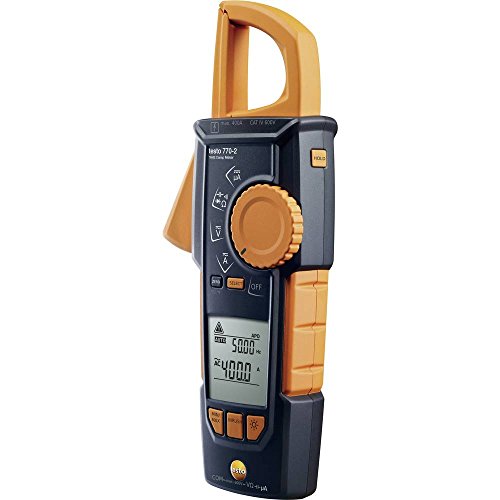
A mechanism-first review of the Testo 770-2 hook-clamp meter, including what the listing states, what it omits, and where the hook design stops being the right answer.