
TopTes PT760 Review: Rechargeable Gas Detector With %LEL and Telescopic Probe
Rechargeable gas sniffer with a 12-inch telescoping steel probe, percent LEL display from 1 to 20 percent, built-in flashlight and Type-C charging.
Read More→Editorial desk
The Akermin Gas Detection Desk researches gas leak detectors, carbon monoxide detectors and multi-gas meters. Every guide is written from manufacturer documentation, datasheets and published standards; Akermin does not run a test laboratory and never claims hands-on testing.
Rechargeable gas sniffer with a 12-inch telescoping steel probe, percent LEL display from 1 to 20 percent, built-in flashlight and Type-C charging.
Read More→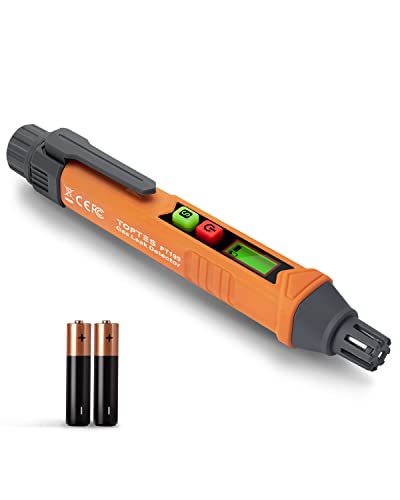
Pocket gas sniffer covering 50 to 1,000 ppm of methane, with a red-screen alarm, 30-second warm-up, 5-minute auto-off and two AAA cells. No number shown.
Read More→
A laundry room with a gas dryer gets its own alarm, high for natural gas or low for propane, clear of exhaust, lint and steam. Sweep the connector after moves.
Read More→
A room with a gas fireplace gets its own gas alarm, high on a side wall for natural gas or low for propane, never on the mantel, plus a CO alarm per its manual.
Read More→
A plug-in gas alarm needs no permission or drilling and leaves with you. Put it in the kitchen outlet farthest from the stove; add a pocket sniffer for move-in.
Read More→For any home with gas piped in and people sleeping there, yes. A fixed alarm covers the hours your nose is off duty; a sniffer finds the bad connector.
Read More→
Any gas that burns: methane, propane, butane, LPG, hydrogen, alcohol and solvent vapors. Not carbon monoxide, carbon dioxide, refrigerants or smoke.
Read More→
Electrochemical cells consume themselves, catalytic beads get poisoned, semiconductors age. Every gas sensor has an expiry.
Read More→Handheld sniffers find small leaks, down to about 50 ppm methane on common models. Fixed alarms ignore them by design and sound only at a fraction of the LEL.
Read More→
Cross-sensitivity, interferents, humidity, poisoning and a dozen everyday chemicals. Know them before dismissing an alarm.
Read More→
A loud continuous alarm means gas: leave. A single chirp at a steady interval means low battery, a fault or end of life. Match the pattern to the manual.
Read More→T90 is how long the sensor takes to reach 90 percent of the truth. In a leak search or a confined space, seconds are the difference.
Read More→