
When to Replace a Gas Detector
Replace a gas detector at its stated service life, at an end-of-life signal, after two failed tests, or after flooding, fire, solvents or a heavy leak.
Read More→Editorial desk
The Akermin Gas Detection Desk researches gas leak detectors, carbon monoxide detectors and multi-gas meters. Every guide is written from manufacturer documentation, datasheets and published standards; Akermin does not run a test laboratory and never claims hands-on testing.
Replace a gas detector at its stated service life, at an end-of-life signal, after two failed tests, or after flooding, fire, solvents or a heavy leak.
Read More→
An alarm protects sleeping people. A meter finds the source. A home needs the alarm; a technician needs the meter.
Read More→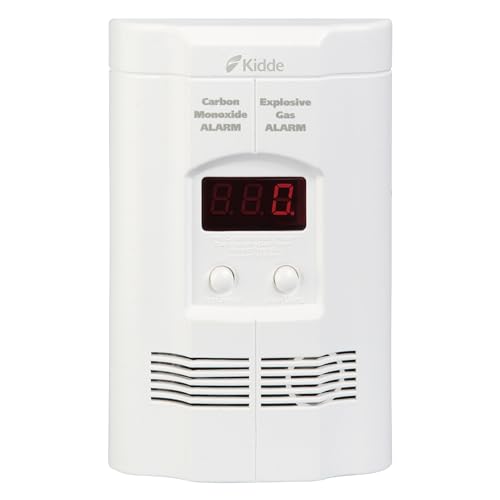
Test a fixed gas alarm with its button once a month, check a handheld sniffer before every use, and bump test any instrument used for safety decisions.
Read More→
Four sensors in one box: oxygen, combustibles, carbon monoxide, hydrogen sulfide. The confined-space standard.
Read More→Multi-gas monitors calibrate with certified gas through a hood. Sniffers only auto-zero. Home alarms cannot be calibrated; test them and replace on schedule.
Read More→A gas detector that has not been challenged with gas is an assumption. Bump tests prove it responds; calibration proves it reads right.
Read More→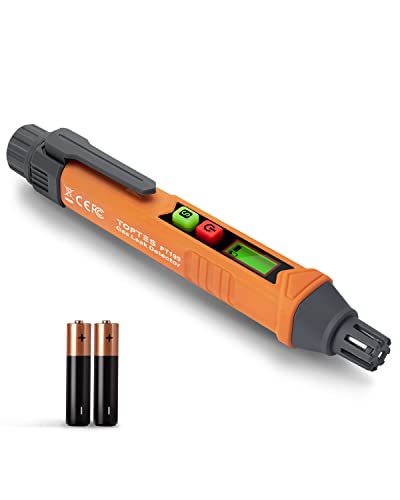
Sniffers list floors of about 40 to 100 ppm of methane, a fraction of a percent of LEL. Home alarms deliberately trip much later, at 10 to 25 percent LEL.
Read More→An infrared gas detector measures how much infrared light hydrocarbons absorb. No oxygen needed, no poisoning, fail-safe, long-lived, but blind to hydrogen.
Read More→A catalytic bead sensor burns gas on a heated catalyst and reads the heat as a bridge imbalance in percent LEL. It needs oxygen and can be poisoned.
Read More→ppm counts molecules; %LEL says how close to burning. The same leak reads very differently on each.
Read More→
A MOS gas sensor is a heated tin-oxide element whose resistance drops in methane or propane. Sensitive and small, but it drifts and reacts to solvents.
Read More→
Mount high near a natural gas water heater or low near stored propane, on a garage side wall away from the overhead door, gas cans and vehicle exhaust.
Read More→