Gas Detector Placement in a Basement
Mount a basement gas alarm near the appliances: high in the joist area for natural gas, low on a wall for propane, clear of the stairwell, dryer vent and sump.
Read More→Editorial desk
The Akermin Gas Detection Desk researches gas leak detectors, carbon monoxide detectors and multi-gas meters. Every guide is written from manufacturer documentation, datasheets and published standards; Akermin does not run a test laboratory and never claims hands-on testing.
Mount a basement gas alarm near the appliances: high in the joist area for natural gas, low on a wall for propane, clear of the stairwell, dryer vent and sump.
Read More→
Not for combustible gas, unless the bedroom itself has a gas appliance. A CO alarm outside every sleeping area is the device the bedroom actually needs.
Read More→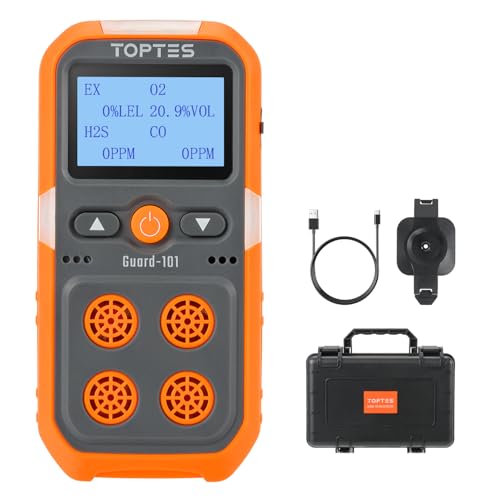
A gas detector is a fixed home alarm for one fuel. A multi-gas detector is a wearable confined-space monitor that reads LEL, oxygen, CO and H2S together.
Read More→
A technician-grade sniffer with an 18-inch gooseneck, a tip light, a 10 second warm-up and a tic-rate alert that speeds up as you approach the leak.
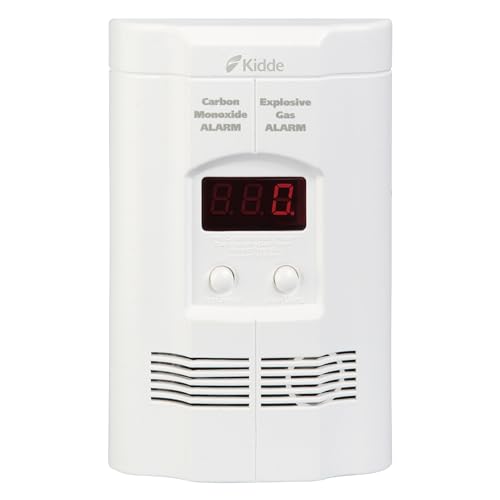
Read More→A plug-in alarm that watches for carbon monoxide and for natural gas or propane, with a digital display, 85 dB horn, peak level memory and a 9V battery backup.
Read More→
A pocket sniffer with a 4-inch probe that shows a two-digit percent LEL reading from 1 to 10 percent, with a red-screen alarm, 75 dB buzzer and two AAA cells.
Read More→
A 17-inch gooseneck sniffer with a seven-bar display, 75 dB alarm, mute and auto power-off, covering about 50 to 10,000 ppm of methane on three AAA batteries.
Read More→Test button: power and horn on a fixed alarm. Unlit-lighter butane puff: sensor response on a handheld sniffer. Bump test: accuracy on meters that show a number.
Read More→
A gooseneck gas sniffer with two sensitivity ranges, five LEDs and an 85 dB alert. No numeric readout, but simple and sturdy for occasional home use.
Read More→Put a combustible gas alarm in the same room as the furnace or water heater, high for natural gas or low for propane, and out of the heat and exhaust path.
Read More→LEL is the lowest gas concentration in air that can ignite. A 10 percent LEL reading means one tenth of that amount. Fixed alarms trip at 10 to 25 percent LEL.
Read More→Natural gas smells like rotten eggs or sulfur, but only because utilities add a mercaptan odorant. Raw methane has no smell at all.
Read More→