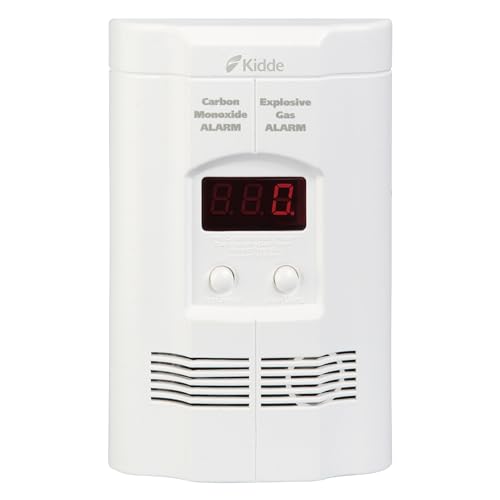
Do You Need a Natural Gas Detector?
If gas is piped into your home and you sleep there, yes. A natural gas alarm covers the hours your nose cannot: while you sleep, when you are congested or away.
Read More→Editorial desk
The Akermin Gas Detection Desk researches gas leak detectors, carbon monoxide detectors and multi-gas meters. Every guide is written from manufacturer documentation, datasheets and published standards; Akermin does not run a test laboratory and never claims hands-on testing.
If gas is piped into your home and you sleep there, yes. A natural gas alarm covers the hours your nose cannot: while you sleep, when you are congested or away.
Read More→A heated sensing element changes electrically when flammable gas touches it. Fixed alarms compare that to a threshold; sniffers show it as a rising scale.
Read More→Count rooms with gas appliances, not square feet: one combustible gas alarm per room that has one, CO alarms on every level, and one sniffer per household.
Read More→
Propane falls. It is heavier than air, so a leak sinks, spreads along the floor and pools in low spots, which is why propane alarms mount near the floor.
Read More→Mount a propane detector low, within about 12 inches of the floor, in the room with the propane appliance or wherever leaking gas would pool.
Read More→Natural gas rises. Methane is lighter than air, so a leak drifts upward and collects under the ceiling, which is why natural gas alarms mount high.
Read More→
Four sensor types cover consumer gas detection: semiconductor (MOS) in sniffers and plug-in alarms, catalytic bead and infrared for LEL readings, and electrochemical cells for CO.
Read More→
Mount a natural gas detector high, within about 12 inches of the ceiling, in the room with the gas appliance, away from the range, vents and windows.
Read More→A smoke detector senses particles from a fire that is already burning. A gas detector senses unburned fuel before it ignites. Neither responds to what the other is built for.
Read More→For a combustible gas alarm, plug-in with battery backup is the default and usually the right choice. Battery-only gas alarms are rare because the sensor heater drains batteries too fast.
Read More→No. A CO detector cannot sense natural gas, propane or methane, and a smoke detector cannot either. Only a combustible gas sensor responds to a fuel leak.
Read More→A fixed alarm guards a room around the clock; a handheld sniffer finds a leak you already suspect. Buy the alarm first; add the sniffer for specific jobs.
Read More→