
A2L Refrigerant Leak Detectors Explained: What HVAC Technicians Need to Change
An A2L refrigerant leak detector responds to R-32 and R-454B and is rated for use around a mildly flammable gas. Check the listing for the A2L label first.
Read More→Editorial desk
The Akermin Refrigerant & HVAC Desk researches refrigerant leak detectors and HVAC diagnostic instruments. Every guide is written from manufacturer documentation, datasheets and published standards; Akermin does not run a test laboratory and never claims hands-on testing.
An A2L refrigerant leak detector responds to R-32 and R-454B and is rated for use around a mildly flammable gas. Check the listing for the A2L label first.
Read More→An infrared refrigerant detector with a stated 10-year sensor, under 0.03 oz/yr, IP54, 17-inch probe and 10-plus hours on USB-C. Halogenated refrigerants only.
Read More→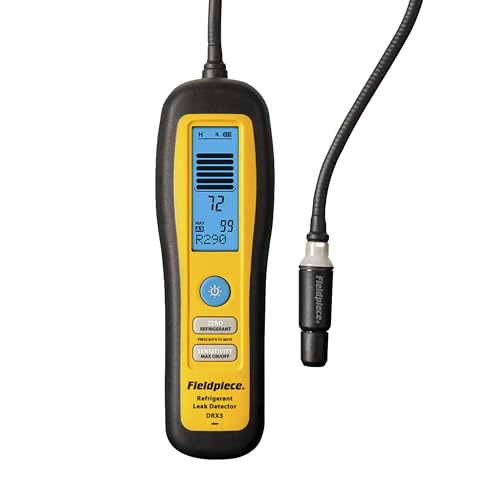
The DRX3 covers A3, A2L and A1 refrigerants plus combustible gases on a replaceable heated-diode sensor. The DR82 is infrared with a stated 10-year sensor.
Read More→
Sniffers for car and truck air conditioning compared on R-134a and R-1234yf sensitivity, UV dye lights, sweep mode, tracer-gas capability and sensor life.
Read More→Infrared refrigerant sniffers with sensors rated in years, compared on stated sensitivity, sensitivity settings, A2L coverage, battery runtime and probe reach.
Read More→
Heated-diode sniffers compared on stated sensitivity, sensor hours, refrigerant coverage and how easily the consumable sensor is replaced.
Read More→Detectors whose listings name A2L coverage, sorted by sensor type: an infrared Fieldpiece, a replaceable-sensor all-rounder and a certified heated diode unit.
Read More→
Heated diode: cheap, sensitive, short-lived, prone to false alarms. Infrared: selective, durable, A2L-ready, pricier.
Read More→A sniffer for HFC, HFO, CO₂ and hydrocarbon refrigerants. The sensor type decides which it can find and how small.
Read More→Infrared and heated-diode sniffers compared on sensitivity in oz/yr, sensor life, A2L readiness and probe reach, from manufacturer specifications.
Read More→