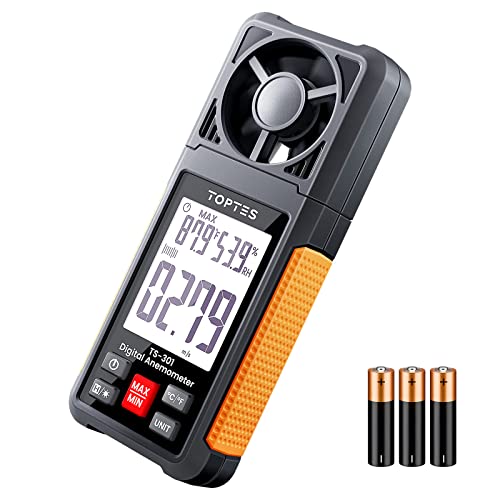
How to Choose a Weather Meter for Field Work
Wind, temperature, humidity, pressure and the derived numbers you actually need: wind chill, heat index, dew point, altitude.
Read More→Editorial desk
The Akermin Environmental Monitoring Desk researches hygrometers, weather stations, data loggers, sound and light meters. Every guide is written from manufacturer documentation, datasheets and published standards; Akermin does not run a test laboratory and never claims hands-on testing.
Wind, temperature, humidity, pressure and the derived numbers you actually need: wind chill, heat index, dew point, altitude.
Read More→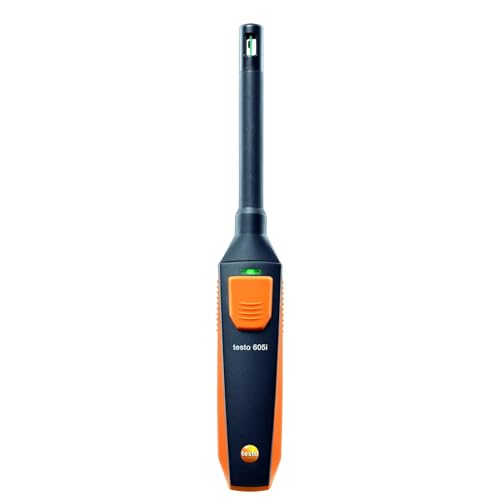
Wet bulb, dry bulb, a chart or a calculation. The old method still checks the new sensors.
Read More→The Magnus formula, a worked example, a lookup table and a rule of thumb. Accurate to a fraction of a degree indoors.
Read More→A checked sensor, settled for 15 minutes, in the right spot, read with the temperature. Otherwise the number is wrong.
Read More→
Face the vane square to the flow, traverse the grille in a grid, average, multiply by free area. Ten minutes per vent.
Read More→
One handheld for airflow, temperature, humidity, light and sound. Worth it when you need all five occasionally.
Read More→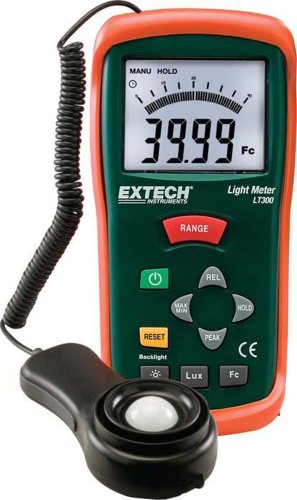
Cosine-corrected sensor, a stated spectral match, a range that covers your lighting, and LED capability if you measure LEDs.
Read More→
Class 2 with a calibrator for anything that will be compared to a limit; unclassified for a rough idea; Class 1 for evidence.
Read More→Vane for grilles, hot-wire for ducts and hoods, flow calculation built in, and a temperature reading you will use.
Read More→
Accuracy, interval, memory, battery, export and an alarm. Match each to the job, from a fridge to a damp wall.
Read More→
Saturated salt in a sealed box gives 75 percent RH. One night tells you the error; the meter's offset fixes it.
Read More→A capacitive sensor with a stated ±3 percent or better, a dew point readout, and a way to check it against salt.
Read More→