As an Amazon Associate, Akermin earns from qualifying purchases. Product links on this page are affiliate links.
For commissioning and fault-finding on a commercial rooftop array, P1 is the pick that covers the most ground in one case: the listing states it performs IEC 62446-1 Category 1 and Category 2 tests, measures open-circuit voltage to 1000 V DC and short-circuit current to 20 A DC per module or string, and traces I-V curves on location against manufacturer data. P2 is the pick for the work you do every day rather than once a year: a CAT III 1500 V clamp meter with a thin jaw for crowded combiner boxes, DC power measurement and an audio polarity indicator. P3 answers a different question entirely, ongoing production rather than instantaneous electrical state, and P4 and P5 are build and balance-of-system items, not test instruments. If you are buying one thing, buy P2 first; the clamp is the tool that gets used on every visit.
Why a rooftop array needs four different instruments, not one
A commercial rooftop array fails in more than one way. A string can be electrically sound and still underperform because a connector was crimped badly at installation. A connector can be perfect and the array can still underproduce because one module in a string is dragging the rest down. A module can be fine and the inverter can still be logging a fault because a combiner box terminal has worked loose in the heat.
Each of those failures is visible to a different instrument. The I-V curve tracer sees the module-level behaviour. The clamp meter sees current in a conductor without breaking the circuit. The energy monitor sees the daily production shape over weeks. The crimper prevents a class of fault that no tester can find easily once it is buried in a rooftop connector.
That is why this page does not rank five interchangeable products. It sorts them by the question each one answers. If you already have a commissioning kit, the commissioning kit comparison covers the overlap; this page is about what a commercial rooftop specifically demands.
The voltage ceiling that decides whether a kit fits your array
String voltage is the first number to check, and it is the number most often assumed rather than read. P1 measures open-circuit voltage up to 1000 V DC at the module or string. P2 carries a CAT III 1500 V safety rating. Those are not the same kind of number, and confusing them is a common and expensive mistake.
The 1000 V DC figure on P1 is a measurement range: the tester can read a voltage up to that value. The 1500 V figure on P2 is a safety category rating: it describes the transient overvoltage environment the instrument is designed to survive while you are holding it. An instrument can have a wide measurement range and a lower safety category, or the reverse. For commercial rooftop work, the safety category is the number that protects you, and the measurement range is the number that lets you do the job.
If your strings are 1500 V class, a 1000 V measurement range will not cover them, regardless of what the safety rating says. Check both. The listing for P1 states 1000 V DC and 20 A DC; it does not publish a CAT rating, so treat that as unstated rather than assume one.
| Pick | What it measures | Stated limit | Safety rating |
|---|---|---|---|
| P1 | VOC, ISC, I-V curve | 1000 V DC, 20 A DC | Not stated in the listing bullets |
| P2 | Current, DC power, polarity, continuity | 100 A AC/DC clamp | CAT III 1500 V |
| P3 | Circuit-level energy consumption | 200 A sensor referenced for 3-phase wye | Not stated in the listing bullets |
| P4 | Charge current control | 100 A controller rating | Not stated in the listing bullets |
| P5 | Nothing; it terminates cable | Not stated in the listing bullets | Not stated in the listing bullets |
Note that P5 is a hand tool and makes no measurement at all. It appears here because a bad crimp is a measurement problem you cannot see with a meter until it becomes a hot joint.
What IEC 62446-1 asks you to record, and what P1 can produce
IEC 62446-1 is the standard that defines what a PV system commissioning record contains. It splits the work into Category 1 and Category 2 tests. Category 1 covers the continuity, polarity, insulation resistance and string open-circuit voltage and short-circuit current checks that every installation should have on file. Category 2 adds performance measurement, which is where I-V curve tracing sits.
P1’s listing states it meets IEC 62446-1 for both categories and that it produces on-location I-V curve results comparing manufacturer I-V curve data to measured data on the analyzer screen. That comparison is the point. A string reading a plausible voltage tells you almost nothing about whether the modules are performing. A measured I-V curve overlaid against the manufacturer’s curve shows you shape, and shape is where shading, mismatch and degradation show up.
What the listing does not publish is the insulation resistance test voltage, the measurement accuracy figures, or the irradiance sensor’s accuracy. The kit includes the IRR2-BT irradiance meter, which matters because an I-V curve is only meaningful when you know the irradiance at the moment of measurement. Without an irradiance reading you cannot correct the curve to standard test conditions, and without that correction you cannot compare it to the datasheet. If you are building the record from scratch, the broader basic solar testing toolkit guide covers the same logic at a smaller scale.
Five tools, five different jobs
Fluke SMFT-1000 Solar Tools Kit
The only pick here that the listing ties to IEC 62446-1 Category 1 and Category 2 tests, with VOC to 1000 V DC, ISC to 20 A DC and on-location I-V curve comparison against manufacturer data.
Fluke 393 FC Solar Clamp Meter
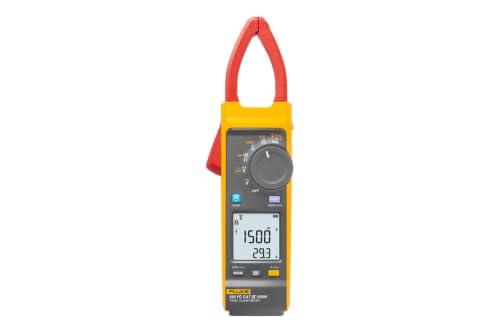
The daily-use instrument: CAT III 1500 V rating, thin jaw for combiner boxes, DC power measurement, audio polarity indication and visual continuity, IP54 for outdoor work.
Emporia Vue 3 Commercial 3-Phase Smart Energy Monitor
Turns the array into a production record rather than a snapshot, with clamp-on sensors installed in the circuit panel and support for the wiring configurations the listing names.
Depvko 100A MPPT Solar Charge Controller
A 12V/24V auto-recognising MPPT controller with an LCD, listed at up to 99 percent charging efficiency and with overcharge, short-circuit and reverse-polarity protection.
ECO-WORTHY Solar Crimper Tool Kit
The termination kit: crimper, ten pairs of connectors, two pairs of spanners and a zip case, with the crimper jaws described as high precision.
The clamp meter is the tool that leaves the van every day
If you own one instrument on this page, own the clamp. P2 is rated CAT III 1500 V, IP54, with a thin jaw described as giving access to cables in crowded combiner boxes, DC power measurement, an audio polarity indicator and visual continuity, plus Fluke Connect software and an included iFlex flexible current probe.
The thin jaw matters more than it sounds. A commercial rooftop combiner box is a tight space with several conductors and limited room to open a clamp around one of them. A bulky jaw either will not fit or will force you to angle the instrument in a way that puts your hand near live terminals. The listing does not publish the jaw opening dimension, so measure your own combiner box clearance before assuming it fits.
The audio polarity indicator is a working-speed feature. On a rooftop, you are often alone, wearing gloves, and looking at a display is slower than hearing a tone. Visual continuity does the same job for the buzzer-free checks. Neither feature replaces a proper insulation resistance test, and the clamp cannot tell you whether a module is degrading; it tells you what current is flowing right now. For a fuller treatment of the clamp category, see how to choose a clamp meter for solar PV systems.
Production monitoring and balance-of-system parts are not test instruments
P3 and P4 sit on this page because they are sold alongside solar test gear, but they do different work. P3 is a circuit-panel energy monitor with clamp-on sensors, supporting single phase, single-split phase, two-wire systems, and three-wire three-phase four-wire wye systems with an earthed neutral, with an additional 200 A sensor required for the wye case. It records consumption and net metering over time. It will not tell you a string is open. It will tell you that Tuesday produced less than Monday, which is the clue that sends you up the ladder with P2 in hand.
P4 is a 100 A MPPT charge controller with 12V/24V auto-recognition, an LCD, listed charging efficiency up to 99 percent and protection against overcharge, short circuit and reverse polarity. It is a balance-of-system component, not a diagnostic tool. The listing’s efficiency figure is a manufacturer claim and should be read as such; MPPT tracking efficiency and conversion efficiency are different quantities, and the listing does not separate them.
P5 is the termination kit: one pair of crimpers in high-carbon steel with PP and TTR handle material and high-precision jaws, ten pairs of solar connectors in PPO material with crimp terminals, two pairs of spanners and a zip case. The listing does not state a crimp size or a cable cross-section range, so confirm your cable gauge fits the jaws before buying. A crimper that is one size off produces joints that pass a pull test and fail a thermal camera.
What none of these five will tell you
No instrument on this page detects a thermal fault. A hot joint, a bypass diode in thermal runaway or a shaded cell heating under reverse bias are all thermal events, and the tools that see them are thermal cameras, covered separately in the thermal camera comparison for solar inspections. An I-V curve can hint at a problem; it cannot localise it on a roof.
None of these tools is an alarm. P3 monitors and reports, but it does not trip anything. P4 protects a battery circuit, not a person. P2 measures current but does not warn you that a conductor is live beyond the polarity tone. Treat every conductor as live until you have proved otherwise with a tested instrument.
None of them tests insulation resistance unless the listing says so, and P1’s listing does not publish that figure. Category 1 testing under IEC 62446-1 includes insulation resistance, so if your commissioning record requires it, confirm the capability in the manual before relying on the kit. The listing states what it states; the rest is a question for the manufacturer.
Finally, none of these tools replaces a proper test plan. A commercial rooftop has dozens of strings, several combiners and one or more inverters. The instrument tells you what is happening at the point you touch. The plan tells you which points to touch, in what order, and what a pass looks like.
Recommended Tools


Products shown because their documented specifications fit this guide. Price and availability are on Amazon and can change.
Frequently Asked Questions
Do I need the I-V curve tracer, or is a clamp meter enough?
A clamp meter measures current in a conductor and cannot show you the shape of a module's performance. The I-V curve tracer in P1 compares measured curves to manufacturer data, which is how you distinguish a string that is merely shaded from one that has a failing module. If your work is fault-finding on underperforming strings, the tracer earns its place. If your work is routine current checks and polarity verification, P2 covers it.
Is the 1000 V DC range on P1 enough for a commercial rooftop?
That depends on your string voltage. The listing states 1000 V DC open-circuit measurement. If your strings are designed to operate above that, the instrument will not measure them. Check your string design voltage against the stated range before buying, and do not assume a higher safety category on another instrument extends the measurement range of this one.
Can the energy monitor replace a commissioning test?
No. P3 records consumption and net metering over time from clamp-on sensors in the panel. It shows you trends and anomalies in production. It does not measure open-circuit voltage, short-circuit current, polarity or insulation resistance, so it cannot produce a commissioning record. It is a monitoring tool that tells you when to go and test, not a substitute for testing.
What is the charge controller doing on a page about test tools?
It is a balance-of-system component, not a diagnostic instrument, and it is included because it is frequently bought alongside solar test gear. P4 controls charging current to a battery bank; it does not measure array performance. If you are commissioning a PV array, the controller is part of the system, not part of your test kit.
Will the crimper kit fit my solar cable?
The listing does not publish a crimp size or a cable cross-section range for P5, so it is not possible to confirm from the listing alone. The connectors are described as fitting most solar cables, which is a general statement rather than a specification. Check the jaw size against your cable gauge before relying on it for a commercial installation.
Which single tool should I buy first?
P2, the clamp meter. It is the instrument that gets used on every visit, it carries a CAT III 1500 V safety rating for the rooftop environment, and its thin jaw is designed for the crowded combiner boxes that commercial rooftops are full of. The multifunction tester and the I-V curve tracer are the tools you bring when the clamp has told you there is a problem worth diagnosing.
Affiliate disclosure: Akermin earns a commission from qualifying Amazon purchases made through links on this page. Our editorial picks are based on documented specifications and owner feedback, not commissions.
Related Guides
Solar Testing Tools for O&M Technicians: 4 Picks for Field Work
Four solar O&M tools compared by what they measure, what they connect to, and where each one runs out of range.
Read More→
PV Testing Kits for System Commissioning: 5 Picks
A comparison of five PV testing kits for commissioning, from a full IEC 62446-1 test set down to a single MC4 adapter lead.
Read More→
Tools for Solar Panel Hotspot Investigations: 5 Picks
A comparison of five tools for solar panel hotspot work, covering thermal imagers for spotting heat and I-V curve tracers for confirming electrical loss.
Read More→