The Placement Rule
Mount a natural gas detector high on a wall, within roughly 12 inches of the ceiling, in the same room as the gas appliance, a few feet to the side of it rather than directly above it, and away from windows, doors, vents, ceiling fans and the dead-air corner where wall meets ceiling. That single sentence covers most homes. The rest of this page explains why the height matters, what to do in each room, and how to handle plug-in detectors that are tied to an outlet near the floor.
Why High
Natural gas is mostly methane, which is lighter than air. When it leaks into a room it rises and spreads out under the ceiling first, then fills downward as the leak continues. A detector near the ceiling meets the gas early; one at knee height meets it only after the upper part of the room already holds a significant concentration. The physics is explained in does natural gas rise or fall. The practical consequence is that a natural gas detector mounted low can be correct in every other respect and still be late.
Room by Room
| Room | Gas source | Where to mount | Avoid |
|---|---|---|---|
| Kitchen | Range, cooktop, oven | High on a wall a few feet from the range | Directly above burners; next to the range hood exhaust; over the sink |
| Utility room or basement | Furnace, water heater, boiler | High on a wall in the appliance room | Right at the flue or draft hood; near the furnace supply vents |
| Laundry | Gas dryer | High on a wall near the dryer connection | Directly behind the dryer where lint and heat collect |
| Living room | Gas fireplace, log set | High on a wall in the room, off to the side | On the chimney breast above the firebox |
| Garage | Gas heater or water heater | High, near the appliance | Anywhere vehicle exhaust or fuel vapor reaches it |
Furnace and water heater rooms have their own quirks, including drafts from the flue and the question of whether one detector can cover both appliances; those are handled in placement near a furnace or water heater.
Places That Cause Missed Leaks or False Alarms
- Windows and exterior doors. Drafts carry gas away from the sensor and can also carry outdoor contaminants to it.
- Supply vents and return grilles. Forced air pushes gas away from a detector mounted next to a supply vent and dilutes what reaches one at a return.
- Dead-air corners. The junction of wall and ceiling, and the corner of a room, are pockets that air does not circulate through. Keep a hand’s width or more clear of them.
- Bathrooms and steamy areas. Humidity and aerosols such as hairspray and deodorant set off semiconductor sensors.
- Directly above a burner or oven. Heat, grease and cooking vapor. This is the most common placement error in kitchens.
- Garages with cars. Gasoline vapor and exhaust trigger combustible sensors. The full list of triggers is in what can cause false gas detector readings.
The Plug-In Problem
Most consumer natural gas detectors are plug-in units, and most outlets are near the floor or at counter height. That conflicts with the high-mount rule. There are three honest ways to deal with it.
- Use a high outlet if you have one. Kitchens sometimes have an outlet above the cabinets for lighting, and utility rooms often have one high on the wall. A plug-in detector such as the BIXTEK or Adorelf units, whose listings both say to choose an outlet near the gas-use area and keep the vents clear, works as intended there.
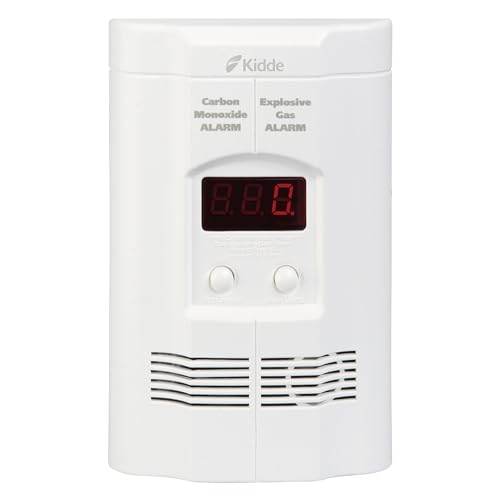
- Follow the manufacturer’s guidance for a combination alarm. Combination CO and explosive gas alarms are designed around outlet height, and their manuals state where the manufacturer accepts them being installed. That guidance governs; a review of the trade-off is in the best natural gas detectors roundup.
- Add an outlet or choose a unit not tied to one. An electrician can add a high outlet in an appliance room for a modest job. The power options and their placement consequences are compared in plug-in vs battery gas detector.
What not to do is accept a low outlet in a natural gas kitchen and assume the detector will catch a leak just as fast. It will catch a leak eventually, but later than it should.
One Detector or Several
One per room with a gas appliance is the working rule, and a separate page works through the count for a typical house in how many gas detectors you need. If you are buying only one, put it in the kitchen if the range is gas, otherwise in the furnace room. The best gas leak detectors guide lists models for each of those spots, and choosing a natural gas detector covers features that matter beyond placement.
Placement improves how early you are warned. It does not change what you do when warned: on a gas smell or an alarm, get out, leave switches alone, and call the gas company or 911 from outside.
Recommended Tools


Natural-Gas-Detector with Plug-in Design, Gas-Leak-Detector with High Accuracy Sensor, Portable
View on AmazonProducts shown because their documented specifications fit this guide. Price and availability are on Amazon and can change.
Frequently Asked Questions
Can I mount a natural gas detector on the ceiling?
Some manufacturers allow ceiling mounting and some specify a wall position just below the ceiling. Either way, keep it out of the dead-air pocket where wall and ceiling meet, and follow the manual for the model you own.
How far from the stove should it be?
Not directly above it. Heat, steam and cooking vapor at the burners cause false alarms and shorten sensor life. Put it a few feet away in the same room, at the height the manufacturer specifies.
Do I need a natural gas detector in each bedroom?
No. Gas detectors belong in rooms with a gas source. Bedrooms are where CO alarms belong, because CO is the hazard that reaches sleeping people without warning.
Is inside the cabinet above the range a good hiding spot?
No. An enclosed cabinet traps heat and grease, blocks airflow to the sensor and muffles the horn. Detectors need open air.
Affiliate disclosure: Akermin earns a commission from qualifying Amazon purchases made through links on this page. Our editorial picks are based on documented specifications and owner feedback, not commissions.
Related Guides
Does a Carbon Monoxide Detector Detect Natural Gas?
No. A CO detector cannot sense natural gas, propane or methane, and a smoke detector cannot either. Only a combustible gas sensor responds to a fuel leak.
Read More→Gas Leak Detector vs Carbon Monoxide Detector: Two Different Hazards
A gas leak detector senses unburned fuel before it can ignite; a CO detector senses the poison left by fuel that burned badly. Neither covers the other.
Read More→
Best Gas Leak Detectors for the Kitchen
Where to put a gas alarm in a kitchen so it catches a range leak without false alarms, and which plug-in and sniffer models fit.
Read More→